Dawning of Precision Recovery
From Gratitude to Groundbreaking Innovation
RECO Island was born from one man's profound gratitude for a second chance at life. Founder Dave transformed personal redemption into a mission that honors every individual seeking recovery. At our Boynton Beach sanctuary, science merges with compassion, redefining addiction treatment for drug rehab and alcohol addiction alike. Clients discover that healing the mind is inseparable from strengthening mental health and community ties. By rooting rehabilitation in dignity, we demonstrate that recovery can be both rigorous and relentlessly human.
Building on that ethos, our team pioneered precision recovery programs that adapt to each person's genetic, psychological, and social blueprint. This bold vision began with the Origins of innovation at RECO Island, where early experiments in next-gen addiction therapy revealed the value of deeply personalized care. Today, data-driven insights guide every decision, whether fine-tuning patient-centered pharmacotherapy or designing biofeedback resilience training modules. Innovation remains our compass, ensuring that every client crafts a personalized sobriety roadmap grounded in evidence.
Why Future Focused Recovery Matters Now
Addiction is evolving, and future-focused recovery models must evolve faster to outpace new threats. Synthetic substances, social media triggers, and global stressors demand AI-driven relapse prevention tools that spot risk before cravings erupt. Digital detox monitoring paired with telehealth sobriety coaching gives clients real-time feedback, empowering sustainable sobriety pathways outside clinic walls. These advances nurture intersectional mental wellness by weaving cultural, gender, and socioeconomic factors into care algorithms. Ultimately, they help transform short-term abstinence into lifelong recovery capital.
Next-gen addiction therapy also confronts the urgent need for equitable access. Virtual consultation platforms shrink geographic barriers, connecting rural families to trauma-informed care strategies and dual-diagnosis synergy specialists. Evidence-based harm reduction meets community reintegration support, allowing clients to transition with dignity rather than fear. Data-informed treatment outcomes continually adjust protocols, ensuring no one becomes lost in outdated manuals. With every iteration, RECO Island confirms that science and compassion are not opposing forces but complementary engines of progress.
The RECO Island Ecosystem of Possibility
Step onto our island campus and you'll find holistic neurorestoration tools working in concert. Psychedelic-assisted rehabilitation sessions, delivered within strict medical frameworks, reopen neural pathways for deep relearning. Simultaneously, neurofeedback training and mindfulness-based stress reduction recalibrate brain-body rhythms, fostering resilience-focused lifestyle design that lasts.
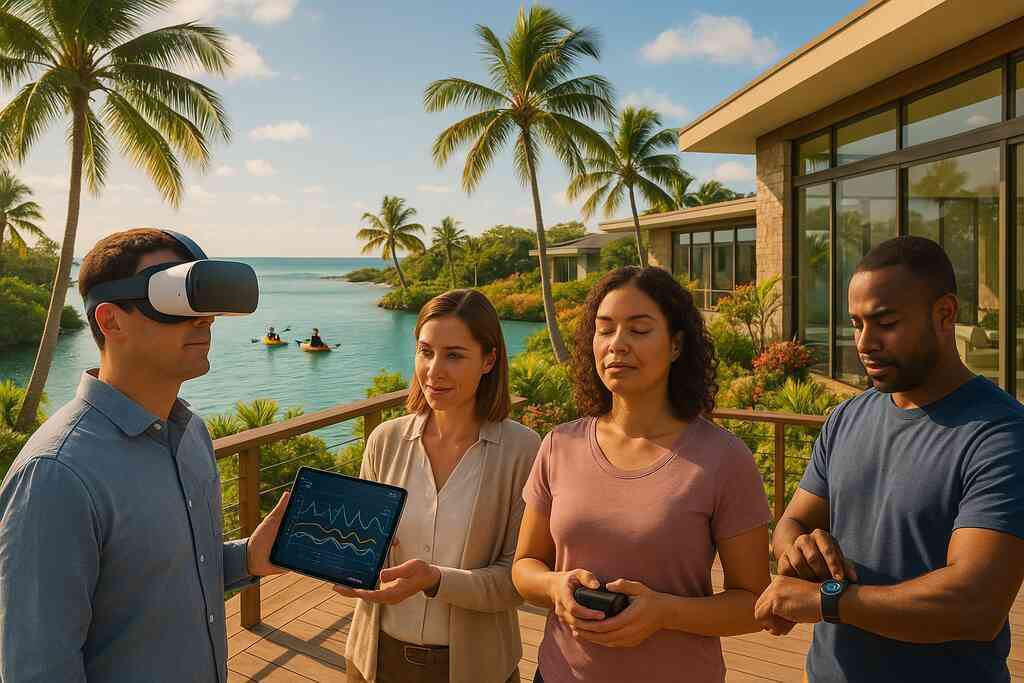
Technology-enhanced therapies flourish here as well. Virtual reality exposure therapy immerses clients in controlled environments, rewriting traumatic scripts while building craving resistance. Within our emerging metaverse recovery community, peer-led accountability networks continue the work 24-7, extending support beyond physical walls. These digital arenas complement family-systems healing sessions back on campus, ensuring loved ones grow together.
Yet innovation means little without human touch. Our clinicians blend genetic risk profiling with compassionate storytelling to create integrated dual-diagnosis synergy plans. Experiential adventure therapy on nearby waterways cultivates courage, while evidence-based harm reduction maintains safety nets. By the time discharge approaches, aftercare continuum planning guarantees lifetime recovery mentoring and community reintegration support. Each element interlocks, forming the RECO Island transformative experience-an ecosystem where possibility becomes practice.

Blueprints of Tomorrow's Therapeutic Frontier
Genetic Risk Profiling and Precision Recovery Programs
RECO Island begins every assessment by mapping each client's genetic risk profile, translating raw data into actionable insight. By pinpointing polymorphisms linked to opioid sensitivity or alcohol metabolism, clinicians predict physiological vulnerabilities early. These insights power precision recovery programs that adjust medication dosages, nutritional protocols, and sleep-cycle interventions for unmatched safety. The approach exemplifies future-focused recovery models where biology, psychology, and environment converge. Clients feel seen on a molecular level and believe lasting change is scientifically within reach.
Genetic information also shapes lifestyle coaching throughout treatment. Counselors reference genomic markers when designing resilience-focused lifestyle design plans involving exercise, circadian alignment, and micronutrient optimization. Data-informed treatment outcomes provide continuous feedback, confirming whether adjustments improve stress regulation or emotional balance. This closed feedback loop prevents one-size-fits-all mistakes that historically plagued addiction care. Ultimately, personalized sobriety roadmaps replace fear with informed optimism, fueling recovery capital building from day one.
AI-Driven Relapse Prediction and Digital Detox Monitoring
Next-gen addiction therapy at RECO Island harnesses machine learning to forecast cravings before they surface. AI-driven relapse prevention algorithms analyze sleep quality, heart rate variability, and sentiment captured in reflective journals. When risk spikes, digital detox monitoring nudges clients to pause social media or initiate guided breathing, disarming triggers quickly. This proactive stance redefines sustainable sobriety pathways by turning smartphones into guardians rather than temptations. The constant, compassionate vigilance reduces emotional ambushes and builds trust in technology as a partner.
Clinicians review algorithmic reports during daily check-ins, aligning human intuition with statistical accuracy. Because patterns shift over weeks, models retrain continuously, mirroring the adaptive nature of recovery itself. Intersectional mental wellness factors-such as financial stress or family conflict-integrate into predictions, ensuring cultural and socioeconomic realities are honored. The result is a dynamic safety net that respects individuality while promoting community reintegration support. Clients graduate knowing their virtual ally follows them long after discharge.
Psychedelic Assisted Rehabilitation and Holistic Neurorestoration
Psychedelic-assisted rehabilitation sessions occur within carefully regulated medical frameworks that emphasize safety, intention, and integration. Measured doses of ketamine or psilocybin reopen neural plasticity, allowing patients to revisit trauma with newfound clarity. Therapists guide exploration, transforming past pain into present purpose while minimizing dissociation. Sessions pair with holistic neurorestoration protocols-Omega-3 supplementation, infrared sauna, and restorative yoga-to stabilize the brain-body axis. Together, they ignite a profound sense of possibility often absent in traditional detox.
The program's sophistication shines through its collaboration with Cutting-edge medical interventions on RECO Island. This partnership embeds psychedelic work within broader medical innovation, guaranteeing seamless continuity of care. Post-session neurofeedback training tracks cortical recalibration, ensuring gains translate into everyday resilience. Clients report accelerated emotional processing, reduced anhedonia, and deeper commitment to community. By merging ancient molecules with modern protocol, RECO Island proves that hope can be engineered as meticulously as any medication.
Virtual Reality Exposure Therapy and Metaverse Recovery Community
Virtual reality exposure therapy transports clients into simulated environments where cravings once thrived-bars, concerts, or stressful offices. Inside the headset, therapists calibrate auditory cues and visual stimuli while teaching coping skills in real time. Trigger intensity rises gradually, mirroring graded exposure principles that desensitize without overwhelming. These controlled encounters rewire threat perception and empower users to navigate real-world temptations confidently. Every completed scenario becomes a building block in their sustainable sobriety pathways.
Beyond formal sessions, a metaverse recovery community extends accountability around the clock. Avatars meet for group meditations, psychoeducation workshops, and peer-led accountability networks, erasing geographical barriers. Users practice refusal skills in gamified challenges that reward healthy choices with digital milestones. Social presence technology fosters genuine connection, mitigating the isolation that often accompanies early recovery. When clients eventually leave Boynton Beach, their virtual tribe follows, ensuring no one walks alone.
Telehealth Sobriety Coaching and Peer-Led Accountability Networks
Telehealth sobriety coaching provides flexible, high-touch support to individuals juggling work, family, and healing. Secure video sessions deliver motivational interviewing, skills rehearsal, and goal tracking without travel stress. Coaches adjust frequency according to data-informed treatment outcomes, preventing both neglect and overload. Since appointments integrate with wearable data dashboards, discussions remain grounded in objective evidence, enhancing trust. Even after hurricanes or pandemics, continuity of care remains unbroken.
Complementing professional guidance, peer-led accountability networks thrive on structured honesty. Daily check-ins via encrypted chat groups create micro-moments of connection, replacing isolation with solidarity. Experienced alumni model lived resilience, sharing practical hacks for cravings, budgeting, or boundary setting. These exchanges accelerate recovery capital building by translating theory into street-level wisdom. Together, coaches and peers weave a safety net strong enough to hold the heaviest setbacks.
Trauma Informed Dual Diagnosis Synergy
Many clients arrive harboring layered trauma alongside mood or personality disorders. Trauma-informed care strategies at RECO Island prioritize emotional safety, predictable routines, and collaborative decision-making. Therapists avoid re-traumatization by using gentle pacing and consent-based narrative exposure. When symptoms overlap, integrated dual-diagnosis synergy aligns psychiatric medication with somatic therapies such as EMDR and sensorimotor processing. This harmony prevents fragmented treatment that often fuels relapse.
Clinicians engage family members to support intersectional mental wellness, teaching them grounding techniques and healthy communication. By acknowledging generational patterns, loved ones become allies rather than inadvertent triggers. The program's comprehensive nature satisfies both regulatory standards and human dignity. Clients depart with clearer minds, regulated nervous systems, and renewed belief in their capacity for connection. Trauma may shape the past, but it no longer dictates the future.
Biofeedback, Neurofeedback and Mindfulness-Based Stress Reduction
Biofeedback devices translate physiological signals into visual data, showing clients how thoughts influence heart rate and muscle tension. Real-time graphs foster agency, turning abstract wellness advice into tangible skill practice. Neurofeedback training advances the concept by teaching users to modulate brainwave patterns linked to focus and calm. Over time, neural pathways favor stability over chaos, boosting impulse control crucial for recovery.
Mindfulness-based stress reduction sessions anchor these technological gains in ancient contemplative wisdom. Guided body scans and loving-kindness meditations strengthen interoceptive awareness, enhancing self-compassion. When combined, biofeedback resilience training and mindfulness cultivate a feedback loop of relaxation and insight. Participants report fewer panic episodes, improved sleep, and heightened joy in everyday activities. These internal shifts often outlast external interventions, reinforcing lifetime recovery mentoring ambitions.
Evidence-Based Harm Reduction and Patient-Centered Pharmacotherapy
RECO Island refuses the false dichotomy between abstinence and compassion. Evidence-based harm reduction supplies naloxone training, fentanyl test strips, and education on safe use practices. While many clients aim for full sobriety, these measures prevent tragedy during ambivalent phases. Simultaneously, patient-centered pharmacotherapy tailors medication to genetic markers, co-morbid conditions, and personal values. This nuanced approach respects autonomy while prioritizing safety.
Clinical teams track outcomes with rigorous metrics, adjusting protocols when side effects surface or goals evolve. Collaboration with community pharmacies enhances accessibility, especially for rural alumni. Transparent communication demystifies pharmacology, reducing stigma around medications for addiction treatment. By blending harm reduction and precision medicine, RECO Island crafts a pragmatic, humane model that other centers increasingly emulate.
Experiential Adventure Therapy and Family Systems Healing
Florida's natural landscape becomes a classroom where experiential adventure therapy unfolds. Kayaking through mangrove tunnels, clients practice mindfulness, teamwork, and calculated risk, reinforcing lessons learned indoors. Physical challenges elicit endorphins, building positive associations with sobriety while strengthening cardiovascular health. Guides debrief each outing, translating metaphors of navigation and balance into recovery language. The wilderness thus becomes both mirror and mentor.
Family-systems healing parallels these adventures with structured dialogues that illuminate legacy patterns. Facilitators employ genograms, role-play, and boundary mapping to foster empathy among relatives. Honest conversation replaces blame, cultivating collective resilience against future crises. As relationships mend, a supportive home environment emerges, bolstering aftercare continuum planning. When the final family hug occurs on campus, hope feels not theoretical but embodied in every embrace.
Beyond Discharge the Infinite Horizon of Sustainable Sobriety
Recovery Capital Building and Community Reintegration
Recovery capital building begins the moment a client decides to leave our shores. Counselors inventory personal strengths, community resources, and financial realities, then weave them into sustainable sobriety pathways that feel attainable. We emphasize intersectional mental wellness by matching alumni with culturally responsive mentors and faith communities that respect individual identity. Because reintegration can trigger anxiety, staff rehearse job-interview scripts, boundary setting with friends, and transportation logistics until confidence replaces doubt. Each rehearsal turns theoretical skills into practical muscle memory that survives real-world turbulence.
Community reintegration support extends far beyond résumé polishing. Alumni join volunteer projects that convert lived experience into social contribution, strengthening self-esteem while reducing stigma. Coaches facilitate introductions to local advocacy groups so that serving others becomes a relapse-resistant habit. Families receive education on compassionate accountability, learning to celebrate progress without enabling old patterns. For many, that network crystallizes into an unshakeable sense of belonging, the true antidote to isolation.
Lifetime Recovery Mentoring Beyond the Island
Discharge marks a milestone, not a finale, and our lifetime recovery mentoring program reflects that philosophy. Alumni are paired with seasoned guides who have navigated similar triggers and triumphs, fostering trust through shared history. Scheduled video conferences prevent drift, while spontaneous text check-ins provide instant reassurance when life feels tenuous. Mentors employ next-gen addiction therapy tools such as digital detox monitoring dashboards to spot stress early, then recommend mindfulness-based stress reduction exercises before cravings escalate. Clients describe the relationship as a living compass that keeps north fixed even when storms gather.
Financial or geographic barriers never block access to help. Scholarships cover telehealth sobriety coaching sessions during employment transitions, ensuring continuity of care. When a mentee relocates, we coordinate new clinical providers within forty-eight hours, demonstrating that future-focused recovery models are agile by design. Most importantly, the program's guiding mantra-"Together, always"-transforms hope into an actionable routine. That steady companionship often proves more potent than any medication.
Data-Informed Outcomes and Aftercare Continuum Planning
We refuse to rely on guesswork when lives hang in the balance. Evidence scientists at RECO Island collect biometric data, sentiment analysis, and attendance trends to refine every aftercare continuum planning session. The team compares progress against regional benchmarks, then recalibrates precision recovery programs so they stay ahead of emerging threats like synthetic opioids. Alumni with elevated risk markers receive additional neurofeedback training or adjusted patient-centered pharmacotherapy regimens, closing gaps before they widen. Transparent dashboards keep clients engaged by showing exactly how their hard work translates into measurable gains.
This analytics engine also guides referrals into the RECO Intensive Outpatient continuum when a structured step-down environment is appropriate. Weekly outcome reviews allow therapists to pinpoint which experiential adventure therapy elements boost motivation most effectively. Because data speak louder than anecdotes, funders, families, and clients alike trust the integrity of our process. Over time, aggregated insights feed national research collaborations, elevating the entire field of addiction treatment. In short, numbers fuel nuance, and nuance saves lives.
Invitation to Join the RECO Island Transformative Experience
If you or a loved one is ready to trade despair for possibility, our doors-and our hearts-are open. The journey begins with a single conversation that honors your story and explores personalized sobriety roadmaps built on cutting-edge science. From there, you gain access to trauma-informed care strategies, peer-led accountability networks, and the unwavering promise of Lifelong support after discharge. Every modality, from AI-driven relapse prevention to holistic neurorestoration, converges toward one goal: helping you reclaim the life you deserve.
Choosing RECO Island means joining a community that believes in relentless innovation and radical compassion. We invite you to step onto our campus, breathe in the ocean air, and envision a future where recovery feels both challenging and exhilarating. Schedule a consultation today, and discover why our alumni call the experience transformative rather than transactional. Your infinite horizon of sustainable sobriety starts now-let's navigate it together.
Frequently Asked Questions
Question: How does genetic risk profiling shape precision recovery programs at RECO Island?
Answer: From the moment a new client steps onto our Boynton Beach campus, we collect a non-invasive DNA sample that screens for polymorphisms linked to opioid sensitivity, alcohol metabolism, and stress reactivity. These findings guide patient-centered pharmacotherapy-adjusting medication type and dosage for maximum safety-and inform resilience-focused lifestyle design that covers sleep, nutrition, and exercise. Because data-informed treatment outcomes are reviewed weekly, your personalized sobriety roadmap grows with you, preventing the one-size-fits-all errors that stall progress in many drug rehab settings. In short, genetic risk profiling fuels the precision recovery programs that make RECO Island a leader in future-focused recovery models.
Question: What makes AI-driven relapse prevention and digital detox monitoring different from traditional aftercare?
Answer: Traditional aftercare often relies on self-reporting and sporadic check-ins. Our AI-driven relapse prevention platform continuously analyzes heart-rate variability, sleep quality, and sentiment tags from your reflective journal. When risk levels spike, the system sends real-time nudges-prompting digital detox monitoring, guided breathing, or an instant telehealth sobriety coaching session. Clinicians review these algorithms daily, aligning human intuition with machine precision to create sustainable sobriety pathways that adapt as quickly as your life does. The result is a proactive safety net that keeps cravings from ever gaining momentum, whether you're navigating a hectic workday or relaxing at home.
Question: How is psychedelic-assisted rehabilitation safely integrated with holistic neurorestoration at RECO Island?
Answer: Every psychedelic-assisted rehabilitation session occurs under strict medical supervision, beginning with a comprehensive physical exam and trauma-informed consent process. Measured doses of ketamine or psilocybin reopen neural plasticity, allowing deep therapeutic work. Immediately afterward, clients transition into holistic neurorestoration modalities-including infrared sauna, Omega-3 supplementation, and mindfulness-based stress reduction-to stabilize brain chemistry and reinforce new insights. Follow-up neurofeedback training tracks cortical recalibration, while peer-led accountability networks help translate breakthroughs into daily habits. This seamless blend of science and compassion exemplifies RECO Island's commitment to next-gen addiction therapy that is both cutting-edge and human-centered.
Question: In the blog Future of Recovery: Insights from RECO Island's Experts, you mention virtual reality exposure therapy and a metaverse recovery community-how do these next-gen addiction therapy tools support lasting change?
Answer: Virtual reality exposure therapy places you inside lifelike simulations-concerts, bars, even stressful office settings-while a therapist teaches coping skills in real time. As trigger intensity rises, you practice breathwork, urge-surfing, and cognitive reframing until the environment no longer holds sway. After formal sessions, our metaverse recovery community keeps momentum going; avatars gather for group meditations, skill-building quests, and peer-support meetings that strengthen recovery capital building around the clock. Because these tools transcend geography, they ensure intersectional mental wellness support for clients who may live far from Boynton Beach yet still crave connection.
Question: What kind of lifetime recovery mentoring and community reintegration support can families expect after discharge?
Answer: Discharge is the beginning of a new chapter, not the end of care. Each alumnus is paired with a lifetime recovery mentoring guide who conducts scheduled video calls and spontaneous text check-ins, using data-informed dashboards to spot stress before it triggers cravings. Community reintegration support includes résumé coaching, introductions to local volunteer projects, and family-systems healing workshops that teach compassionate accountability. Scholarships cover additional telehealth sobriety coaching when finances are tight, and our evidence-based harm reduction resources-like naloxone training-remain available 24/7. Together, these services create an aftercare continuum planning framework that keeps you, and those who love you, firmly on the path to sustainable sobriety.