The Role of Community in Healing at RECO Island
Discover transformative healing at RECO Island—where community, mindfulness, and adventure unite to spark lasting, empowered sobriety.
Arriving Together on the Healing Horizon
Why community based recovery amplifies hope
Community heals wounds that medicine alone cannot touch, and RECO Island proves this truth every day. When clients witness group therapy empowerment in action, they absorb courage from peers who once felt the same despair. The brain’s mirror neurons respond to smiles, nods, and empathetic words, rewiring hopeless beliefs into confident momentum. Because we integrate trauma-informed care community principles, residents learn that vulnerability earns respect rather than judgment. Consequently, motivation rises steadily, and relapse prevention community strategies take root before cravings resurface.
Hope also grows through structured social connectedness in sobriety activities. Therapeutic recreation groups, morning mindfulness circles RECO, and evening mental health peer circles keep energy flowing. Each event highlights collective wins: a first sober sunrise, a letter forgiven, a milestone coin awarded. Celebrations remind participants that an addiction recovery fellowship is stronger than any single obstacle. Over time, communal resilience building becomes the default reflex, enabling individuals to face triggers with unified resolve.
From isolation to integration the RECO Island welcomes
Many guests arrive burdened by loneliness, yet the first-day orientation flips that script. Staff and alumni line the pathway, greeting newcomers by name, modeling immediate inclusion in a supportive housing community. This ceremonial welcome sparks dopamine and oxytocin releases that soothe withdrawal anxiety and set a positive emotional baseline. Next, staff introduce the integrated support ecosystem, highlighting medical professionals, holistic practitioners, and recovery mentoring volunteers available around the clock. Knowing that an expert multidisciplinary care team stands ready allows clients to relax and absorb new skills.
Integration continues in small connection circles facilitated by licensed clinicians. Participants share origin stories, then craft personal intentions for the week ahead. Because every voice receives equal time, shared accountability partnerships blossom quickly. Clients realize they have traded isolation for an ever-growing sober living community that will walk beside them long after discharge. That early bond increases engagement in experiential therapy groups, where trust accelerates emotional breakthroughs.
Shared accountability partnerships set the tone for sobriety
Accountability at RECO Island is never punitive; it is empowering. Upon admission, each client pairs with a seasoned peer who models the daily structure of group recovery and checks in on emotional wellness. These partnerships translate abstract goals into actionable steps, reducing overwhelm. Regular meetings examine progress, revisit coping plans, and celebrate incremental wins, reinforcing the idea that setbacks are learning opportunities, not failures.
The system also integrates technology, offering secure apps where partners record intentions, mindfulness practice, and cravings data. Because transparency is mutual, both parties cultivate integrity and resilience. Over weeks, clients expand into triads and larger peer cohorts, forming a mesh network of support that extends beyond campus. Alumni support programs then maintain those ties, ensuring graduates have access to a life after treatment support network wherever they relocate.
Anchoring purpose through mutual aid groups and mindfulness circles
Purpose fuels stamina, so RECO Island layers multiple forums where meaning arises organically. Mutual aid groups convene nightly, blending 12-Step wisdom with modern cognitive tools to address addiction dynamics from every angle. Members practice shared leadership, rotating facilitation roles to foster ownership and confidence. Those same rooms host trauma-processing workshops, allowing survivors to convert pain into advocacy for others.
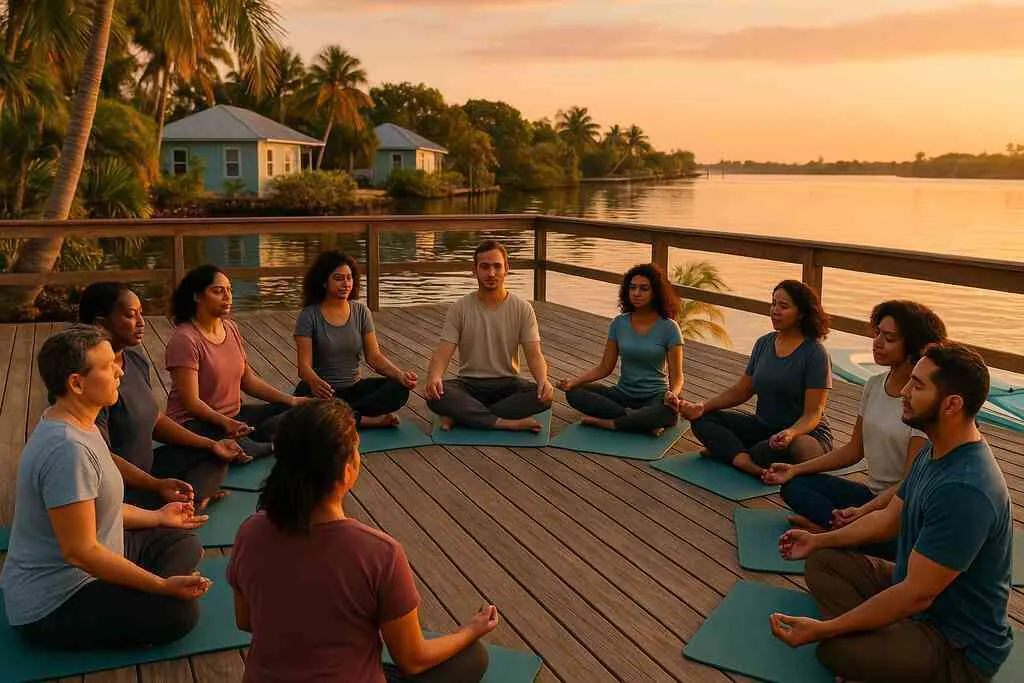
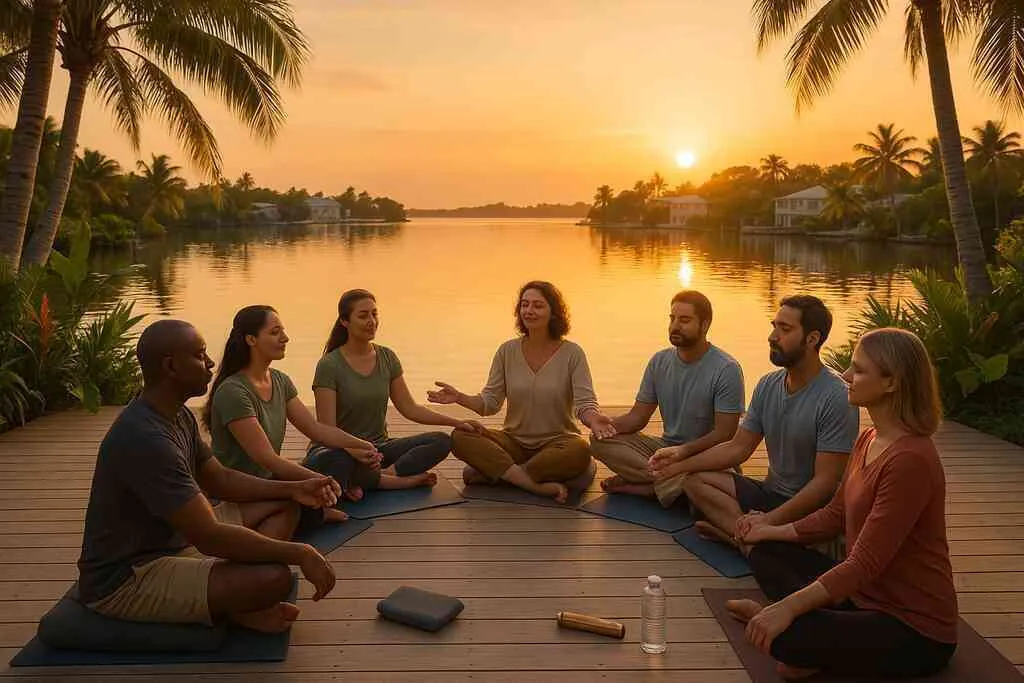
Morning mindfulness circles on our scenic Intracoastal deck remind residents that sobriety offers serenity, not deprivation. Guided breathwork, gentle movement, and gratitude reflections ground the nervous system, making space for clarity. Participants then carry that calm into the day’s holistic recovery community schedule of therapeutic recreation groups and sober activities in Boynton Beach, cementing mind-body alignment. Repeated exposure to peace and fellowship convinces the brain that connection, not substances, generates true relief.
By nightfall, clients debrief wins and challenges, weaving lessons into a personal relapse prevention community blueprint. This communal healing journey transforms duty into passion, enabling each person to envision stewardship roles-whether mentoring newcomers, volunteering in hometowns, or advocating public policy. In this way, the island’s supportive rhythm anchors a purpose that endures far beyond discharge, lighting the horizon for the next wave of seekers.
Blueprints of Collective Empowerment
Group therapy empowerment is the backbone of transformation
Group therapy empowerment forms the engine that drives RECO Island’s community-based recovery model. Sessions unfold inside the RECO Island healing environment, where circles of chairs replace isolating hospital gurneys. Licensed facilitators guide the dialogue, yet participants steer the momentum, translating vulnerability into courage. The daily structure of group recovery keeps everyone on schedule, reinforcing accountability without rigidity. Over time, each voice learns to resonate with purpose, knitting together a peer support network that feels indestructible.
As honesty deepens, mirror neurons light up, allowing clients to absorb confidence from one another. This trauma-informed care community normalizes tears and laughter in equal measure, dissolving shame faster than any lecture could. Because breakthroughs happen collectively, people reframe challenges as shared puzzles rather than private failures. That collective empowerment in rehab fosters a holistic recovery community where hope matures into strategy. Consequently, relapse prevention community principles become second nature long before discharge.
Peer support network weaving trauma informed care into daily life
Outside formal sessions, the peer support network remains active in hallways, mindfulness circles RECO, and evening mental health peer circles. Veteran residents greet newcomers with warm candor, immediately modeling the compassionate recovery culture that defines RECO Island. Trauma stories surface organically during meals or sober activities in Boynton Beach, ensuring therapeutic discoveries never stay confined to therapy rooms. These spontaneous check-ins transform ordinary hours into micro-interventions, sustaining communal healing journey momentum. Clients quickly learn they can lean on several shoulders at any moment.
Alumni support programs add another protective layer, proving relationships never expire when insurance coverage ends. Graduates return for recovery mentoring workshops, sharing fresh victories and cautionary tales about life after treatment. Their lived wisdom anchors social connectedness in sobriety, inspiring current residents to visualize long-term success. Because advice comes from peers who once occupied the same bunk, resistance dissolves. This revolving door of mentorship keeps communal resilience building dynamic and multi-generational.
Sober living community and supportive housing synergy
A vibrant sober living community flourishes across RECO Island’s cottages and affiliated residences. Curfews, chore rotations, and shared accountability partnerships create healthy pressure without feeling punitive. Residents practice budgeting, cooking, and conflict resolution while surrounded by peers chasing identical goals. Linking these homes to transitional housing at RECO Institute ensures no one loses momentum when stepping off campus. The supportive housing community therefore acts as a bridge, not a cliff, between treatment and autonomous living.
Evenings feature therapeutic recreation groups that turn downtime into growth opportunities. Volleyball matches, art nights, and coastal cleanups demonstrate that fun survives sobriety, reducing fear of "a boring life." Group accomplishments, like winning a local softball game, cement communal pride and deter isolation. Participants also craft relapse prevention community plans together, rehearsing scripts for high-risk scenarios. Shared ownership of safety strengthens commitment because protecting the group means protecting oneself.
Integrated support ecosystem linking medical health therapy and holistic recovery resources
Community thrives when every discipline collaborates, which is why RECO maintains an expert multidisciplinary care team. Physicians manage detox protocols, therapists decode emotional knots, and wellness coaches teach breathwork, yet communication remains seamless. Daily huddles align strategies, ensuring interventions reinforce rather than contradict each other. Clients witness professionals modeling collaboration, which subconsciously invites them to mirror cooperative behaviors. This integrated support ecosystem amplifies trust and accelerates healing trajectories.
Beyond clinical care, residents access nutrition counseling, acupuncture, and experiential therapy groups that engage body, mind, and spirit. The program’s emphasis on integrated mental health therapy acknowledges that anxiety and depression often shadow addiction. Addressing co-occurring disorders increases emotional bandwidth, making peer connections feel safer. Holistic modalities like sound baths occur alongside evidence-based CBT, proving science and mindfulness can coexist. Together, these resources embody the multifaceted armor clients carry into the outside world.
Family inclusive therapy forging intergenerational resilience
Healing multiplies when families join the conversation, so RECO Island champions family-inclusive therapy weekends. Loved ones tour campus, attend psychoeducation workshops, and share meals under palms that sway like forgiving hands. The narrative shifts from blame to solutions, allowing relatives to become allies rather than referees. Reading our story of communal recovery beforehand prepares families to witness transformation with open hearts. By closing generational gaps, these gatherings plant seeds of collective responsibility.
After structured sessions, informal dialogues continue around firepits, where parents meet other parents and siblings find empathetic ears. Stories overlap, revealing that addiction’s chaos never targets only one household. This shared understanding fosters a burgeoning addiction recovery fellowship among families themselves. Equipped with communication toolkits, relatives leave prepared to uphold boundaries without neglecting compassion. The result is an interlocking web of resilience that supports clients long after graduation from RECO Island.
Experiential Currents that Strengthen Bonds
Therapeutic recreation groups and sober activities in Boynton Beach
The Atlantic sunrise invites movement, and RECO Island answers with daily therapeutic recreation groups that celebrate motion and teamwork. Clients join beach volleyball squads, paddleboard relays, and coastal cleanup missions that embody community-based recovery in real time. Every shout of encouragement reinforces our compassionate recovery culture, proving that joy survives detox. While muscles stretch, mirror neurons activate, deepening social connectedness in sobriety and dissolving isolation faster than lectures alone. Participants finish winded yet proud, carrying fresh confidence back to the RECO Island healing environment.
Under warm Florida skies, clients also explore sober activities Boynton Beach offers beyond campus, from art walks to farmers’ markets. Traveling as a peer support network teaches navigation of triggers in the wider world while still being protected by staff. Shared accountability partnerships debrief every outing, transforming missteps into practical relapse prevention community lessons. These excursions convert theoretical group therapy empowerment into lived experience, fueling communal resilience building that will travel home with graduates. Over time, participants learn that adventure can be spontaneous without alcohol, anchoring new brain pathways of reward.
Mindfulness circles and breathwork on the Intracoastal
Every dawn, waves lap beneath the Intracoastal deck as mindfulness circles RECO hosts gather in silent anticipation. Facilitators guide breathwork that steadies heart rates, giving the trauma-informed care community space to process dreams without judgment. The holistic recovery community absorbs full cries and salt air, teaching nervous systems that calm exists beyond chemical sedation. These sessions integrate seamlessly with the island’s medical, psychiatric, and wellness services, illustrating our integrated support ecosystem in action. Even newcomers who once doubted meditation soon crave the serenity it delivers.
Mid-morning workshops then blend stillness with movement, pairing yogic flows with immersive experiential therapy modules that activate multisensory learning. Clients practice synchronized breathing while scaling climbing walls or navigating trust falls, embedding regulation skills in muscle memory. Because the exercises happen in a supportive cohort, collective empowerment in rehab becomes palpable, echoing through laughter and high-fives. Participants leave drenched in both sweat and insight, prepared to access those grounding tools during future stress spikes. The ritual reminds everyone that recovery is not passive; it is breath, motion, and connection intertwined.
Recovery mentoring and alumni support programs nurturing continuous growth
Recovery mentoring begins on day one as seasoned alumni share coffee and candid stories with current residents. Their presence turns abstract hope into living proof, fortifying the addiction recovery fellowship that undergirds RECO Island. Mentors model boundary setting, calendar planning, and self-advocacy, translating theory into practical life skills. Because many have reentered careers or parenting roles, they exemplify long-term social connectedness in sobriety. Such visibility shrinks the unknown, making sustained wellness feel attainable rather than mythical.
Weekly alumni support programs stream through video calls and on-campus dinners, ensuring bonds flourish across miles and years. Discussions often examine challenges inside the supportive housing community or victories earned within new workplaces. Collectively, these dialogues sculpt a life-after-treatment network that thrives on authenticity and accountability. Graduates also volunteer during weekend workshops, deepening their purpose while giving newcomers fresh strategies. The cycle exemplifies a communal healing journey momentum that never fades, only evolves.
Communal healing journey through experiential therapy groups and adventure outings
Experiential therapy groups push healing beyond conversation, immersing clients in art studios, equine barns, and ocean kayaks. Each setting triggers different sensory pathways, allowing buried emotions to surface safely within a compassionate recovery culture. When a nervous resident paints their first vibrant canvas, cheers erupt, demonstrating peer support network effectiveness. Shared accomplishments cement trust faster than any icebreaker, converting strangers into allies against relapse. The island’s flexible schedule ensures everyone samples multiple modalities, discovering which activities ignite personal insight.
Weekend adventure outings widen horizons even further, guiding teams through Everglades airboat rides and coral reef snorkels. Facing unfamiliar environments together strengthens communal resilience building because collaboration determines safety and success. Guides weave therapeutic prompts into each challenge, reinforcing relapse prevention community tactics like grounding techniques or urge surfing. By evening campfires, participants articulate how nature mirrored their internal journeys, embedding lessons within vivid memories. Such integrative learning sticks, ready to be recalled during future high-risk moments.
Relapse prevention community fortified by shared wisdom
Relapse prevention at RECO Island is a collective craft refined in nightly mental health peer circles. Residents dissect real-world scenarios-family conflicts, work stress, or social invitations-then crowdsource solutions grounded in evidence-based practice. Group therapy empowerment turns fear into strategy, because dozens of perspectives illuminate blind spots one mind misses. The dialogue showcases how community-based recovery outperforms solitary willpower, substituting shame with tactical planning. Each participant writes an individualized action map, signed by trusted peers who pledge support.
These maps grow sturdier when mutual aid groups apply the principles of recovery coaching alongside cognitive behavioral skills. Veterans address common distortions, while newcomers contribute fresh insights, demonstrating collective empowerment in rehab. Alumni often join virtually, reminding current residents that accountability transcends exit dates. Over time, the sober living community becomes a mobile task force, ready to deploy calls, meditations, or rides. This layered safety net transforms vulnerability into power, proving that shared wisdom is recovery’s strongest shield.
The Ripple Beyond the Island
Life after treatment is supported by an addiction recovery fellowship
Graduating from RECO Island never means walking alone again. Instead, alumni immediately plug into a life after treatment support network that keeps momentum strong. Weekly check-ins, virtual meditation rooms, and regional meetups create a living bridge between treatment and everyday responsibility. Because voices come from trusted peers who survived identical storms, confidence grows faster than isolation can creep back. Furthermore, licensed clinicians remain available for guidance, ensuring the addiction recovery fellowship combines professional insight with lived wisdom.
Practical tools reinforce that promise. Alumni craft relapse drills, update coping plans, and trade progress notes within a secure app moderated by staff. Because data becomes conversation, emerging stressors surface early and receive quick attention. Monthly panels showcase graduates thriving at home, at work, and in service, proving community-based recovery breeds sustainable joy. Taken together, these layers turn post-discharge vulnerability into excitement for the next chapter.
Continued social connectedness in sobriety through digital and local meetups
Technology widens the RECO Island circle without diluting its warmth. Daily video huddles let alumni practice mindfulness, share wins, or request urgent support. Because screens connect bedrooms, breakrooms, and city buses, help arrives precisely when cravings strike. Moderators uphold a compassionate recovery culture, ensuring discussions stay solution-focused and inclusive. Through these digital gatherings, social connectedness in sobriety evolves from abstract ideas into a reliable routine.
Offline, regional chapters meet for coffee, hiking, or community service, turning neighborhoods into satellites of the sober living community. Organizers follow trauma-informed care principles, so newcomers feel safe sharing emotions amid everyday settings. Shared accountability partnerships form naturally as members trade phone numbers and commit to weekly check-ins. Consequently, the peer support network remains active between formal events, weaving recovery into grocery runs and school pickups. This constant presence dismantles the myth that sobriety isolates people from normal life.
Communal resilience building that echoes into hometowns
When graduates return home, they carry more than coping worksheets; they embody communal resilience building learned on the island. Many start book clubs, volunteer at shelters, or mentor high-schoolers, replicating the compassionate recovery culture within their zip codes. Because purpose fuels neurochemical rewards, serving others safeguards their own sobriety as well. Friends and relatives notice the shift and often request guidance, expanding healing circles beyond original boundaries. Thus, a single recovery journey sets off concentric waves of wellness.
Community impact deepens when alumni collaborate with local therapists, faith groups, and civic leaders to host educational forums. Using lessons from RECO’s integrated support ecosystem, they demonstrate how medical care, mindfulness, and mutual aid complement one another. Consequently, towns evolve from reactive crisis management to proactive prevention models. Schools introduce mental health peer circles, and workplaces adopt sober activities that foster inclusion. Every partnership proves that shared healing resources can thrive far beyond coastal palms.
Collective empowerment in rehab translates into purposeful living
Inside RECO Island, collective empowerment in rehab teaches clients that their voices matter and their choices hold power. That revelation follows them into job interviews, classrooms, and family dinners, where they now advocate for healthy boundaries. Many pursue certifications in counseling, fitness, or art therapy, aiming to multiply the hope once extended to them. Because they practiced leadership in group therapy empowerment sessions, stepping onto bigger stages feels natural rather than daunting. Purposeful living becomes not a slogan but a daily itinerary.
Communities benefit when recovered individuals re-enter society with clarity, empathy, and entrepreneurial drive. Employers gain reliable talent, nonprofit boards gain passionate advocates, and families regain steady guardians. Moreover, graduates model vulnerability and resilience, inviting colleagues to address their own mental health without shame. In this way, RECO Island’s holistic recovery community produces leaders who convert personal triumph into collective advancement. The cycle completes itself because every new leader eventually returns to mentor the next resident, keeping the torch bright.
Frequently Asked Questions
Question: How does RECO Island’s community-based recovery model accelerate healing compared to traditional rehab settings?
Answer: At RECO Island, the entire campus is engineered as a compassionate recovery culture where clients never feel isolated. From day one, you are welcomed into a RECO Island healing environment that replaces sterile hospital rooms with vibrant peer circles, outdoor mindfulness decks, and therapeutic recreation groups. Group therapy empowerment sessions let you learn directly from others’ breakthroughs, while trauma-informed care community guidelines keep every conversation safe and shame-free. This constant social connectedness in sobriety activates mirror neurons that boost hope, commitment, and overall treatment engagement-delivering faster, more durable progress than programs that focus solely on individual counseling.
Question: What can I expect from the peer support network and shared accountability partnerships during my stay at RECO Island?
Answer: Immediately after intake, you will be paired with a seasoned peer mentor who models daily structure and checks in on your emotional wellness. These shared accountability partnerships turn big goals-like completing detox or writing a relapse prevention community plan-into manageable, motivating steps. Throughout the day, the peer support network is active in mental health peer circles, mindfulness circles, RECO, and sober activities in Boynton Beach. Because everyone is working toward the same milestones, victories are celebrated collectively, and setbacks are handled with empathy and strategy rather than criticism. Over time, you’ll expand into triads and larger cohorts, forging friendships that often last well beyond graduation.
Question: How are family-inclusive therapy weekends and alumni support programs woven into the supportive housing community after treatment?
Answer: RECO Island understands that lasting recovery extends far beyond the individual. Family-inclusive therapy weekends invite loved ones to campus for psychoeducation workshops, campus tours, and shared meals, transforming relatives into allies who understand the holistic recovery community philosophy. After discharge, many clients transition into our sober living community or affiliated supportive housing community, where curfews, chore rotations, and continued group therapy empowerment reinforce new habits. Alumni support programs-including weekly video meetups and on-campus dinners-keep you connected to mentors and friends regardless of geography, ensuring that the addiction recovery fellowship you built on the island stays strong in everyday life.
Question: In The Role of Community in Healing at RECO Island blog, mindfulness circles RECO and therapeutic recreation groups are highlighted-how do these activities strengthen relapse prevention community skills?
Answer: Morning mindfulness circles on our Intracoastal deck regulate the nervous system through breathwork and gratitude practice, teaching you evidence-based grounding techniques you’ll later use when cravings strike. Therapeutic recreation groups-like beach volleyball, paddle-boarding, and coastal clean-ups-translate those calm, focused mindsets into real-world teamwork scenarios. Each outing concludes with peer-led debriefs where participants analyze triggers, celebrate wins, and update personal relapse prevention community maps. By coupling internal regulation (mindfulness) with external practice (recreation), RECO Island ensures you leave with both the tools and the confidence to navigate stress without substances.
Question: How does RECO Island’s integrated support ecosystem address co-occurring mental health challenges while fostering a holistic recovery community?
Answer: Addiction rarely travels alone, so RECO Island maintains an expert multidisciplinary care team of physicians, licensed therapists, wellness coaches, and recovery mentoring volunteers who collaborate daily. Medical staff manage detox and medication, therapists provide evidence-based modalities like CBT and EMDR, and holistic practitioners lead yoga, acupuncture, and sound-bath sessions. Because these services are synchronized within an integrated support ecosystem, clients struggling with anxiety, depression, or trauma receive seamless, comprehensive care. This wrap-around approach not only stabilizes mental health but also frees you to engage fully in communal resilience building activities-from mutual aid groups to alumni networking events-creating a sturdy foundation for lifelong sobriety.