What Makes RECO Island a Fit for Young Adult Rehab
When young adult rehab needs to feel like more than a bed and a schedule If you are searching for young adult rehab, chances are the stress is already loud. Maybe you are worried about withdrawal, school, work, or the look on your family’s face. That mix of fear and shame can make every option […]

When young adult rehab needs to feel like more than a bed and a schedule
If you are searching for young adult rehab, chances are the stress is already loud. Maybe you are worried about withdrawal, school, work, or the look on your family’s face. That mix of fear and shame can make every option feel confusing. A strong program should feel safe, structured, and human from the start.
“This my first time ever going into any type of treatment or detox treatment program. I’m so thankful and so very grateful for all of the therapists, Tech’s, nurse and everyone that works there to help Reco Island Detox and all. Other services that they offer runs efficiently Reco will forever be my extended family. I am so proud and greatful to be an Reco Alumni. 🫶🏾🫶🏾🫶🏾🤗🤗”- Tara B., a 5 star review from RECO Island on Google Business Reviews
Why Delray Beach rehab can feel safer for young adults who are overwhelmed by pressure, shame, or withdrawal
A Delray Beach rehab can feel different because the setting itself lowers some of the noise. Young adults often come in exhausted from pressure, secrecy, and the mental whiplash of trying to look fine. In a place like Delray Beach, the pace is calmer, but support is still close by. That matters when you are trying to stop spiraling and start thinking clearly.
Here is the part most families miss. Safety is not only about locked doors and clinical rules. Safety also means fewer distractions, less social pressure, and a setting where you can breathe before you talk. RECO Island sits in a part of South Florida that supports that kind of reset. For someone who feels raw, judged, or physically depleted, that matters.
What makes a coastal healing environment matter when someone is trying to reset their daily rhythm
A coastal healing environment can help young adults regain a sense of rhythm. Sunlight, fresh air, and a quieter pace can support sleep, appetite, and basic routine. Those things sound simple, but they often fall apart during addiction. When your days have been ruled by cravings or chaos, normal structure can feel surprisingly hard.
On the projects we have completed this year, one pattern has stayed constant: people heal better when their surroundings reduce friction. A busy, harsh, or overly clinical setting can keep the nervous system on edge. A coastal setting near the beach can soften that edge without pretending recovery is easy. That balance helps young adults stay present long enough to do real work.
How RECO Island fits the needs of young adults who need structure, privacy, and dignity without feeling boxed in
RECO Island was built with dignity in mind. That sounds abstract, but it shows up in practical ways: respectful care, clear expectations, and room to be a person instead of a case file. For young adults, that matters a great deal. They may want help, but they do not want to feel managed or talked down to.
If you are comparing options, start with the basics: look for a young adult rehab in Delray Beach that can offer structure without stripping away privacy. A good program should help you build a day, not trap you inside one. It should also make room for identity, independence, and growth. RECO Island’s approach aligns with that need for steadiness without pressure.
What signals say a person needs more than outpatient support and should consider a higher level of care
This part is genuinely confusing for most families. People wait too long because the situation still looks “manageable” from the outside. They may see missed classes, mood swings, or money problems, but not yet a disaster. By the time the crisis is obvious, the person is often deeper in it.
Signs of addiction that often show up before a crisis becomes obvious to family or friends
The signs of addiction are often small at first. You may notice lying, isolation, sleep changes, missed responsibilities, or a growing need to use just to feel normal. Some young adults become unusually defensive. Others seem flat, foggy, or emotionally absent. None of that proves addiction by itself, but the pattern matters.
We hear this from families almost every week. A parent says, “I cannot tell if I am overreacting.” Often, they are not. If behavior changes keep stacking up, you may want to review signs of addiction and when to seek help in Florida. The sooner you notice the pattern, the more options stay open.
When alcohol, fentanyl treatment, heroin recovery, cocaine detox Florida, or prescription pill addiction call for a higher level of stabilization
Some substances need more than outpatient support. An alcoholism treatment center may be needed when drinking becomes daily or withdrawal starts showing up. Fentanyl treatment, heroin recovery, cocaine detox Florida, and prescription pill addiction can also require close medical support because the body and brain can react strongly when use stops. If you are seeing shakes, vomiting, anxiety, or sleep collapse, that is not the time to guess.
For people searching “drug rehab near me,” the real question is not convenience. It is safety. A medical team should assess how severe the dependence is and whether South Florida detox is the right place to begin. RECO Island’s medical support should be explored directly through our medical detox process when substance use has moved beyond what outpatient care can safely contain.
Why dual diagnosis treatment matters when depression and addiction, anxiety treatment, PTSD treatment, bipolar disorder therapy, or trauma are part of the picture
Many young adults are not dealing with addiction alone. They are also living with depression and addiction, anxiety treatment needs, PTSD treatment, bipolar disorder therapy, or unresolved trauma. That is where dual diagnosis treatment becomes essential. SAMHSA and NIDA both emphasize treating co-occurring disorders together, not in separate silos.
If mental health is driving use, treating substance use alone will miss the point. A person may stop drinking and still feel overwhelmed by panic, numbness, or intrusive memories. That is why trauma therapy South Florida options matter so much in a place like Delray Beach. They give the brain and body a safer path forward, especially when trauma has shaped coping for years.
How to think about South Florida detox, residential treatment facility care, partial hospitalization program, and intensive outpatient when the goal is lasting change
Different levels of care serve different needs. South Florida detox focuses on stabilization and withdrawal management. A residential treatment facility adds round-the-clock structure. A partial hospitalization program offers intensive daytime care. Intensive outpatient can work when someone is stable enough to live offsite and still attend treatment regularly.
Here is a simple way to compare them:
Level of careBest forDaily structureDetoxWithdrawal and early stabilizationMedical monitoringResidentialHigh support and low stabilityFull-day programmingPHPSteady support with more independenceMost of the dayIOPStep-down care and recovery skillsSeveral hours a weekIf you want a clear breakdown, PHP vs IOP in Delray Beach is worth reviewing before you choose. The right level of care depends on the whole picture, not just the substance.
The treatment design young adults usually need when life, mental health, and substance use are all tangled together
Young adult recovery works better when treatment is practical and emotionally intelligent. People at this stage often need structure, but they also need respect. They need evidence-based treatment that does not feel cold. That is a high bar, but good programs can meet it.
How evidence based treatment can include CBT, DBT, EMDR trauma therapy, and group therapy activities without feeling clinical and cold
Evidence-based treatment means the methods have support from research and clinical use. That includes cognitive behavioral therapy, or CBT; dialectical behavior therapy, or DBT; and EMDR trauma therapy. CBT helps people notice and change unhelpful thoughts. DBT builds distress tolerance and emotion regulation. EMDR can help process traumatic memories in a structured way. 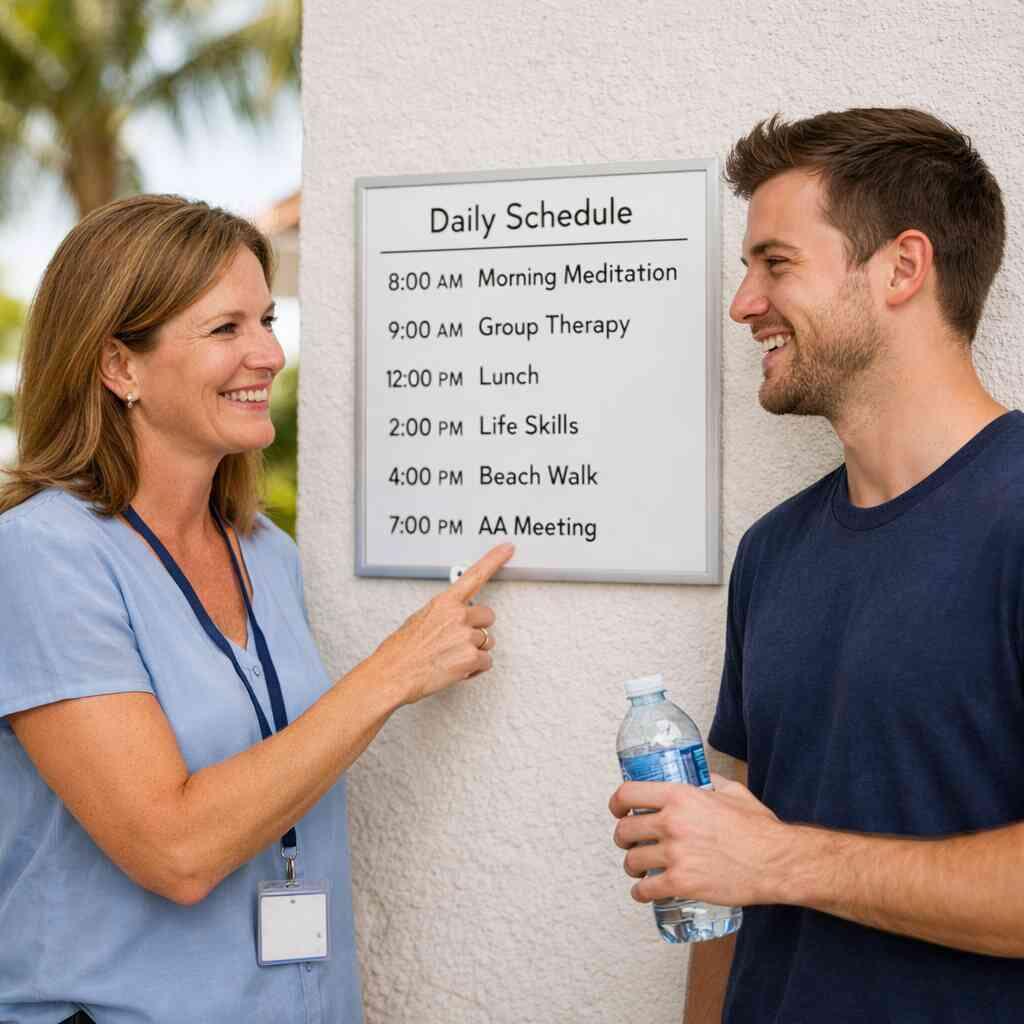
Group work can also be powerful when it is done well. Group therapy activities should not feel forced or fake. They should help people practice honesty, listening, and repair. If you want to see how those methods fit together, review evidence-based therapies at RECO Island in Florida. Good therapy should feel clear, not performative.
Where medication assisted treatment may fit, including Suboxone maintenance or Vivitrol injections when medically appropriate
For some people, medication-assisted treatment is part of stable recovery. That may include Suboxone maintenance or Vivitrol injections when medically appropriate and prescribed by a qualified clinician. These medications are not substitutes for therapy. They are tools that can reduce cravings or lower relapse risk while the person builds new skills. The important part is fit. Not every person needs medication, and not every medication suits every case. But for opioid use disorder, FDA-approved medication can be lifesaving. If you are exploring this path, it helps to understand medication-assisted treatment as one part of a larger plan, not the whole plan. ### Why mental health IOP and outpatient program Delray Beach options can matter after a residential stay or PHP
A strong recovery plan does not end at discharge. That is where mental health IOP and an outpatient program Delray Beach can help. They keep treatment active while the person begins to face real-world stress again. School, work, family, and social pressure come back fast. Support should come with them.
This transition is where many programs lose people. The day structure changes, but the emotional load does not. Good step-down care helps with relapse prevention, coping skills, and accountability. It also gives the person a place to practice what they learned before life gets too loud again.
How family therapy, family support in recovery, and objective goal planning help rebuild trust without forcing quick fixes
Trust does not rebuild because someone says sorry once. It rebuilds through repetition, honesty, and predictable behavior. That is why family therapy and family support in recovery matter. Families need space to speak plainly, ask questions, and learn what helps versus what enables.
A strong program should also use objective goal planning. That means clear, measurable targets instead of vague promises. For example: attend groups, complete assignments, participate in medication review, and plan discharge steps. If your family is ready for that level of involvement, family weekend and family support in Delray Beach recovery can help explain what healthy participation looks like.
What role holistic recovery can play through mindfulness meditation, yoga therapy, art therapy, nutrition and exercise, and life skills training
Holistic recovery is not a replacement for therapy. It is a way to support the whole person. Mindfulness meditation, yoga therapy, and art therapy can help young adults reconnect with their bodies and regulate stress. Nutrition and exercise matter too, because sleep, appetite, and energy often need repair.
Life skills training is just as important. A lot of young adults in treatment need help with routines, money, time, and communication. That may sound basic, but it is often the bridge between treatment and real life. When a person can manage a morning, a meal, and a schedule, confidence begins to return.
How families compare programs without getting lost in the sales talk
Families often get pulled into polished websites and big promises. That can make a hard decision even harder. The better question is not, “Who sounds impressive?” It is, “Who can care for my loved one responsibly?” That is a very different test.
What to look for in a private rehab versus a large, impersonal center when choosing a young adult treatment program
A private rehab can offer more personal attention than a large, high-volume center. That does not automatically make it better. But it can mean more individualized scheduling, clearer communication, and a stronger sense that someone knows the person’s story. Young adults often respond better when they feel seen, not processed.
When comparing a young adult treatment program, ask how much real contact the person will have with therapists, case managers, and medical staff. Ask how they handle privacy, phones, downtime, and family contact. A center that can answer clearly is usually more trustworthy than one that hides behind slogans. RECO Island’s structured young adult treatment program in Delray Beach is designed to make those expectations visible.
Why licensed clinicians, Joint Commission accreditation, and Florida licensing matter more than buzzwords
Buzzwords do not protect anyone. Licensed clinicians do. Joint Commission accreditation signals that a program meets recognized standards. Florida licensing matters too, because it helps confirm the facility operates under state oversight. Those details are not glamorous, but they matter more than glossy branding.
If a program claims expertise, it should be willing to show proof. That includes who provides care, how crises are handled, and what types of supervision are in place. Do not let a fancy phrase replace a basic credential. If you want a deeper look, review Joint Commission accreditation and licensed care before you decide.
How to evaluate insurance verification, Aetna, Cigna, Blue Cross Blue Shield, out-of-network benefits, and self-pay options before admission
Money stress can derail a good decision fast. That is why insurance verification should happen early. Ask whether they work with Aetna, Cigna, Blue Cross Blue Shield, and what out-of-network benefits may apply. Also ask about self-pay options if coverage is limited or delayed.
Do not assume the first answer is the final answer. Benefits vary, and admissions teams should explain them plainly. A clear process helps you avoid surprise bills later. If cost is part of the decision, insurance verification for Florida rehab can help you understand the basics before you admit.
What a strong intake process should clarify about medical detox, aftercare planning, sober living resources, case management, and vocational support
A strong intake process should not feel rushed. It should clarify medical history, substance use patterns, current risks, and mental health needs. It should also explain whether medical detox is needed, what aftercare planning looks like, and whether sober living resources are part of the discharge path. That kind of clarity prevents gaps later.
You should also ask about case management and vocational support. Young adults often need help with school plans, job searches, or simple routines that keep life moving. Recovery lasts longer when practical life is addressed alongside emotions. That is part of what makes a program durable rather than decorative.
Why local fit matters in Palm Beach County treatment centers and how RECO Island’s Delray Beach recovery community may align with real life after treatment
Local fit matters more than people think. Palm Beach County treatment centers serve a community where recovery has to work in real life, not just inside a building. Delray Beach has a visible recovery community, access to sober support, and enough everyday life to practice new habits. That blend can help young adults transition without feeling dropped.
RECO Island is part of that local rhythm. Its Delray Beach recovery community setting can support continuity, especially after discharge. If you are comparing Florida rehab that takes insurance, proximity, support, and follow-up matter just as much as the program brochure. For many families, that local connection is the difference between hoping and planning.
If you are weighing options now, take one practical step today: compare two programs, confirm benefits, and ask which level of care matches the current risk. You do not have to solve everything tonight. Start with one honest conversation, and let the next decision come from facts, not fear.
Frequently Asked Questions
Question: What makes What Makes RECO Island a Fit for Young Adult Rehab different from other Delray Beach rehab options for someone looking for young adult rehab?
Answer: RECO Island is designed to feel structured without feeling cold, which matters a lot for young adults who are overwhelmed by school pressure, work stress, family expectations, or withdrawal. In a Delray Beach rehab setting, the calmer coastal environment can reduce some of the noise that often makes recovery harder to start. RECO Island’s approach emphasizes dignity, privacy, and clear expectations so people can focus on healing instead of feeling boxed in. That kind of supportive structure can be especially helpful for young adults who need room to rebuild confidence while still receiving strong clinical care.
Question: How does RECO Island help people decide whether they need South Florida detox, a residential treatment facility, partial hospitalization program, or intensive outpatient care?
Answer: The right level of care depends on the person’s current safety, stability, and substance use patterns. If withdrawal risks are high, South Florida detox may be the right first step. If someone needs more daily support, a residential treatment facility can provide round-the-clock structure. A partial hospitalization program can be a strong next step for people who still need intensive support, while intensive outpatient may fit those who are stable enough for more independence. RECO Island’s intake process is meant to help clarify those choices so families are not left guessing. That matters because the safest plan is the one that matches the actual clinical need, not just what feels convenient.
Question: Does RECO Island support dual diagnosis treatment for depression and addiction, anxiety treatment, PTSD treatment, bipolar disorder therapy, and other co-occurring disorders?
Answer: Yes, dual diagnosis treatment is important when mental health and substance use are happening together, because treating one without the other can leave the root problem in place. Many young adults arrive with depression and addiction, anxiety treatment needs, PTSD treatment concerns, bipolar disorder therapy needs, or unresolved trauma that has shaped their coping. RECO Island’s approach is built around evidence-based treatment and trauma-informed care, which can help people address both substance use and co-occurring disorders at the same time. That may include cognitive behavioral therapy, dialectical behavior therapy, EMDR trauma therapy, and group therapy activities, depending on the individual’s needs and clinical plan. This kind of integrated care gives people a better chance to build coping skills that actually hold up in real life.
Question: What treatment supports are available at RECO Island for opioid rehab Delray, fentanyl treatment, heroin recovery, prescription pill addiction, cocaine detox Florida, and alcoholism treatment center needs?
Answer: RECO Island can be a fit for people who need stabilization and support for a wide range of substance use concerns, including opioid rehab Delray needs, fentanyl treatment, heroin recovery, prescription pill addiction, cocaine detox Florida, and alcohol-related care. In some cases, medication-assisted treatment such as Suboxone maintenance or Vivitrol injections may be considered when medically appropriate and prescribed by a qualified clinician. The goal is not just to stop use, but to create a safer path into long-term recovery with relapse prevention, coping skills, and aftercare planning. For some people, that may also involve family therapy, case management, sober living resources, or step-down support through outpatient program Delray Beach or mental health IOP services. Because every situation is different, the best next step is a careful clinical assessment rather than a one-size-fits-all answer.
Question: How does RECO Island support long-term recovery after discharge with aftercare planning, alumni program options, and family support in recovery?
Answer: Long-term recovery usually depends on what happens after the initial stay, so aftercare planning is a major part of a strong treatment experience. RECO Island’s approach includes thinking ahead about sober living resources, outpatient program Delray Beach options, case management, and practical supports like life skills training and vocational support. Family therapy and family weekend opportunities can also help rebuild trust and teach loved ones how to support recovery without unintentionally enabling old patterns. For some people, alumni program connection and peer support can help keep momentum going once treatment becomes less structured. Recovery is not just about getting through one phase; it is about building a life that can hold up under stress, which is why planning for the next step matters so much.
Question: What should families know about insurance verification, Florida rehab that takes insurance, and how to choose a rehab like RECO Island near the Delray Beach recovery community?
Answer: Families should look for clear answers about insurance verification, self-pay options, out-of-network benefits, and whether the program works with carriers like Aetna, Cigna, or Blue Cross Blue Shield. A trustworthy rehab should explain these details plainly and help families understand what is covered before admission. When learning how to choose a rehab, it also helps to ask about licensed clinicians, Joint Commission accreditation, DCF licensing, and how the intake process works. RECO Island’s location in the Delray Beach recovery community can be an advantage for people who want access to local support and a setting that feels grounded in real life. If you are comparing Florida rehabs that take insurance, the best choice is the one that offers clinical clarity, compassionate care, and a treatment plan that matches the person’s current needs.