How to Prepare for Benzodiazepine Withdrawal Safely
If you are reading this at 11 p.m., you may be scared to stop, scared to keep going, and tired of guessing. That fear is real. Benzodiazepine withdrawal can feel deceptively ordinary at first, then suddenly intense. The safest path starts with planning, not pressure. When stopping benzodiazepines feels riskier than staying on them Why […]

If you are reading this at 11 p.m., you may be scared to stop, scared to keep going, and tired of guessing. That fear is real. Benzodiazepine withdrawal can feel deceptively ordinary at first, then suddenly intense. The safest path starts with planning, not pressure.
When stopping benzodiazepines feels riskier than staying on them
Why sudden benzodiazepine withdrawal can trigger rebound anxiety, insomnia, and seizure risk
Benzodiazepine withdrawal can bring back symptoms more intensely than before. People often notice rebound anxiety, shaky sleep, muscle tension, and a racing mind within a short window. In more serious cases, seizure risk during withdrawal rises, especially after higher doses or longer use. That is why benzodiazepine withdrawal deserves medical respect, not guesswork. For a clear overview, many families start with understanding benzodiazepine withdrawal at RECO Island.
A common mistake is assuming willpower can override biology. It cannot. Your nervous system adapts to the medicine, then protests when the medicine leaves too quickly. That protest can look like insomnia, panic, sweating, or feeling unreal. It can also show up as anger, confusion, or a sudden fear that something is terribly wrong.
The warning signs that mean tapering needs medical supervision, not willpower
Here is the part most people miss. A taper is not automatically safe just because it is gradual. If you have past seizures, heavy alcohol use, a history of panic attacks, or mixed prescriptions, you need medically supervised detox. You also need support if you are taking other sedatives, opioids, or sleep medicines.
Watch for red flags such as:
- Confusion or disorientation
- Hallucinations
- Severe tremors
- Chest pain
- Vomiting that prevents fluids
- Thoughts of self-harm
- A fast, irregular heartbeat
These signs call for immediate medical attention. They are not weakness. They are warning lights. In South Florida detox settings, clinicians watch these symptoms closely because the body can change quickly.
How prescription pill addiction can hide behind a normal prescription history
Prescription pill addiction does not always look like chaos. Sometimes it begins with a legitimate prescription after surgery, a stressful life event, or a real anxiety disorder. Over time, tolerance grows, and the medication stops working the same way. Then the person starts taking more, running out early, or feeling unable to face the day without it.
We hear this from clients almost every week. They often say, “I followed directions for years.” That history still matters, and so does what happens next. The issue is not moral failure. It is dependence, which is a medical condition that needs careful planning and evidence-based treatment.
What families in Delray Beach should watch for before symptoms escalate
Families often notice the change before the person does. In Delray Beach, where work, school, and family schedules move quickly, the signs can hide in plain sight. You may see missed calls, new irritability, forgotten plans, or a growing fear of leaving the house. You may also notice more pills disappearing than expected.
If someone in your home starts doctor-shopping, hiding medication bottles, or sleeping at odd hours, take that seriously. The person may also look “fine” during the day and unravel at night. If you live near Atlantic Avenue or commute across Palm Beach County, stress can intensify those symptoms. Early action keeps options open and helps prevent a crisis.
The planning work that makes tapering off benzodiazepines safer
Why a psychiatric evaluation should come before any benzo taper schedule
A safe taper starts with a psychiatric evaluation. That is because benzodiazepines are often tied to anxiety, trauma, depression, or bipolar symptoms that still need treatment. If you remove the medication without understanding why it was prescribed, symptoms can surge. A thoughtful assessment helps separate withdrawal from the original condition.
At RECO, a psychiatric evaluation for co-occurring disorders helps map that difference. That matters when you are balancing sleep, mood, panic, and day-to-day functioning. A taper plan should never be copied from a friend or a forum. It should reflect your history, your dose, and your current health.
How licensed clinicians build withdrawal symptom management around your dose history
Licensed clinicians build withdrawal plans around the full picture. They look at which benzodiazepine you take, how long you have taken it, and whether you use anything else. They also consider your work schedule, driving needs, and family responsibilities. That is where withdrawal symptom management becomes practical, not abstract.
A good plan may involve smaller dose reductions, closer check-ins, and changes in timing. Sometimes a doctor adjusts the taper pace after the first few steps. That is normal. A benzo taper schedule is a living plan, not a rigid rule.
When co-occurring disorders change the plan for dual diagnosis treatment
Many people do not have only one diagnosis. They may have anxiety plus alcohol use, depression plus pill misuse, or trauma plus insomnia. That is the co-occurring disorders model, and it changes care. In those cases, dual diagnosis treatment matters because both conditions influence each other.
A person can look “noncompliant” when the deeper issue is untreated PTSD or severe depression. The National Institute on Drug Abuse has long emphasized integrated care for this reason. If anxiety fuels pill use, then anxiety treatment must be part of the plan. If trauma drives the fear, then trauma therapy in South Florida may be needed too.
What to ask about medication management assessments and evidence-based treatment
Before you start, ask direct questions. Keep them simple. You need to know how the team monitors symptoms, how often they adjust the plan, and what happens if sleep collapses. You also need to know whether the program offers medication management assessments alongside therapy.
Useful questions include:
- How do you monitor withdrawal symptoms?
- Who changes the medication plan?
- Do you treat anxiety, depression, or PTSD at the same time?
- What therapies support the taper?
- How do you coordinate care if another substance is involved?
If the answers sound vague, keep looking. Safe care should feel specific. RECO’s evidence-based treatment for prescription pill addiction centers on that kind of clarity.
Why insurance verification and self-pay options matter before you start
Money stress can derail treatment fast. That is why insurance verification belongs at the start, not after the crisis grows. If you have Aetna, Cigna, Blue Cross Blue Shield, or out-of-network benefits, ask what is covered. If you prefer privacy or faster access, ask about self-pay options too.
Insurance verification for Florida addiction treatment can reduce surprises. It also helps you compare a private rehab plan with other Florida rehabs that take insurance. The goal is not to make treatment expensive. The goal is to make it workable so you can focus on getting stable.
What a medically supervised detox really changes day by day
How South Florida detox settings reduce seizure risk during withdrawal
A medically supervised detox changes the risk profile immediately. In a South Florida detox setting, staff can observe symptoms, check vitals, and respond before problems escalate. That matters because seizure risk during withdrawal is not something to “push through.” It requires trained eyes and a real protocol.
For a deeper sense of what this looks like, see what detox is like at RECO Island in Delray Beach. The setting matters too. A calm, coastal environment in Delray Beach can help lower external stress while the body stabilizes.
What happens during the first hours when panic attack support matters most
The first hours can feel strange. Panic may spike. Your thoughts may race. Your hands may tremble. Some people feel as if they cannot sit still for a full minute. That is why panic attack support matters early, not later.
Clinicians usually focus on safety, hydration, sleep, and symptom tracking. They may also check for other substances that complicate withdrawal. One client came in after “just one rough week” without medication, then admitted he had not slept in two nights. His fear eased once staff explained each symptom plainly and monitored him through the night. Calm, direct care can interrupt panic before it becomes a spiral.
How to prepare for insomnia during detox without reaching for old coping habits
Insomnia during detox is common, and it can be brutal. People often want to fix it fast with old habits, especially more pills or alcohol. That shortcut usually makes things worse. Instead, prepare a short sleep plan before detox begins.
Try this:
- Keep the room cool and dark
- Avoid caffeine late in the day
- Write down worries before bed
- Use slow breathing for five minutes
- Ask staff before taking anything new
Sleep may still be uneven for a while. That does not mean treatment is failing. It means the nervous system is relearning how to rest.
Where Vivitrol injections or Suboxone maintenance may fit for other substance issues
Sometimes benzodiazepine withdrawal happens alongside opioid or alcohol recovery. In those cases, medication-assisted treatment may come into the conversation for the other substance. Vivitrol injections or Suboxone maintenance are not benzodiazepine treatments, but they may help with opioid or alcohol recovery when appropriate. A clinician should decide that based on your full history. This is why one-size-fits-all plans fall apart. If you are also dealing with fentanyl treatment, heroin recovery, cocaine detox Florida needs, or opioid rehab Delray concerns, your team should coordinate carefully. Treating one substance while ignoring the others leaves gaps. ### How a residential treatment facility can support the hardest stretch of stabilization 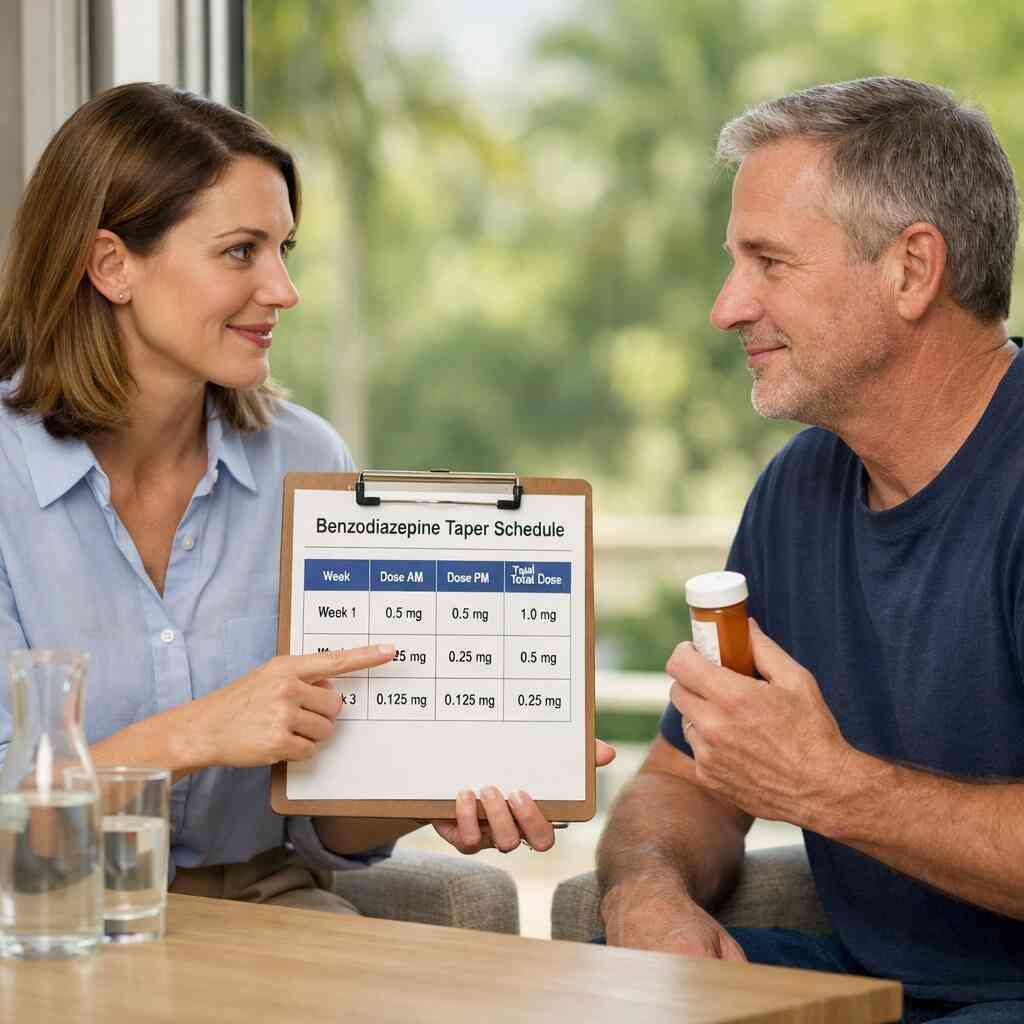
A residential treatment facility gives structure when your system feels too raw for home. You wake up, eat, attend therapy, rest, and repeat. That routine matters during the hardest stretch of stabilization. It lowers decision fatigue and keeps you away from triggers.
Some people need that level of support before stepping down to a partial hospitalization program or intensive outpatient care. That is not overreacting. It is matching care to need. On the projects we’ve finished this year, the people who stabilized best were the ones who accepted structure early.
Beyond detox the real work is rebuilding steadier thinking and calmer routines
Why cognitive behavioral therapy and dialectical behavior therapy help with anxiety rebound symptoms
Detox clears the body, but the mind still needs tools. Cognitive behavioral therapy helps you spot anxious thoughts and test them against reality. Dialectical behavior therapy teaches distress tolerance, which matters when the brain still wants a quick fix. Together, they help with anxiety rebound symptoms that can show up after the medication leaves.
If you want a deeper comparison, the difference between CBT and DBT for recovery explains how each method works. CBT is practical. DBT is skill-heavy. Both can support coping skills when your emotions feel too loud.
How EMDR trauma therapy may be used when PTSD treatment is part of the picture
Sometimes the benzodiazepine was never the real problem. It was a shield. If trauma, nightmares, or hypervigilance sit underneath the pill use, EMDR trauma therapy may help. EMDR stands for eye movement desensitization and reprocessing. It helps the brain process painful memories in a less overwhelming way.
That does not mean every person needs EMDR. It means trauma should be screened carefully. If you need PTSD treatment, trauma therapy in South Florida may be a strong fit. Many people feel relief just from naming the trauma pattern out loud.
What group therapy activities and family therapy can change about shame and isolation
Shame grows in silence. Group therapy activities break that silence with shared experience. You hear your own thoughts in another person’s story. That can feel unsettling at first, then deeply relieving. It also helps people test reality instead of hiding inside fear.
Family therapy can shift the whole home system. It can reduce blame, improve boundaries, and create clearer support after discharge. If family conflict, secrecy, or rescues have become part of the pattern, family therapy and aftercare planning for long-term recovery matter. Recovery often improves when the household language changes.
How mindfulness meditation, holistic recovery, and heart regulation practices support coping skills
You do not need a perfect mind to learn calm. Mindfulness meditation trains attention so thoughts do not run the whole day. Holistic recovery can include breathing, movement, nutrition, and sleep routines. Heart regulation practices, like slow-exhale breathing, can lower physical alarm.
These skills sound simple because they are simple. Simple does not mean easy. Repetition builds the result. RECO’s mindfulness meditation and holistic recovery skills can support this daily work without making it mystical or vague.
Why aftercare planning should include sober living resources, 12-step alternatives, and SMART Recovery
Detox ends. Recovery continues. That is why aftercare planning matters so much. Good plans include sober living resources, therapy, relapse prevention, and support groups that fit your values.
Some people want 12-step alternatives. Others want traditional meetings. Some prefer SMART Recovery because it focuses on self-management and practical tools. SMART Recovery and 12-step alternatives for relapse prevention can help you choose what feels sustainable. The best plan is the one you will actually use on a hard day.
What to do next if you are trying to stay safe and keep moving forward
How Delray Beach rehab and outpatient program Delray Beach options differ when stability is fragile
If your symptoms still feel shaky, a Delray Beach rehab setting may offer more structure than an outpatient program Delray Beach option. The difference is simple. One gives more supervision. The other gives more flexibility. Your stability should decide, not pride.
This matters in South Florida, where traffic, jobs, and family obligations can make daily treatment harder. If you need more containment, start there. If you can safely live at home and attend sessions, outpatient care may fit better. Delray Beach rehab and outpatient care options can help you compare the levels.
When partial hospitalization program and intensive outpatient care make more sense than inpatient rehab Palm Beach County
A partial hospitalization program gives full-day treatment without an overnight stay. Intensive outpatient gives fewer hours and more independence. Both can work well after detox, especially when you are not ready for full inpatient rehab Palm Beach County placement. The right level depends on sleep, cravings, home stress, and relapse risk.
Level of careBest forMain advantageResidential treatmentHigh instabilityMost structurePHPEarly stabilizationStrong support with daytime return homeIOPModerate stabilityFlexibility for work and familyFor a fuller breakdown, partial hospitalization program and intensive outpatient in South Florida explains the tradeoffs. If you are also managing depression and addiction, a mental health IOP may be especially useful.
What to ask about insurance verification, private rehab, and Florida rehabs that take insurance
Before you choose a place, ask three things. What does insurance cover? What is the daily structure? What happens after detox? Those questions separate vague marketing from real care.
A trustworthy program should answer clearly. It should also help with insurance verification, explain out-of-network benefits, and discuss self-pay options without pressure. If you are comparing Florida rehabs that take insurance, ask how quickly they can verify coverage and admit you. The right answer should feel calm, not rushed.
How the RECO Intensive location near 140 NE 4th Avenue Delray Beach FL 33483 fits South Florida recovery
The RECO Intensive location at 140 NE 4th Avenue Delray Beach FL 33483 sits near the center of a strong local recovery community. That matters. Delray Beach has a real rhythm of support, with nearby services, meetings, and a walkable coastal feel that can lower stress. The setting is close to Atlantic Avenue, yet still quiet enough for healing.
If you are considering care here, the RECO Intensive location can be a practical base for South Florida recovery. The goal is not just admission. It is fit. A good fit supports long-term recovery instead of just the next few days.
How long-term recovery depends on relapse prevention, case management, life skills training, and follow-through
Recovery after benzodiazepine withdrawal depends on what happens next. Relapse prevention teaches you how to respond to cravings, stress, and sleep problems before they explode. Case management helps with appointments, work issues, and referrals. Life skills training can rebuild routines that pill use quietly erased.
Strong programs also connect people to vocational support, nutritional counseling, and sober living resources when needed. RECO’s RECO Intensive alumni and alumni program can extend that continuity. The people who do best usually keep showing up after the acute crisis ends. That follow-through is not glamorous. It works.
Frequently Asked Questions
Question: How does How to Prepare for Benzodiazepine Withdrawal Safely help me understand whether I need medically supervised detox or an outpatient program Delray Beach?
Answer: The blog is meant to help you recognize when benzodiazepine withdrawal may be too risky to manage alone and when a higher level of care makes more sense. If you are dealing with seizure risk during withdrawal, severe insomnia during detox, panic attack support needs, or other symptoms that feel hard to control, medically supervised detox is often the safer first step. If you are more stable and do not need round-the-clock monitoring, an outpatient program Delray Beach or intensive outpatient option may be appropriate after a clinical assessment. At RECO Island in Delray Beach, licensed clinicians can help you evaluate your symptoms, your medication history, and any co-occurring disorders so the plan matches your needs instead of forcing you into a one-size-fits-all approach. That kind of safe detox planning is especially important if you are also navigating prescription pill addiction, anxiety treatment, or depression and addiction at the same time.
Question: What should I expect during tapering off benzodiazepines at a Delray Beach rehab or South Florida detox setting?
Answer: Tapering off benzodiazepines should be done with a thoughtful benzo taper schedule and close withdrawal symptom management, especially if you have been on the medication for a long time or at a higher dose. In a South Florida detox or Delray Beach rehab setting, the process usually starts with an intake process and a psychiatric evaluation so the team can understand your history, current symptoms, and any other substances or medications involved. From there, licensed clinicians may adjust the taper gradually and monitor for anxiety rebound symptoms, insomnia during detox, tremors, confusion, or other warning signs. If you also need dual diagnosis treatment, the plan can address anxiety treatment, PTSD treatment, bipolar disorder therapy, or depression and addiction alongside the taper. RECO Island focuses on evidence-based treatment and compassionate care, which can make the process feel less frightening and more structured.
Question: Does RECO Island offer support for dual diagnosis treatment, trauma therapy South Florida, and EMDR trauma therapy during benzodiazepine withdrawal recovery?
Answer: Many people who struggle with benzodiazepine withdrawal also have co-occurring disorders such as anxiety, PTSD, depression, or bipolar disorder, which is why dual diagnosis treatment matters. RECO Island’s approach can include psychiatric evaluation, medication management, and therapy options that support long-term recovery rather than treating withdrawal in isolation. Depending on your needs, care may also include cognitive behavioral therapy, dialectical behavior therapy, family therapy, mindfulness meditation, and holistic recovery supports that strengthen coping skills. If trauma is part of the picture, trauma therapy South Florida services and EMDR trauma therapy may be important to discuss during intake. The goal is to help you stabilize physically while also addressing the reasons the medication became hard to stop in the first place. That combination can support stronger aftercare planning and relapse prevention once detox is complete.
Question: How do insurance verification, self-pay options, and Florida rehabs that take insurance work if I want treatment at RECO Island?
Answer: Before admission, RECO Island can help you with insurance verification so you understand what your plan may cover and what out-of-network benefits could apply. If you have Aetna, Cigna, or Blue Cross Blue Shield, it is worth asking for a benefits check early so there are no surprises. If insurance is limited or you prefer more privacy, self-pay options may also be available. This matters because choosing between a private rehab, a residential treatment facility, partial hospitalization program, or intensive outpatient care often depends on both clinical need and financial fit. Asking about Florida rehabs that take insurance, the intake process, and any potential follow-up care can make the next step feel clearer. The team can help you compare levels of care without pressure so you can focus on safety and long-term recovery.
Question: What happens after detox if I need aftercare planning, sober living resources, or support groups like SMART Recovery and 12-step alternatives?
Answer: After detox, the next phase is often just as important as the first. A solid aftercare planning process may include relapse prevention, case management, life skills training, and referrals to sober living resources if you need more structure at home. Some people benefit from support groups such as SMART Recovery, while others prefer 12-step alternatives or a mix of both. Depending on your needs, ongoing care may also include a mental health IOP, group therapy activities, family therapy, vocational support, or nutritional counseling. RECO Island’s RECO Intensive alumni and alumni program can help provide continuity after the most acute phase has passed. The goal is to keep building coping skills and support long-term recovery in a way that fits your life, not just your discharge date.