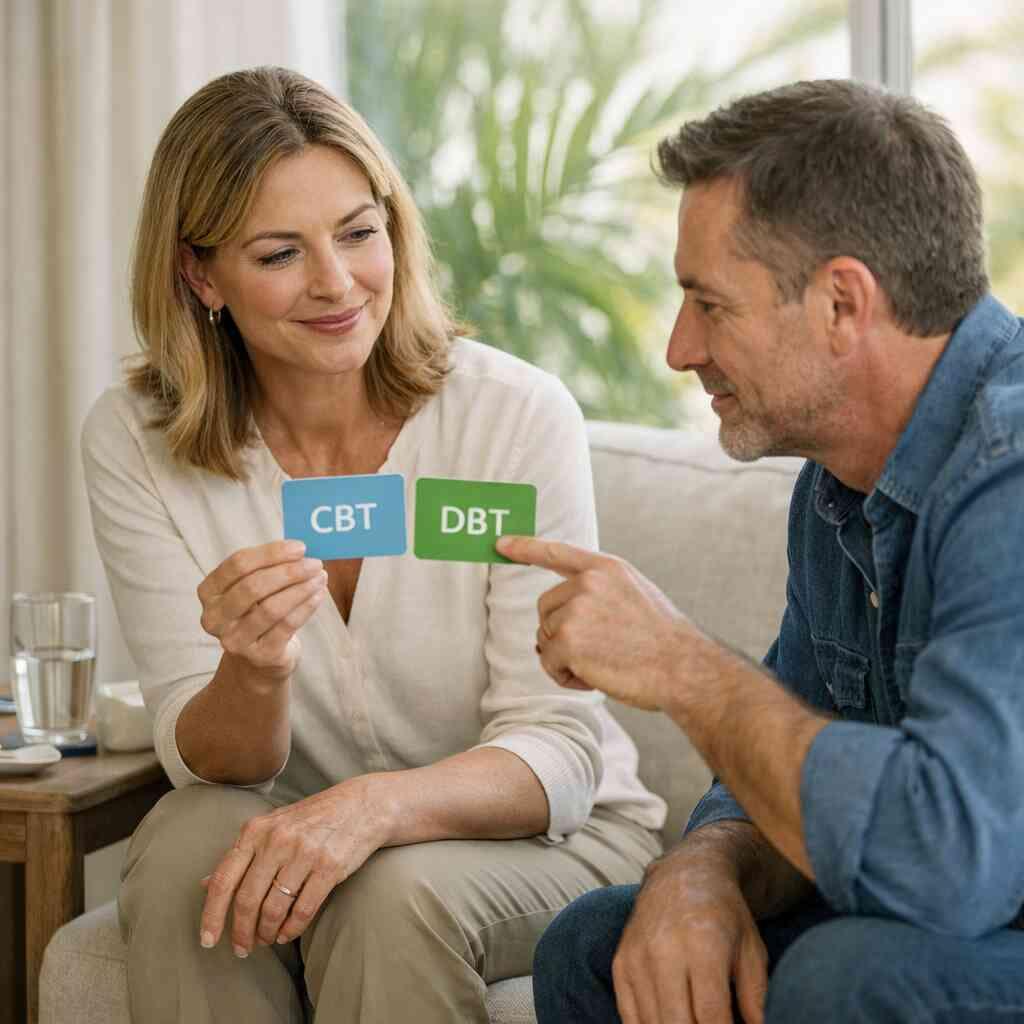
The Difference Between CBT and DBT for Recovery
If you are reading this because treatment feels confusing, take a breath. That feeling is common. CBT and DBT sound alike, and people often hear both in the same conversation at a Delray Beach rehab or during an intake call. The hard part is that the right therapy depends on what is driving the struggle […]

If you are reading this because treatment feels confusing, take a breath. That feeling is common. CBT and DBT sound alike, and people often hear both in the same conversation at a Delray Beach rehab or during an intake call. The hard part is that the right therapy depends on what is driving the struggle underneath the substance use. Sometimes it is a loop of thoughts. Sometimes it is emotional overload. Sometimes it is both.
Why CBT and DBT feel similar until recovery gets real
The moment a coping skill is not enough and emotions start running the day
A coping skill can help in the moment. Then the same trigger hits again. That is where many people realize recovery needs more than willpower. A person may know how to breathe, journal, or pause, yet still spiral when shame, panic, or craving hits hard.
In early recovery, the body often feels louder than the mind. Sleep is off. Hunger is strange. Stress sits in the chest. That is why people looking for the difference between CBT and DBT in recovery often find that the real issue is not just behavior. It is the pattern that keeps behavior alive.
One client in South Florida described it this way after a rough week on Atlantic Avenue: he could name his trigger, but he still used by sunset. The issue was not a lack of insight. It was the speed of the emotional wave. CBT helped him examine the thought chain. DBT helped him survive the wave without acting on it.
Why people in Delray Beach rehab programs hear both terms so often
You hear both terms because both are evidence-based treatment. They also fit many levels of care, from inpatient rehab Palm Beach County programs to an outpatient program in Delray Beach that residents can attend while working. In a coastal recovery setting, that matters. People need treatment that matches real life, not a textbook schedule.
CBT and DBT also show up often in dual diagnosis treatment. That matters in Florida addiction treatment because substance use rarely travels alone. Depression and addiction, anxiety treatment, bipolar disorder therapy, PTSD treatment, and alcohol use can all overlap. The therapy has to match the whole picture, not just the drug or drink.
What we see most often is simple. Families search for a drug rehab near me or an alcoholism treatment center, then discover that therapy style matters as much as location. Delray Beach has a large recovery community, so the language can feel familiar fast. Still, familiar words are not the same as the right fit.
How cognitive behavioral therapy and dialectical behavior therapy fit dual diagnosis treatment
CBT and DBT both help people notice what happens before a relapse. That is the shared ground. CBT focuses more on thought patterns, beliefs, and behaviors. DBT adds stronger tools for distress tolerance skills, emotional regulation in recovery, and interpersonal effectiveness skills.
For co-occurring disorders, the distinction matters. A person with trauma, bipolar symptoms, or intense emotional swings may need DBT’s structure more often. A person whose drinking or pill use is tied to negative self-talk, avoidance, or distorted thinking may respond well to CBT. Many programs blend both. That approach often fits co-occurring disorders treatment in Florida better than using one method alone.
Here is the part most families miss. The therapy choice is not about which method is “stronger.” It is about which one helps the person stay engaged long enough for change to stick. That is especially true in South Florida detox settings, where the body may stabilize before the mind does.
What a worried family member should notice before choosing one over the other
If you are watching someone you love struggle, look for patterns, not labels. Does the person get stuck in repetitive thinking? Does shame lead straight to drinking or drug use? Does anger, panic, or emptiness seem to take over in minutes? Those clues matter more than the name of the therapy.
A few signs often point toward CBT:
- The person ruminates and catastrophizes.
- Small problems quickly become “I failed.”
- Relapse follows a chain of thoughts.
- They can practice skills when calm.
A few signs often point toward DBT:
- Feelings spike fast and hard.
- Conflict turns into crisis.
- Impulses show up before reflection.
- Distress tolerance is the main missing skill.
That does not replace a clinical assessment. It simply helps you ask better questions during the admissions process. A good team will explain the fit clearly, without pressure.
The thought work behind CBT for recovery and where it helps most
How thought restructuring changes the loop between triggers and relapse
CBT starts with a practical idea. Thoughts affect feelings. Feelings affect actions. If you change the thought, you can change the chain. That process is called thought restructuring, and it is central to CBT for recovery.
In addiction counseling, this often means slowing down the moment before use. A person learns to notice, “I already blew the day, so I may as well keep going.” That sentence looks harmless. It can be the bridge to relapse. CBT teaches people to challenge that thought and replace it with something more accurate and useful.
What we have seen in 2026 specifically is that this works best when the person practices it in real time. Not just in session. Not just on paper. The skill has to be repeated during cravings, after conflict, and when the brain starts bargaining. That is where relapse prevention therapy becomes more than a phrase.
Why CBT is often used for depression and addiction, anxiety treatment, and alcohol use
CBT is widely used for depression and addiction because it targets hopeless thinking. It also fits anxiety treatment because worry often runs on prediction and avoidance. The person expects danger, then avoids the discomfort, then feels temporary relief. That relief teaches the brain to repeat the pattern. CBT interrupts that loop.
It also works well for alcohol use because many people drink to mute self-criticism or social fear. The same is true for prescription pill addiction, cocaine detox Florida needs, or opioid rehab Delray cases where the urge is tied to emotional escape. CBT gives the person a map of the habit. Once the map is visible, it becomes easier to change direction.
For some people, the missing piece is a medication discussion as well. FDA-approved supports such as Suboxone maintenance and Vivitrol injections or other medication-assisted treatment may pair with therapy. A clinician should guide that decision. The therapy still matters because medication can reduce risk, but skills help sustain recovery.
The role of coping skills for addiction recovery in outpatient mental health treatment
Coping skills for addiction recovery are not flashy. They are often simple, which is why people underestimate them. A skill may look like delaying a response, taking a walk, calling support, or using a thought record. In outpatient mental health treatment, those small acts can change the whole day.
A mental health IOP often uses structured skill-building. That can include coping skills training, recovery skills training, and evidence-based treatment that teaches people how to respond instead of react. Many people also benefit from 12-step alternatives or SMART Recovery if the group format fits them better. The best plan is the one you can actually use after you leave session.
At RECO Island, that kind of skill work can be part of mental health IOP and coping skills training. The goal is not to flood you with tools. The goal is to help you use the right tool at the right moment. That difference matters when life is busy and stress is high.
When CBT pairs well with group therapy activities and relapse prevention therapy
CBT often works best in a group setting because people hear their own thoughts in someone else’s story. That is powerful. It reduces shame and sharpens insight. Group therapy activities also help normalize the work of recovery. You practice, reflect, and adjust together.
CBT also pairs well with family therapy. Families often get stuck in the same old arguments. One person withdraws. Another pushes. CBT helps everyone spot the cycle and interrupt it earlier. That can make a real difference in aftercare planning, sober living resources, and long-term recovery support.
A practical note: the healthiest programs connect CBT to daily life. That might mean planning for triggers after work, during holidays, or near the beach when old routines come back. It may also mean using group therapy and process groups for relapse prevention. Skills matter most when they are tested.
Why DBT was built for chaos not just bad habits
How distress tolerance skills help when cravings, panic, or shame spike fast
DBT was built for high emotion. That is its strength. Distress tolerance skills help you get through a crisis without making it worse. They do not erase pain. They help you survive the peak safely.
This matters when cravings hit fast. It matters when panic makes thinking blurry. It matters when shame tells you to hide or use. DBT gives you concrete tools for those moments, including paced breathing, grounding, and self-soothing techniques. Those skills can keep a hard moment from becoming a relapse.
Here is an example we hear often in South Florida recovery work. Someone leaves a family conflict, drives across town, and suddenly feels flooded with anger and panic. CBT may help later, when the person reviews the thought pattern. DBT helps in the car, at the red light, when the body is in alarm.
Why emotional regulation in recovery matters for trauma therapy South Florida clients
Emotional regulation in recovery is not about becoming numb. It is about staying inside your window of tolerance. That means you can feel, think, and choose without being swept away. For trauma therapy South Florida clients, that skill is often the difference between progress and repeated crisis.
Trauma changes the nervous system. A memory, a sound, or even a smell can trigger the body as if danger is happening now. That is why DBT often works well alongside trauma-informed therapy and EMDR trauma therapy. Many people need stabilization before deeper trauma processing. DBT can provide that structure.
If trauma has been driving alcohol, pills, or other drugs, the overlap is real. We often see trauma therapy South Florida clients who also struggle with depression and addiction. The right plan does not rush. It builds enough safety for the person to stay present.
Mindfulness for recovery and interpersonal effectiveness skills in real life
Mindfulness for recovery sounds abstract until you use it in daily life. It can be as small as noticing your jaw is tight before you speak. It can mean watching a craving rise and fall without obeying it. DBT teaches mindfulness as a skill, not a mood. Interpersonal effectiveness skills are just as practical. They help you ask for what you need without exploding or disappearing. That matters with partners, parents, bosses, and children. It also matters in recovery groups, where honesty and boundaries need to work together. “My experience at Reco Island Detox Center was outstanding. The clinical program was comprehensive and tailored to individual needs, ensuring a holistic approach to recovery. Every aspect of the treatment was carefully designed to support healing and growth. What truly stood out, however, was the compassionate staff. They were not only professional and knowledgeable but also genuinely caring and supportive, making the entire journey feel safe and comfortable. Reco Island Detox Center truly provides a nurturing and effective environment for recovery. ❤️”– Jessica H., a 5 star review from RECO Island on Google Business Reviews
A client once told us the hardest part was not stopping substances. It was learning to say, “I need space,” without starting a fight. That is DBT in real life. It is quiet work, but it changes the shape of a day.
Where DBT fits for co occurring disorders, PTSD treatment, and bipolar disorder therapy
DBT fits especially well when emotions swing hard and fast. That includes co occurring disorders, PTSD treatment, and bipolar disorder therapy. It also fits many people with self-harm history, intense relationship conflict, or repeated treatment dropout. The structure helps people stay in the room long enough to heal.
For dual diagnosis treatment, DBT can work alongside psychiatric care, case management, and addiction counseling. If mood symptoms are strong, a clinician may also coordinate with psychiatry. RECO Psychiatry services for mental health care may be part of that wider plan when medication and therapy need to work together.
DBT is not only for crisis. It also supports maintenance. People who use it learn to identify triggers, tolerate discomfort, and respond with more choice. Those are long-game skills, and long-game skills matter in heroin recovery, fentanyl treatment, and every other high-risk pattern.
Picking the right lane in Delray Beach from residential care to IOP
When a residential treatment facility or partial hospitalization program makes more sense than intensive outpatient
The right therapy only works if the level of care fits. A residential treatment facility or partial hospitalization program is often a better match when the person cannot stay safe at home, cannot stop using, or cannot focus long enough for outpatient work. Intensive outpatient works best when stability is already stronger.
If detox is still needed, starting with our medical detox process may be the safer path before therapy intensifies. That is true for cocaine detox Florida cases, opioid withdrawal, benzodiazepine withdrawal, and alcohol withdrawal. Therapy cannot do its best work if the body is still in medical danger.
In Delray Beach, people often compare beachside recovery settings, private rehab options, and Palm Beach County treatment centers. The better question is not “Which place looks nicest?” It is “Which level of care gives this person the best chance to stay engaged?” That question changes everything.
What PHP vs IOP really means for work, school, and family life
PHP vs IOP is a common question. PHP, or partial hospitalization program, usually means more hours each week and more structure. IOP, or intensive outpatient, usually means fewer hours and more flexibility. Both can be effective when matched to the right need.
If you are juggling work, school, and family, IOP may fit better. If cravings, trauma symptoms, or mood swings are still intense, PHP may be wiser for a while. The schedule should support recovery, not fight it. That is why the intake process matters so much.
People sometimes expect therapy to feel identical across programs. It does not. A structured day can change how quickly skills stick. For many, the right balance comes from PHP vs IOP for recovery in Delray Beach, then adjusting as stability improves.
How medical detox, medication-assisted treatment, and aftercare planning can support the therapy plan
Medical detox and therapy work best together, not separately. Detox handles the body’s withdrawal process. Therapy handles the thinking, feeling, and behavior patterns that follow. For opioid use disorder, medication-assisted treatment can reduce cravings and lower risk. That can include Suboxone maintenance or Vivitrol injections, depending on clinical fit.
Aftercare planning matters just as much. People often feel steady in treatment, then lose structure after discharge. A good plan should include relapse prevention, sober living resources if needed, and case management. It should also include practical support for life skills training, vocational support, and follow-up care.
Here is what almost no online guide mentions. The transition out of treatment is often the most fragile point. The person is not starting from zero, but the old environment still has a pull. Good aftercare planning makes that transition less abrupt.
What insurance verification, out of network benefits, and self pay options change for treatment access
Money questions can feel embarrassing. They should not. Insurance verification is part of treatment access, not a sign of failure. Many Florida rehabs that take insurance work with plans like Aetna, Cigna, and Blue Cross Blue Shield, while some also offer out-of-network benefits or self-pay options.
The details matter. A plan may cover some services but not others. It may support detox, PHP, or IOP differently. That is why early admissions support helps. If you need clarity, ask directly about insurance verification and what your plan may cover before making assumptions.
For families in South Florida, this also affects timing. Waiting because of cost fears can make the situation worse. A short call can reveal options you did not expect. That is especially true for people comparing private rehab, DCF licensed programs, or evidence-based therapy options for dual diagnosis care.
The decision that actually matters once treatment starts
How to choose between CBT and DBT based on triggers, trauma, and support needs
The best choice starts with honest observation. If the main pattern is negative thinking, avoidance, and relapse after self-criticism, CBT may be the clearer fit. If the main pattern is emotional flooding, conflict, or impulse-driven behavior, DBT may be the better anchor. Many people need both over time.
Trauma is a major clue. So is support at home. If the home is unstable, therapy may need stronger emotion skills and more structure. If the home is supportive but the thinking is distorted, CBT may move faster. The point is not to label the person. The point is to match the tools to the problem.
If you are looking at a dual diagnosis treatment at RECO Island, ask how the team decides between modalities. A good answer should sound specific, not generic. Real treatment plans should feel tailored to your triggers, history, and support system.
Why long term recovery depends on coping skills, family therapy, and sober living resources
Long-term recovery is built, not declared. Coping skills keep hard moments from becoming dangerous ones. Family therapy helps loved ones change patterns that keep everyone stuck. Sober living resources can add structure when home is not ready yet.
People often want a simple answer. They want the one therapy, one group, or one medication that solves everything. Recovery rarely works that way. It works through layers. Skills, support, environment, and follow-through all matter.
The strongest plans also include continuing care. That may mean alumni program contact, process groups, or regular check-ins. It may include mental health therapy and recovery support after the main phase ends. The goal is steady progress, not a perfect performance.
What a strong next plan looks like with alumni program support, case management, and life skills training
A strong plan does three things. It protects the person from predictable triggers. It keeps support active after discharge. It teaches practical life skills so recovery fits real life, not just treatment hours.
That can include case management, vocational support, nutritional counseling, and help with housing. It can also include alumni program support and connection to RECO Intensive alumni. Those links to ongoing care help people stay connected when motivation dips. That is often when relapse risk rises.
One man told us his biggest breakthrough was not a speech or a breakthrough insight. It was learning how to fill his calendar without chaos. That is life skills training in plain language. It seems small until it changes everything.
How to ask about RECO Intensive location, admissions process, and the right level of care without guessing
You do not need perfect language to make the call. Start with what you know. Say what substances are involved, whether trauma or depression is part of the picture, and what has or has not worked before. Ask about the RECO Intensive location at 140 NE 4th Avenue Delray Beach FL 33483, and ask how the admissions process works.
You can also ask about RECO Intensive reviews, though any review should be weighed carefully and not treated like a diagnosis. Ask whether the program offers a residential treatment facility, partial hospitalization program, or intensive outpatient care. Ask what the team recommends and why. A clear answer is a good sign.
If you need a place to start, use one call and one honest conversation. You do not need to decide everything today. Start with the facts you have, ask for a clinical opinion, and let the plan take shape from there.
Frequently Asked Questions
Question: In The Difference Between CBT and DBT for Recovery, how does RECO Island decide whether someone needs cognitive behavioral therapy, dialectical behavior therapy, or a blend of both in dual diagnosis treatment?
Answer: At RECO Island, the right therapy choice starts with a clinical assessment of the whole picture, not just the substance use. Our team looks at behavioral patterns and triggers, trauma history, emotional regulation in recovery, support at home, and whether the person is dealing with co-occurring disorders like depression and addiction, anxiety treatment needs, PTSD treatment, or bipolar disorder therapy. CBT for recovery often fits people whose main struggle is negative self-talk, rumination, avoidance, and relapse driven by thought spirals. DBT for recovery is often a stronger fit when emotions spike quickly, distress tolerance skills are the main need, or relationships and impulsivity are making recovery harder to sustain.
We also consider the level of care that makes sense. Some people are best supported in a residential treatment facility, while others do well in a partial hospitalization program or intensive outpatient setting. If someone is stabilizing after South Florida detox, or needs a more structured start before stepping into outpatient mental health treatment, we can help guide that decision. The goal is to match the person with evidence-based treatment that supports long-term recovery, not to force one method for everyone.
Question: What makes CBT vs DBT different for coping skills for addiction recovery, relapse prevention therapy, and emotional resilience at a Delray Beach rehab?
Answer: CBT and DBT both help people stay grounded in recovery, but they work in different ways. CBT focuses on thought restructuring, helping a person notice and challenge thoughts that push them toward substance use. That makes it especially useful for relapse prevention therapy when the pattern is built around shame, hopelessness, or distorted thinking. DBT focuses more on distress tolerance skills, mindfulness for recovery, and interpersonal effectiveness skills, which can be especially helpful when a person feels emotionally flooded or reacts before they can think through a choice.
At RECO Island in Delray Beach, we use these approaches to strengthen healthy coping mechanisms and emotional resilience. That may include recovery skills training, group therapy activities, family therapy, or mindfulness meditation depending on the person’s needs. We also help clients build practical tools they can use outside the program, whether they are returning to work, attending school, or reconnecting with family. The point is not to memorize therapy terms. It is to learn coping skills for addiction recovery that actually hold up in real life.
Question: Does RECO Island offer support for trauma therapy South Florida clients who may need EMDR trauma therapy, dialectical behavior therapy, or substance use disorder therapy together?
Answer: Many people who come to us are dealing with more than one challenge at once, and that is exactly why dual diagnosis treatment matters. Trauma, PTSD treatment needs, depression and addiction, anxiety treatment, or bipolar disorder therapy can all overlap with substance use disorder therapy. For some people, a trauma-informed plan may include EMDR trauma therapy or other clinically appropriate approaches if the treatment team determines it is the right fit. DBT can also be helpful because it gives people a way to stay regulated while they work through painful experiences.
At RECO Island, the focus is on building safety first. That may mean using coping skills, self-soothing techniques, and mindfulness for recovery before moving into deeper trauma work. We do not assume one method fits every person. Instead, licensed clinicians evaluate what will support the most stable path forward, whether that means a residential treatment facility, partial hospitalization program, or intensive outpatient program. This kind of evidence-based treatment can be especially important for people whose recovery has been interrupted by trauma symptoms or emotional overwhelm.
Question: What is PHP vs IOP at RECO Island, and how do these levels of care support people looking for an outpatient program Delray Beach or a Florida addiction treatment option?
Answer: PHP vs IOP usually comes down to structure and intensity. A partial hospitalization program offers more hours of treatment and support each week, which can be helpful when someone needs a higher level of care but does not require full residential treatment. An intensive outpatient program offers more flexibility, making it a strong option for people balancing work, school, or family responsibilities while still needing consistent treatment support.
At RECO Island, these levels of care are considered part of a larger recovery plan. Someone may begin after detox, then transition into PHP, and later step down to IOP as stability improves. This can be especially helpful for people seeking Florida addiction treatment for alcohol use, prescription pill addiction, opioid rehab Delray needs, fentanyl treatment, heroin recovery, cocaine detox Florida support, or benzodiazepine withdrawal care. The right level of care should protect recovery without making daily life impossible. That is why a thoughtful intake process and clinical recommendation matter so much.
Question: How does RECO Island help with aftercare planning, sober living resources, family therapy, and long-term recovery support after CBT or DBT treatment?
Answer: Recovery does not end when a program ends, so aftercare planning is a major part of care at RECO Island. A strong discharge plan may include relapse prevention therapy, case management, life skills training, vocational support, and recommendations for sober living resources when extra structure is needed. We also value family therapy because recovery often improves when loved ones understand how to support healing without reinforcing old patterns.
CBT and DBT both remain useful after formal treatment ends. CBT can help clients keep using thought restructuring and relapse prevention skills. DBT can help them stay steady with emotional regulation in recovery, mindfulness for recovery, and distress tolerance skills when life becomes stressful again. Depending on the person’s needs, ongoing support may also include alumni program connection, SMART Recovery, or other recovery support options. The goal is long-term recovery support that feels realistic and sustainable, not one more plan people cannot maintain.
Question: How can I verify insurance verification, out-of-network benefits, or self-pay options for RECO Island at 140 NE 4th Avenue Delray Beach FL 33483?
Answer: The simplest way to begin is to contact the admissions team and ask for insurance verification. Many families want to know whether their plan may help with services such as detox, residential treatment facility care, partial hospitalization program support, or an intensive outpatient program. Depending on the policy, Aetna, Cigna, Blue Cross Blue Shield, out-of-network benefits, or self-pay options may be part of the conversation. Because coverage can vary, it is best to confirm the details directly rather than guess.
At RECO Island, we understand that cost concerns can delay care, especially when someone is searching for a drug rehab near me, an alcoholism treatment center, or Florida rehabs that take insurance. If you are exploring treatment in Delray Beach or nearby South Florida communities, asking about the RECO Intensive location, intake process, and what services may be covered is a practical first step. You do not need to have everything figured out before you call. A clear conversation can help you understand the options and choose the safest next step.