How RECO Island Supports Delray Beach Rehab in 2026
When a Delray Beach rehab search feels urgent and every option looks the same You may be reading this because the panic feels real. The calls, withdrawal, sleepless nights, and insurance questions can pile up fast. In that moment, every Delray Beach rehab listing can blur together. What you need is not more noise. You […]

When a Delray Beach rehab search feels urgent and every option looks the same
You may be reading this because the panic feels real. The calls, withdrawal, sleepless nights, and insurance questions can pile up fast. In that moment, every Delray Beach rehab listing can blur together. What you need is not more noise. You need a clear path.
The fears families bring to an outpatient program Delray Beach search
Families usually start with fear and move to confusion. They worry about judgment, hidden costs, and whether the person they love will actually stay in care. Many also search for an outpatient program in Delray Beach while trying to keep work and school on track. That pressure is real. It makes every choice feel heavier.
Here is the part most families miss. The right level of care depends on stability, not hope alone. If someone is drinking heavily, using opioids, or cycling through panic and despair, outpatient support may be too limited at first. A good Delray Beach rehab conversation starts with safety, then moves to fit. That is why the intake process matters so much.
Why coastal settings like Delray Beach can lower the noise around treatment decisions
Delray Beach has a slower edge than many South Florida cities. The palm-lined streets, the beach air, and the calmer pace near Atlantic Avenue can reduce some of the noise around treatment decisions. That does not fix addiction. It does, however, help people think more clearly. A quieter setting can make hard conversations less frantic.
In the projects and care conversations we see, environment matters. A coastal healing environment can support focus, especially when someone feels overwhelmed by a drug rehab near me search. One family told us the simple drive past the beach gave them enough calm to ask better questions about treatment. They were not deciding less seriously. They were deciding more clearly. That distinction matters.
What signs of addiction and withdrawal usually push people toward help now
The signs of addiction and when to seek help in Florida often become clearer than people expect. Missed work, secret drinking, isolated behavior, and repeated promises to stop are common warning signs. So are shakier symptoms like tremors, sweating, nausea, anxiety, and sleep loss. If opioids, benzodiazepines, or alcohol are involved, withdrawal can become dangerous quickly.
A family in Boca Raton once called after a weekend of escalating confusion and nonstop vomiting. They had been searching for signs of addiction and when to seek help in Florida, but what changed their course was seeing withdrawal up close. They did not need a lecture. They needed clarity. That is often the moment treatment stops being abstract.
How South Florida detox and rehab timelines can change what level of care makes sense
South Florida detox is not one-size-fits-all. How long detox lasts depends on the substance, the last use, medical history, and current symptoms. Alcohol detox can move differently than cocaine detox in Florida or fentanyl treatment. Benzodiazepine withdrawal can last longer and requires careful monitoring. Timelines shape placement. Placement shapes safety.
If someone is still medically unstable, a residential treatment facility or South Florida detox setting may make more sense than outpatient care. If symptoms are easing, a partial hospitalization program can provide structure without full overnight care. You can think of it like this: the more unstable the body and mind, the more support the plan needs. For people seeking South Florida detox for opioid recovery, that distinction can change everything.
What RECO Island is actually doing behind the scenes to make treatment fit real life
RECO Island’s work is not just what happens in a therapy room. It starts much earlier. The intake process, the insurance verification, the clinical review, and the first practical questions all shape what comes next. If you are already exhausted, that behind-the-scenes work matters more than you might think. It reduces delays. It reduces guesswork.
How the intake process and insurance verification reduce delays before care starts
Insurance questions can stall treatment for days. That is a dangerous delay when someone is ready now. A clear admissions process helps families understand whether they may use Aetna, Cigna, Blue Cross Blue Shield, out-of-network benefits, or self-pay options. That matters for Florida rehabs that take insurance. It also matters for anyone trying to avoid another week of uncertainty.
For many families, insurance verification for Florida rehab coverage is the difference between action and paralysis. It can feel uncomfortable to talk about money during a crisis. Still, it is better to know early than to guess later. In real cases, we often see people calm down once the benefits picture is clear. Clarity lowers panic.
Why dual diagnosis treatment matters when depression and addiction show up together
Depression and addiction often feed each other. Anxiety treatment, bipolar disorder therapy, PTSD treatment, and substance use can all overlap. That is the dual diagnosis model, also called co-occurring disorders care. NIDA and SAMHSA both support treating both conditions together. Treating only one side usually leaves the other side active.
A man from Palm Beach County once came in saying he only needed help for drinking. During intake, it became clear that his depression had been driving the alcohol use for years. That is a common pattern. A dual diagnosis treatment near Palm Beach County approach can bring those pieces into one plan. When the mind is hurting, the substance use often has a reason.
How PHP, intensive outpatient, and mental health IOP support different stages of stability
Partial hospitalization program care, intensive outpatient, and mental health IOP serve different needs. PHP is more structured. It can offer many treatment hours during the day, then send you home at night. Intensive outpatient is lighter and works better when you can manage more independence. Mental health IOP helps when psychiatric symptoms still need steady support.
These programs are not a hierarchy of worth. They are tools. A person leaving detox may need PHP. Someone balancing work and recovery may fit IOP later. If you want a simple comparison, a PHP vs IOP for recovery in Delray Beach guide can help you think through the tradeoffs. The right level keeps you honest without overwhelming you.
Level of careBest fitMain benefitPHPEarly stabilizationStrong structure and daily supportIntensive outpatientMore stable recoveryFlexibility for work or schoolMental health IOPCo-occurring symptomsFocused psychiatric support### Where CBT, DBT, EMDR trauma therapy, and group therapy activities fit into daily care
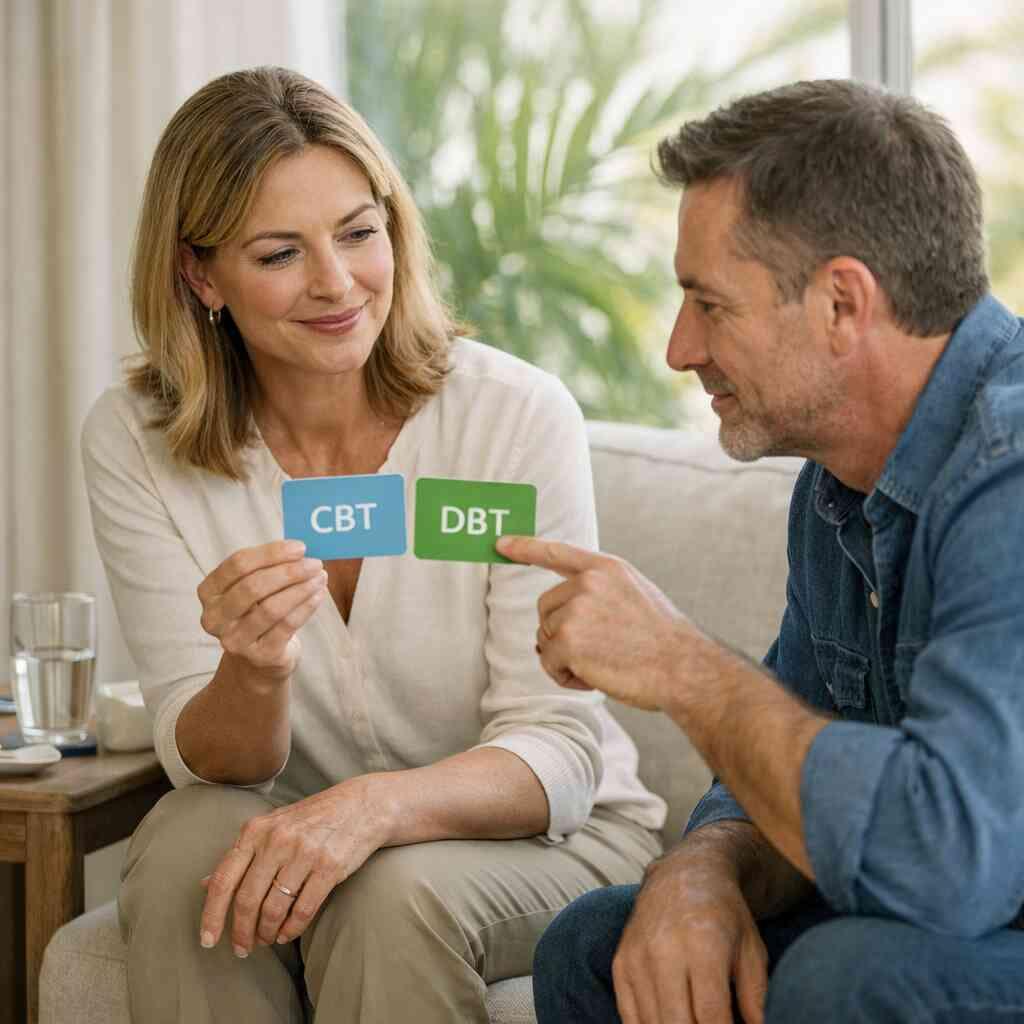
Evidence-based treatment matters because recovery needs skills, not slogans. Cognitive behavioral therapy, or CBT, helps people notice thoughts that trigger use. Dialectical behavior therapy, or DBT, teaches emotion regulation and distress tolerance. EMDR trauma therapy can help process trauma that still feels stuck in the body. Group therapy activities help people practice honesty in real time.
The mistake we see most often is rushing past trauma. Trauma therapy in South Florida should not be treated like an optional add-on when PTSD symptoms are active. On many plans, group work, art therapy, mindfulness meditation, yoga therapy, and coping skills practice work together. That mix is not magic. It is repetition, done with guidance.
Why family therapy, case management, and aftercare planning matter after the hardest days
Family therapy often changes the tone at home. It helps relatives understand triggers, boundaries, and relapse warning signs. Case management can connect people to sober living resources, vocational support, nutritional counseling, and life skills training. Aftercare planning keeps the plan from ending when the daily program ends. That is where long-term recovery becomes real. RECO Island’s post detox aftercare planning for long term recovery focus fits best practices here. A person leaving treatment may need help with transportation, meetings, housing, or medication follow-up. One young adult we saw had good insight but no structure at home. He needed a sober living option and a schedule before he needed inspiration. That detail changed his outcome more than motivation alone. 
How medication-assisted treatment like Vivitrol injections and Suboxone maintenance may fit some recovery plans
Medication-assisted treatment can be lifesaving for some people. Vivitrol injections and Suboxone maintenance are FDA-approved tools that may support opioid recovery when clinically appropriate. Naltrexone, the medication behind Vivitrol, can reduce cravings for some people after detox. Suboxone can help stabilize opioid use disorder while therapy and support continue. These are medical decisions, not moral ones.
Medication does not replace therapy. It can make therapy possible. That is especially true in fentanyl treatment, heroin recovery, and prescription pill addiction. For some people, medication lowers the intensity enough to think clearly again. For others, it is not the right fit. Good care explains the choice without pressure.
The decision frame that helps people choose the right level of care in Palm Beach County
Picking treatment in Palm Beach County is not about finding the “best” label. It is about matching care to the current level of risk, support, and daily life. An alcoholism treatment center, opioid rehab Delray option, or trauma-focused track each answers a different need. If you choose the wrong level, the person may feel buried or under-supported. Both can trigger relapse.
When a residential treatment facility makes more sense than outpatient support
A residential treatment facility makes sense when safety is shaky. That may include severe withdrawal risk, repeated relapse, unstable housing, or suicidal thinking. It may also fit people whose drug use has taken over every waking hour. Inpatient rehab Palm Beach County can create distance from triggers while medical and therapeutic support stay close.
This is where clinical honesty matters. Outpatient care is not “less serious.” It is simply less contained. If someone cannot go an evening without using, outpatient support may be too thin. If they are medically fragile, residential care can offer the reset they need before stepping down later.
What PHP vs IOP means for work, school, and family life in Delray Beach
People often ask, “What is PHP vs IOP?” The answer depends on how much structure you can keep without constant supervision. PHP usually requires more treatment hours and less outside flexibility. IOP works better when you can attend care and still manage some life responsibilities. Both can be part of a strong Delray Beach rehab plan.
QuestionPHPIOPSchedule demandHigherLowerWork or school fitHarderEasierSupport levelMore intensiveMore flexibleBest forEarly stabilizationStep-down care or steadier casesIf you are sorting through an outpatient program in Delray Beach, ask how the schedule fits your real week. Do not guess. Ask about hours, group frequency, and family needs. The right fit protects honesty.
How to think about private rehab, out-of-network benefits, and self-pay options
Private rehab can offer more privacy and a calmer pace. It can also come with higher costs. That is why out-of-network benefits and self-pay options should be checked early. You do not want financial shock after the emotional one. That is avoidable.
Here is a practical way to think about it:
- Ask for a benefits check before admission.
- Confirm whether your plan uses out-of-network benefits.
- Request an estimate of likely self-pay costs.
- Ask what is included in the clinical fee.
- Clarify whether medication, labs, and family work are separate.
That process feels tedious. It is still worth doing. When money is transparent, families can make better choices about how to choose a rehab in South Florida.
Why sober living resources, alumni support, and relapse prevention shape long-term recovery
Recovery does not end at discharge. Sober living resources, alumni support, and relapse prevention planning help people keep the gains they worked for. Alumni programs create connection after the intensity drops. SMART Recovery and 12-step alternatives can both play a role. The point is not ideology. The point is structure.
RECO Island’s alumni support aligns with continuing care best practices. That matters because the weeks after treatment can feel oddly quiet. Quiet can be risky. A person who had round-the-clock support may need check-ins, routines, and accountability before independence feels safe again.
What to ask before choosing between an alcoholism treatment center, opioid rehab, or trauma therapy in South Florida
Start with the basics. Ask whether the program treats alcohol, opioids, trauma, or all three together. Ask if licensed clinicians provide care. Ask how dual diagnosis treatment is handled. Ask whether the program uses evidence-based treatment, and ask which therapies are used daily versus occasionally.
A few smart questions can save weeks:
- Do you offer CBT, DBT, or EMDR?
- How do you support co-occurring disorders?
- What does aftercare support include?
- Is family involvement available?
- How do you handle relapse prevention?
If you need help sorting those answers, how to choose a rehab in South Florida can give you a cleaner framework. You do not need to know everything today. You do need to ask the right things.
How RECO Island supports next steps near 140 NE 4th Avenue Delray Beach FL 33483 without overpromising
RECO Island sits at 140 NE 4th Avenue Delray Beach FL 33483, close to the center of the Delray Beach recovery community. That location can help people stay connected to South Florida recovery supports while receiving care. RECO Intensive location details matter because access matters. If getting to treatment is hard, staying in it becomes harder too.
The strongest centers do not promise shortcuts. They offer a clear intake process, careful clinical review, and a plan that fits the person in front of them. If you are comparing Delray Beach recovery community options or looking for a Delray Beach rehab in 2026, use that as your standard. Ask for facts. Ask for fit. Then make the call.
“This my first time ever going into any type of treatment or detox treatment program. I’m so thankful and so very grateful for all of the therapists, Tech’s, nurse and everyone that works there to help Reco Island Detox and all. Other services that they offer runs efficiently Reco will forever be my extended family. I am so proud and greatful to be an Reco Alumni. 🫶🏾🫶🏾🫶🏾🤗🤗”– Tara B., a 5 star review from our business on Google Business Reviews
Frequently Asked Questions
How long does detox last at a Delray Beach rehab?
Detox length depends on the substance, overall health, and how severe withdrawal is. Alcohol and benzodiazepine withdrawal can require closer monitoring. Opioid withdrawal can also vary, especially with fentanyl exposure. A good program will explain the expected timeline after assessment, not guess. That assessment matters more than a generic number.
Does RECO Island take my insurance?
Insurance options can change, so the safest answer is to verify directly. Many Florida rehabs that take insurance can check Aetna, Cigna, Blue Cross Blue Shield, and out-of-network benefits. Ask for written confirmation before admission. If you want a fast answer, use the admissions team’s insurance verification process.
What is the difference between PHP and IOP?
PHP, or partial hospitalization program, usually offers more treatment hours and more structure. IOP, or intensive outpatient, gives more flexibility for work, school, and home life. Both can be useful at different recovery stages. The right fit depends on stability, support, and current risk.
Can family be involved in treatment?
Yes, many programs include family therapy or family education. This can help relatives understand addiction, boundaries, and relapse warning signs. Family weekend or scheduled family sessions can also improve communication. Ask how often family involvement is offered and what topics are covered.
What if I need help for depression but not addiction?
That can still matter a great deal. Depression and addiction often overlap, but some people need mental health IOP or co-occurring care without a primary substance focus. Ask for a full assessment. If symptoms include hopelessness, sleep loss, or panic, getting evaluated is still a smart move.
Are Vivitrol or Suboxone right for everyone?
No. Medication-assisted treatment fits some people and not others. Vivitrol injections and Suboxone maintenance can help with opioid use disorder when clinically appropriate. A licensed medical team should review your history, current use, and goals before recommending either option.