
How RECO Island Uses EMDR and CBT for Trauma Therapy
When trauma keeps replaying and nothing else has worked If you are reading this because sleep feels broken, focus keeps slipping, or your body stays on alert, that fear makes sense. Trauma can feel like a loop you never asked for. It can also hide inside alcohol use, pills, work panic, or numbness that looks […]


When trauma keeps replaying and nothing else has worked
If you are reading this because sleep feels broken, focus keeps slipping, or your body stays on alert, that fear makes sense. Trauma can feel like a loop you never asked for. It can also hide inside alcohol use, pills, work panic, or numbness that looks like “just getting by.” At a Delray Beach rehab, that pattern deserves careful attention, not judgment.
Why PTSD symptoms can look like anxiety, depression, substance use, or all three at once
PTSD does not always announce itself with flashbacks. Sometimes it shows up as irritability, stomach pain, shame, sleep loss, or a constant need to escape. That is why people searching for Florida addiction treatment or mental health IOP often find the real issue is deeper than one diagnosis. Trauma can drive depression and addiction, and it can also fuel anxiety treatment needs, especially when the nervous system never settles.
Here is the part most families miss. A person may seem “unmotivated” when they are actually exhausted from hypervigilance. Someone else may drink at night and call it stress. Another may bounce between anger and collapse. A careful dual diagnosis treatment plan looks at co-occurring disorders together, because trauma rarely stays in one lane.
One client in the Delray area came in saying he only needed help with drinking. After a few sessions, he could finally name the panic that started after a violent loss. Once that was clear, treatment shifted from surface control to real stabilization. That is the difference trauma-aware care can make.
What makes EMDR and CBT different from talk therapy that stays on the surface
Talk therapy can help, but not all therapy reaches the same depth. Cognitive behavioral therapy helps you notice the thoughts that keep fear, guilt, and avoidance alive. EMDR trauma therapy helps the brain process disturbing memories without forcing you to relive them in a raw way. Together, they give structure to healing.
Here is the simple version. CBT works with meaning, habits, and thought patterns. EMDR works with memory networks and the body’s alarm system. Both are evidence-based treatment approaches used by many licensed clinicians for PTSD treatment and trauma recovery support. In the right setting, they can help people who have tried “just talking about it” and still feel stuck.
At RECO Island, that matters because trauma often lives under addiction, not beside it. If someone keeps cycling through cocaine detox Florida, opioid rehab Delray, or benzodiazepine withdrawal, trauma may be the engine under the hood. Therapy should address that engine directly.
Why Delray Beach rehab settings often need trauma therapy that supports both safety and structure
A trauma-reactive person does better in an environment that feels steady. That is one reason Delray Beach rehab and South Florida recovery settings often pair therapy with a clear routine. Coastal calm helps, but structure matters more than scenery. A person healing from trauma needs predictability, healthy boundaries, and a pace that does not overwhelm the nervous system.
That is especially true in a residential treatment facility, partial hospitalization program, or outpatient program Delray Beach setting. The level of care should match current stability. If someone is still using heavily, a South Florida detox level may be needed first. If they are medically stable but fragile, a step-down plan may work better.
The best outcomes rarely come from intensity alone. They come from the right balance of support and space. In a place like Delray Beach, where the recovery community is active and the Atlantic Avenue pace can feel busy, that balance matters even more.
The questions families ask when they are deciding whether trauma therapy belongs in an outpatient program Delray Beach or a higher level of care
Families usually ask practical questions first. Can this person sleep at home? Are they safe? Can they keep appointments? Those questions are good ones. They also reveal something important: trauma care should fit the person, not the other way around.
A thoughtful intake process looks at:
- Current substance use
- Safety and self-harm risk
- Panic, dissociation, or trauma triggers
- Ability to manage daily life
- Need for medication support
- Family stress and home stability
Sometimes an intensive outpatient schedule is enough. Sometimes a partial hospitalization program is a better fit. If the person cannot stay regulated between sessions, a more contained setting may be needed first. That is why comparing outpatient program options in Delray Beach should always include a real clinical review, not just a brochure.
How RECO Island blends EMDR and CBT without rushing the nervous system
Healing from trauma should never feel like being shoved open. Good care starts slowly. It listens first. It teaches safety before memory work. That pace is not a delay. It is the treatment.
How trauma-informed care shapes the pace of treatment before any memory work begins
Trauma-informed care and PTSD treatment begin with one core idea: many behaviors are protection, not defiance. That changes everything. Instead of asking, “What is wrong with you?” the team asks, “What happened, and what helps your body feel safe now?” That approach is central to holistic trauma healing and respectful behavioral health support.
Before any deep processing, clients need tools. That may include sleep routines, craving plans, nutrition, and clear session boundaries. It may also include coordination with RECO Psychiatry when symptoms need medication review. The goal is to reduce overload before opening painful material.
A young adult came in after months of avoiding appointments because every room felt like a test. The team started with short check-ins, breathing work, and simple goals. Only later did the trauma narrative become possible. That slower pace is often what keeps treatment from backfiring.
What EMDR trauma therapy is and why bilateral stimulation matters for trauma processing
EMDR stands for Eye Movement Desensitization and Reprocessing. It uses bilateral stimulation, which means left-right stimulation through eye movements, tapping, or tones. The point is not magic. The point is helping the brain process stuck memories in a more adaptive way. For many people, that lowers the emotional charge attached to trauma.
EMDR does not erase the past. It helps memories become less overwhelming. That matters for people with PTSD treatment needs, especially when trauma triggers sudden panic, shame, or dissociation. It can also support people with dual diagnosis concerns, because unresolved memories often drive relapse.
If you want a deeper overview of how this fits into local care, see our guide on EMDR trauma therapy in South Florida. The key point is simple: EMDR works best when the person is stable enough to stay present. That is why pacing matters so much.
How CBT for trauma helps change the thoughts that keep fear, shame, and avoidance in place
CBT helps you notice the thoughts that feed the alarm. Trauma often teaches people to expect danger, blame themselves, or avoid anything that feels uncertain. Those thoughts can sound convincing because they have been reinforced for years. CBT for trauma helps challenge them with facts, skill, and repetition.
The work often includes identifying distorted beliefs, like “I am never safe,” or “This is my fault.” Then the therapist helps the client test those beliefs against current reality. That process supports coping skills, emotional regulation, and relapse prevention. It also helps with anxiety treatment and depression and addiction, because thought patterns affect both mood and behavior.
If you are comparing care plans, our article on CBT for trauma recovery in Delray Beach can help explain how that work fits into day-to-day treatment. The best CBT is practical. It gives you language you can actually use on a hard night.
Where individual therapy, group therapy activities, and family therapy fit when someone has dual diagnosis treatment needs
Trauma recovery is not a one-room solution. Individual therapy is where private memory work and skill-building often happen. Group therapy activities help clients hear their experience reflected back by others who understand. Family therapy helps rebuild trust, improve communication, and reduce the stress that can keep symptoms alive.
That layered model matters in dual diagnosis treatment and co-occurring disorders care. It also helps people who need support for bipolar disorder therapy, depression and addiction, or trauma tied to grief, abuse, or medical events. Research and national guidance, including SAMHSA guidelines, consistently support integrated care when mental health and substance use overlap.
If family support is part of your situation, family therapy for trauma recovery support can be an important piece. The family does not need perfect language. It just needs honest guidance and clear roles.
How grounding techniques, emotional regulation, and mindfulness meditation support clients between sessions in South Florida recovery
The time between sessions can be the hardest part. That is when old habits whisper loudest. So the tools have to be simple enough to use when you are tired. Grounding techniques bring attention back to the room, the breath, or the feet on the floor. Mindfulness meditation helps you notice a feeling without obeying it.
At RECO Island, these tools can support behavioral health support across the week. They pair well with yoga therapy, art therapy, and practical coaching. They also help people use SMART Recovery or 12-step alternatives with more stability, because the body is less likely to go into panic mode.
For a deeper look at this style of support, mindfulness and grounding techniques for emotional regulation can be useful. The real goal is not perfect calm. It is getting enough steadiness to stay engaged.
What moving from survival mode to long-term recovery really looks like in Delray Beach
Trauma therapy is not just about symptoms. It changes the choices that shape the next season of life. That includes level of care, medication support, housing, family involvement, and aftercare. Recovery becomes more durable when each part supports the others. 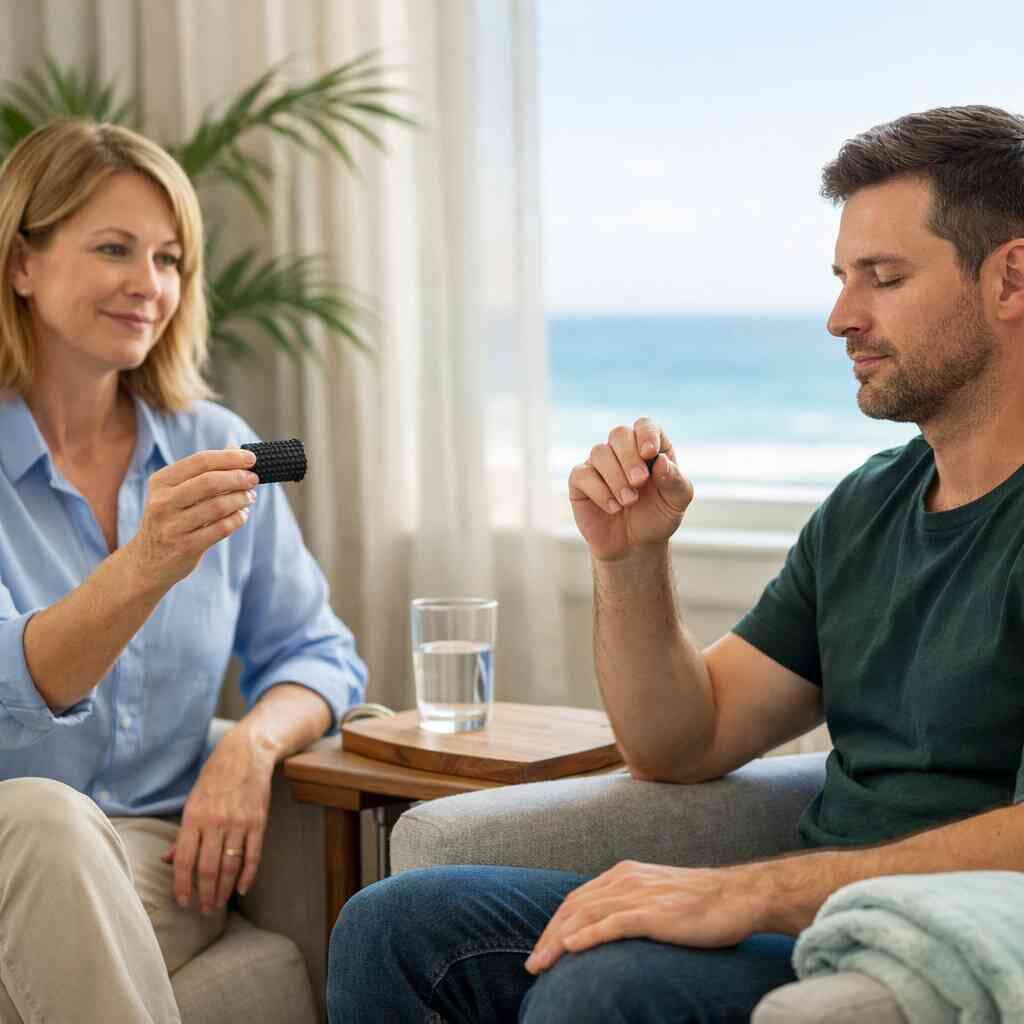
How trauma therapy connects with partial hospitalization program and mental health IOP decisions
Choosing between a partial hospitalization program and mental health IOP in Delray Beach depends on how much support the person needs. PHP offers more hours and more structure. IOP offers flexibility while still keeping therapy active. A person who is newly sober, highly triggered, or medically fragile may need PHP first. Someone with more stability may do well in IOP.
That decision should not be based on pride. It should be based on safety and function. If trauma symptoms, cravings, or mood swings make daily life hard, more structure may help. If the person can manage home life and still attend treatment, IOP may be the better fit. For a clear comparison, our guide on partial hospitalization program and mental health IOP in Delray Beach can help.
The best level of care is the one that keeps you engaged without overwhelming you. That is the sweet spot.
When medication-assisted treatment, Suboxone maintenance, or Vivitrol injections may be part of a broader recovery plan
Some trauma survivors also need help with cravings or withdrawal. That is where medication-assisted treatment can help. Suboxone maintenance and Vivitrol injections are FDA-approved options used in many Florida addiction treatment plans. They are not substitutes for therapy. They are tools that can lower risk and support participation in care.
This is especially relevant in opioid rehab Delray, fentanyl treatment, and heroin recovery. It can also matter for prescription pill addiction and some relapse patterns after detox. A treatment team should explain benefits, limits, and monitoring clearly. Medication choices should always be individualized.
If you want to understand the general framework, our page on medication-assisted treatment and Suboxone maintenance is a place to start, though it is a general reference. In actual care, the details should come from your clinical team and prescriber.
How aftercare planning, relapse prevention, and sober living resources support life after treatment
Recovery does not end when sessions end. That is where aftercare planning matters. Good aftercare includes therapy follow-up, support groups, medication review, and a plan for triggers. It also includes sober living resources when home is not stable enough yet.
Relapse prevention is not about shame. It is about seeing patterns early. A person may need help with sleep, conflict, boredom, or social pressure. Some need life skills training, vocational support, or nutritional counseling to rebuild daily structure. Others do better with an alumni program that keeps connection alive after formal treatment ends.
For more on that transition, aftercare planning and relapse prevention support explains the moving pieces well. The work after treatment often determines whether gains hold.
Why insurance verification, private rehab options, and out-of-network benefits matter before admission
Cost worries can stop people cold. That is real. Before admission, insurance verification should be clear and plain. Ask about Aetna, Cigna, Blue Cross Blue Shield, and any out-of-network benefits. Ask about self-pay options too. Hidden costs create stress, and stress can push people away from care.
Private programs can still be accessible when benefits are reviewed carefully. The right admissions team should explain what the plan may cover and what it may not. If the program is private rehab, ask for specifics before you commit. Clarity now prevents painful surprises later.
For next steps, our page on insurance verification for private rehab options can help you prepare questions. You do not have to solve the whole financial picture today. Start with one call and one honest benefits check.
What to look for next if you are comparing RECO Intensive location, insurance fit, and the right level of care for trauma recovery support
If you are comparing options near 140 NE 4th Avenue Delray Beach FL 33483, look for fit, not flash. Ask whether the program offers evidence-based treatment, licensed clinicians, and clear coordination across care levels. Ask how they handle dual diagnosis, mental health IOP, and trauma work together. Ask what happens after the first week, because that is where support either deepens or disappears.
If you want to explore the broader care network, the RECO Intensive recovery network can be a useful reference point. You can also compare how trauma care connects with beachside recovery, the local recovery community, and the calm of South Florida recovery. Near Delray Beach, that mix of structure and environment can matter more than people realize.
For a place like RECO Island, the best next move is simple. Verify your benefits, ask about level of care, and request a trauma-informed intake. You do not have to figure it all out today, and you do not have to do it alone.
*”I came to RECO with two days clean and sober and now I’ll be clean and sober 5 years next month. That speaks for itself in my opinion
More importantly, I feel phenomenal. And I’m having the time of my life ! At RECO I learned how to stay clean and sober. They taught me that. They gave me tools, bit I have to do my part to be sure.
I go to RECO many a Thursday night for a group therapy session, Alumni is invited to that as well. I find it extremely beneficial to my recovery program. It’s great to see current clients and staff members. Making connections with people is a key component of a strong and solid program. Very easy to do. Everybody is very supportive of each other.
Regardless of whatever aspect of RECO that a client might be involved in, rest assured that it will have excellent competence and professionalism.
The main RECO facility is state of the art, but it’s what happens inside, in the trenches, that is truly miraculous.
RECO gets good results, I’ve seen it first-hand, in myself.”*- Kekes K., a 5 star review from RECO Island on Google Business Reviews
Frequently Asked Questions
How long does detox last at a Delray Beach rehab?
Detox length depends on the substance, medical history, and severity of use. Alcohol and benzodiazepine withdrawal can require close monitoring because symptoms can become dangerous. Opioid detox may be shorter, but cravings can last much longer. A program should explain the expected timeline during intake and adjust care as needed.
Does RECO Island take my insurance?
The only reliable way to know is to verify benefits directly. Ask about your plan, deductibles, prior authorization, and any out-of-network coverage. Many Florida rehabs work with major insurers, but each policy is different. A verification call can clarify coverage before admission.
What is the difference between PHP and IOP?
A partial hospitalization program usually offers more weekly hours and more structure. An intensive outpatient program offers fewer hours and more flexibility. PHP often fits people who need close support after detox or during early stabilization. IOP may suit someone who is safer and more functional at home.
Can I bring my phone to treatment?
Policies vary by program and level of care. Some centers limit phone use early in treatment to reduce distractions and help clients settle in. Others allow use at set times. Ask about device rules during intake so there are no surprises.
Is family involved in the program?
Many trauma recovery programs include family work when it is clinically helpful. Family therapy can improve communication, repair trust, and teach loved ones how to support recovery without enabling. The exact level of involvement depends on safety, readiness, and treatment goals.
What if I need help for depression but not addiction?
You still deserve care. Trauma, depression, and anxiety can exist without active substance use. A mental health assessment can help determine whether outpatient therapy, IOP, medication support, or a different level of care is the best fit. The right plan should match symptoms, safety, and daily function.