Ultimate Guide to SMART Recovery and 12 Step Alternatives
If you are reading this because meetings did not feel like a fit, that feeling can sting. Maybe you left thinking, “Why does this help everyone else and not me?” That question is more common than people admit. In Delray Beach, we hear it often from people who want structure, not surrender, and help without […]
If you are reading this because meetings did not feel like a fit, that feeling can sting. Maybe you left thinking, “Why does this help everyone else and not me?” That question is more common than people admit. In Delray Beach, we hear it often from people who want structure, not surrender, and help without shame. The good news is that there are solid 12-step alternatives that support real change.
When 12-step meetings feel like the wrong fit, what else actually helps
Why some people want non-12-step recovery without giving up structure
Many people want non-12-step recovery because they still need a clear plan. They may want tools, check-ins, and practical goals instead of language that feels spiritual or absolute. That does not mean they are resistant to help. It means they are looking for a method that matches how they learn and heal. In Delray Beach rehab settings, that difference matters.
A man in early recovery once told our team that meetings left him feeling judged before he ever spoke. He was not rejecting recovery. He was rejecting a format that made him feel smaller. After he started a more skills-based plan, he stayed engaged because the structure felt usable on hard days. That is the point: treatment should help you act, not only reflect.
The difference between peer support in recovery and a program that asks for total surrender
Peer support in recovery can be powerful because it reduces isolation. You hear real stories, real setbacks, and real progress. Still, peer support is not the same as a program that asks for total surrender to a higher power. Some people thrive with that model. Others need a framework built around choice, accountability, and behavioral change.
That is why recovery support groups matter in so many forms. A group can offer encouragement, routine, and honesty without demanding one exact belief system. For many people, that makes the room feel safer. It also makes return more likely, which matters in long-term recovery. When shame drops, participation often rises.
How SMART Recovery uses self-management and recovery training to build coping skills
SMART Recovery stands for self-management and recovery training. It focuses on practical tools for change, including urge management, thought testing, and problem solving. That makes it useful for people who want a structured approach without a spiritual model. It also lines up well with evidence-based recovery tools and coping skills for recovery.
Here is the part most people miss: SMART is not just “positive thinking.” It asks you to spot the thought, test the thought, and choose the next action. That is close to how cognitive behavioral therapy works in clinical care. The method can feel plain, but plain often works when cravings are loud and sleep is poor.
What recovery support groups can offer when shame and resistance are getting in the way
Some people do not avoid help because they do not care. They avoid it because shame makes every room feel dangerous. Recovery support groups and peer support in recovery can reduce that pressure by making change feel shared rather than exposed. When you hear someone else describe the same fear, your own fear often gets quieter.
From the programs we have seen this year, the best groups do one thing very well: they keep people coming back. They do that by staying specific. People talk about triggers, phone calls, sleep, family tension, and what happens at 9 p.m. when the mind gets restless. If you are comparing recovery support groups and peer support in recovery, look for groups that focus on action, not performance.
Why a Delray Beach recovery community can make the choice feel more real and less abstract
A local recovery setting changes the conversation. In Delray Beach, people are not just reading about recovery. They are seeing it around Atlantic Avenue, in sober living homes, and in the daily rhythm of South Florida. That local visibility makes the next step feel less abstract. It also helps when you need sober things to do in Delray Beach on a weekend.
One woman told us that being close to the beach helped her nervous system settle. Not because the ocean solved addiction, but because the environment gave her enough calm to keep learning. That matters. Healing is easier when the setting supports it. For many, beachside recovery feels less clinical and more human.
What the strongest alternatives are really teaching underneath the slogans
How cognitive behavioral therapy and dialectical behavior therapy show up inside modern recovery plans
The strongest alternatives are usually not slogans. They are skills. Cognitive behavioral therapy helps you notice the link between thoughts, feelings, and behavior. Dialectical behavior therapy adds tools for distress tolerance, emotion regulation, and relationship skills. Together, they support relapse prevention strategies in a way that feels practical.
These methods fit well inside evidence-based treatment for drug rehab near me searches, especially when people want more than lectures. In plain terms, CBT helps you challenge unhelpful thoughts. DBT helps you stay steady when the emotion is high. If your mind says, “I already messed up, so why stop now,” that is exactly the kind of thought these therapies target.
Why mindfulness meditation and emotional regulation skills matter when cravings spike
Cravings often rise fast. They can feel physical, mental, and emotional all at once. That is why mindfulness meditation and emotional regulation skills belong in modern treatment. They help you notice the urge without obeying it. They also give your body time to calm before you decide.
For some people, five minutes of breathing feels too simple to matter. Then they try it during a real trigger and see the difference. The goal is not to become perfectly calm. The goal is to create a small pause. That pause can protect a sober choice.
Where trauma-informed recovery fits for PTSD and substance use recovery
A lot of substance use is tangled with trauma. That is why trauma-informed recovery is not a luxury. It is a clinical necessity for many people with PTSD treatment needs, panic, or a history of unsafe relationships. When treatment ignores trauma, people often leave feeling exposed instead of helped.
Approaches like EMDR trauma therapy can fit well for some clients when a clinician determines they are appropriate. The key is pacing. Good trauma care respects readiness. It does not force disclosure. If you are searching for trauma-informed recovery and PTSD plus substance use support, look for a setting that treats safety as part of treatment, not an afterthought.
How dual diagnosis support changes the plan for depression, addiction, anxiety, and bipolar disorder therapy
Dual diagnosis means treating substance use and mental health together. That matters for depression and addiction, anxiety treatment, and bipolar disorder therapy. NIDA and SAMHSA both support integrated care for co-occurring disorders because untreated symptoms can drive relapse. You cannot always separate the pain from the use. A client once came in convinced he only had a drinking problem. After a fuller assessment, anxiety and sleep loss were clearly part of the picture. His plan changed, and so did his follow-through. That is why integrated care matters. If the root issue is misread, the plan usually cracks. 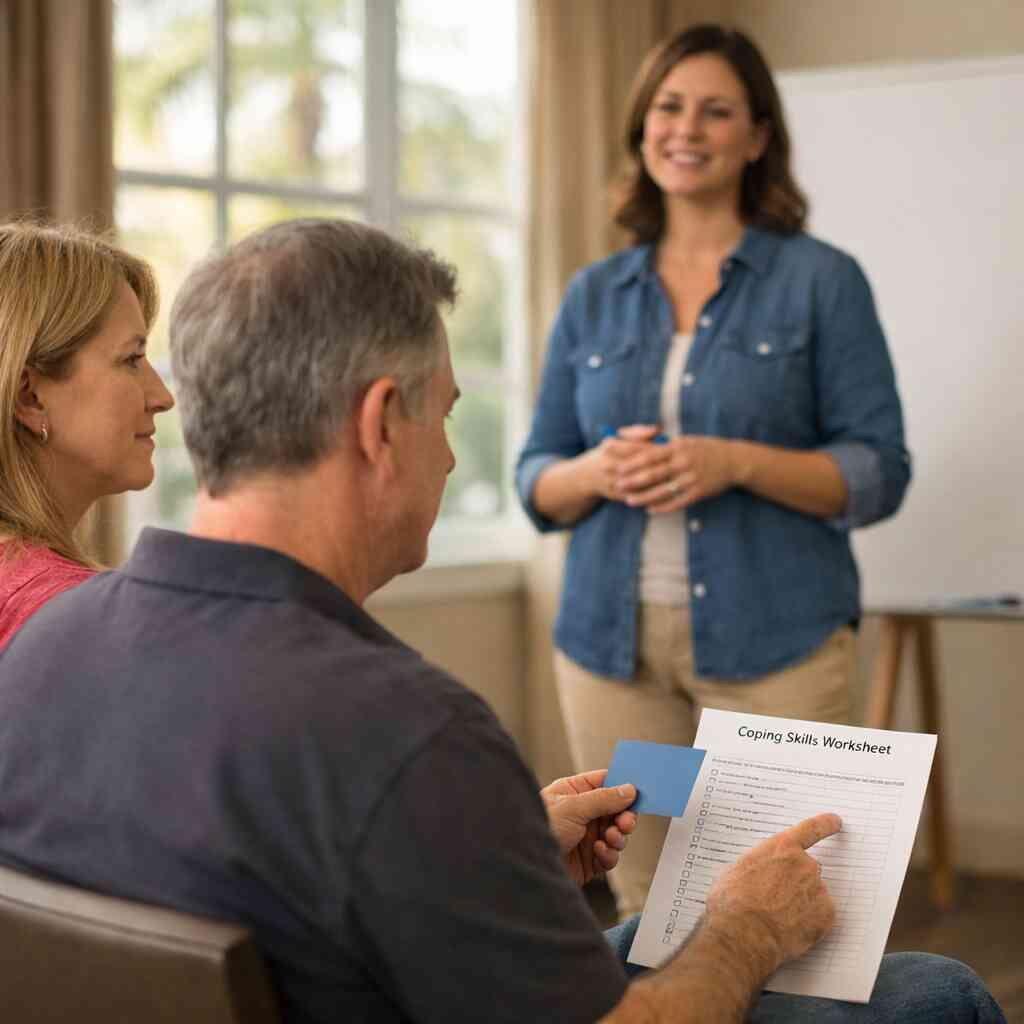
What medication-assisted treatment can look like with FDA-approved options like Vivitrol injections and Suboxone maintenance
Medication-assisted treatment can be a stabilizing part of care for some people. Vivitrol injections and Suboxone maintenance are FDA-approved options used in specific cases for opioid or alcohol recovery support. They do not replace therapy. They can reduce cravings, lower risk, and create enough stability for deeper work.
A simple way to think about it: medication can quiet the noise, while therapy teaches the new pattern. That combination often helps with opioid rehab Delray, fentanyl treatment, heroin recovery, and prescription pill addiction. If you want more detail, look at medication-assisted treatment and recovery planning and ask how it fits your history, not someone else’s.
The decision that keeps people from spinning in circles and into a plan they can live with
When to pair SMART Recovery with outpatient recovery programs, partial hospitalization program options, or mental health IOP
SMART Recovery works well for many people, but it is not always enough on its own. If you are in the middle of benzodiazepine withdrawal, early sobriety, or unstable mental health, you may need more support. That is where outpatient recovery programs, partial hospitalization program options, or mental health IOP can help. They add structure, clinical oversight, and daily practice.
Here is a simple comparison:
Level of careBest fitMain benefitPHPHigher support needsMore hours, more structureIOPStable enough for daily lifeStrong therapy with flexibilitySMART RecoverySelf-directed supportSkills, accountability, peer inputIf you are trying to decide between outpatient recovery programs and mental health IOP in Delray Beach, ask how the schedule fits your real life. Treatment only works if you can keep showing up.
How aftercare planning, sober living resources, and alumni recovery support protect long-term recovery
Recovery does not end when the main program ends. That is where aftercare planning, sober living resources, and alumni recovery support become important. They help protect gains when life gets louder again. This is especially true after residential treatment facility care or a partial hospitalization program.
The best aftercare plans are specific. They name therapy, meetings, work goals, sleep routines, and family contact. They also include backup steps for cravings or setbacks. If you want to see how this works in practice, review aftercare planning and alumni recovery support. Continuing care is not extra. It is part of treatment.
Why family therapy, life skills training, and relapse prevention strategies belong in the same conversation
Substance use affects the whole household. That is why family therapy matters. It helps repair trust, clarify boundaries, and reduce chaos. Add life skills training and relapse prevention strategies, and the plan becomes more real. You are not just avoiding alcohol or drugs. You are building a life that can hold sobriety.
Families often ask what to say, what not to say, and how much to push. Those are fair questions. In many cases, the answer is structure plus compassion. If family contact has been strained, family support in recovery and family therapy can give everyone a common language. That lowers confusion fast.
What to ask when comparing private rehab near me options in Delray Beach and South Florida
Not all programs offer the same level of care. When people search private rehab near me, they often compare location, schedule, and approach before they compare anything else. That makes sense. Still, the bigger questions are about fit and clinical depth. Ask about licensed clinicians, Joint Commission accreditation, and whether the program treats dual diagnosis directly.
You should also ask about group therapy activities, case management, vocational support, and nutritional counseling. Those services often matter more than polished photos. If you are comparing private rehab near me in South Florida and Delray Beach, ask what a normal day looks like. People do better when they know the rhythm before they arrive.
How insurance verification, Aetna, Cigna, Blue Cross Blue Shield, and self-pay options shape the next move
Money questions can stop people cold. That is real. Before you decide on care, ask for insurance verification and a plain explanation of benefits. Aetna, Cigna, and Blue Cross Blue Shield may cover part of treatment, and some plans include out-of-network benefits. If not, self-pay options may still be possible.
If you are looking at Florida rehabs that take insurance, start with the facts, not the fear. Ask what your plan covers for detox, PHP, IOP, and aftercare. Then compare that with your needs. For a direct look, review insurance verification for rehab with Aetna, Cigna, and Blue Cross Blue Shield. You do not have to solve every cost question today. You only need enough information to choose the next safe step.
Frequently Asked Questions
Question: What makes SMART Recovery and other 12-step alternatives a good fit for people who want structured support without a spiritual model?
Answer: SMART Recovery and other 12-step alternatives can be a strong fit for people who want practical, skills-based addiction recovery support. At RECO Island in Delray Beach, the focus is on compassionate, evidence-based treatment that can include coping skills for recovery, relapse prevention strategies, cognitive behavioral therapy, and dialectical behavior therapy depending on each person’s needs. For many people, that kind of structure feels more usable than a purely discussion-based approach, especially when they are looking for non-12-step recovery options that still offer accountability and connection. If you are comparing recovery support groups or recovery meetings near me, it can help to look for a program that respects your beliefs, your goals, and your pace.
Question: How does RECO Island support dual diagnosis treatment for depression and addiction, anxiety treatment, bipolar disorder therapy, and PTSD treatment?
Answer: RECO Island takes a dual diagnosis approach because substance use and mental health concerns often overlap. That means care may address depression and addiction, anxiety and addiction recovery, bipolar disorder therapy, or PTSD and substance use recovery together rather than separately. This is especially important when symptoms like panic, low mood, trauma reactions, or sleep problems are part of the picture. Depending on clinical need, support may include trauma-informed recovery, mindfulness meditation, group therapy activities, and coordination with licensed clinicians. For people looking for co-occurring disorder recovery or mental health IOP options near South Florida, an integrated plan can make treatment feel more complete and more realistic for long-term recovery planning.
Question: What levels of care are available if I need more than peer support in recovery, such as PHP, IOP, or an outpatient program Delray Beach?
Answer: If you need more support than peer support in recovery or self-directed tools alone can provide, RECO Island can help you explore the right level of care. Some people benefit from a partial hospitalization program when they need more daily structure, while others do well with intensive outpatient support or an outpatient program Delray Beach when they need flexibility for work or family life. The right fit depends on factors like withdrawal risk, mental health symptoms, safety, and how much structure you need right now. During the intake process, the team can help you compare options such as partial hospitalization program options, mental health IOP, and outpatient recovery programs so you can make an informed decision that supports stability and long-term recovery.
Question: Does the Ultimate Guide to SMART Recovery and 12 Step Alternatives apply if I need help for opioid rehab Delray, fentanyl treatment, heroin recovery, or prescription pill addiction?
Answer: Yes. The ideas in the blog are relevant for many forms of substance use, including opioid recovery support, fentanyl recovery support, heroin recovery support, and prescription pill addiction recovery. While SMART Recovery can be a helpful part of a plan, some people also need medication-assisted treatment, South Florida detox, or a higher level of care before they can fully engage in recovery work. RECO Island can help assess whether services such as Vivitrol injections, Suboxone maintenance, or other evidence-based treatment options may be appropriate based on your history and clinical needs. If you are searching for drug rehab near me, opioid rehab Delray, or Florida addiction treatment, it is important to choose a setting that can look at the whole picture and build a plan that fits your situation.
Question: How do aftercare planning, sober living resources, family therapy, and alumni recovery support help protect long-term recovery at RECO Island?
Answer: Recovery does not end when the first phase of treatment is over, which is why aftercare planning matters so much. RECO Island emphasizes continuing support through aftercare planning, sober living resources, family therapy, life skills training, case management, and alumni recovery support when appropriate. These services can help people stay connected to structure, healthy routines, and practical support as they return to everyday life. Family involvement can also strengthen communication and reduce conflict, especially when healing from addiction has affected the whole household. If you are looking into long-term recovery planning, alcohol recovery alternatives, or Florida recovery resources, a strong aftercare plan can be one of the most important parts of staying grounded after treatment.