Ultimate Guide to Aftercare Planning After Residential Treatment
You may be leaving residential treatment and feeling two things at once: relief and fear. That mix is normal. The structure helped, and now life outside is asking for more. If you are worried about relapse, insurance, or what happens after discharge, this guide is for you. Aftercare planning is the bridge between safety and […]
You may be leaving residential treatment and feeling two things at once: relief and fear. That mix is normal. The structure helped, and now life outside is asking for more. If you are worried about relapse, insurance, or what happens after discharge, this guide is for you. Aftercare planning is the bridge between safety and real life.
When does residential treatment really end and aftercare begin
The moment discharge planning starts and why waiting until the last week leaves gaps
Aftercare planning for residential treatment should start early, not at the finish line. Waiting until the last week leaves holes in your schedule, support, and transportation. It also creates panic when insurance, housing, or follow-up care still needs work. A strong discharge planning for rehab and life after treatment process gives you time to think clearly. That matters when you are still learning how to live without constant supervision.
We hear this concern often from families looking at Delray Beach rehab options. They want Florida addiction treatment that feels steady, not rushed. That is especially true after South Florida detox or inpatient rehab in Palm Beach County. If you are comparing a residential treatment facility with an outpatient program Delray Beach residents use, timing matters. Good planning makes the transition from residential treatment less abrupt.
What usually belongs in a continuing care plan after residential treatment
A continuing care plan usually includes therapy, recovery meetings, medication follow-up, housing, and practical daily support. It also names who to call if cravings rise or depression worsens. If you are dealing with alcoholism treatment center follow-up, opioid rehab in Delray, or cocaine detox Florida recovery needs, the plan should match the substance and the risk. The best plans also account for trauma therapy South Florida residents may need later. Recovery is rarely one issue at a time.
A useful plan often includes:
- outpatient therapy appointments
- a relapse prevention plan
- sober living resources
- family contact boundaries
- medication check-ins
- transportation backup
- a written trigger list
That kind of detail may feel tedious. It is not. It is what keeps a good start from slipping.
Why the strongest aftercare plans are built around relapse prevention and daily structure
The strongest aftercare plans do not rely on motivation alone. They use routine, sleep, meals, meetings, and therapy as anchors. This is where aftercare planning for residential treatment becomes practical, not abstract. A relapse prevention plan for long-term recovery support should name your stress points and early warning signs. It should also set a daily rhythm that can survive a bad mood or a hard workday.
One client in a Boca Raton outpatient setting kept relapsing every Sunday night. The issue was not willpower. It was an empty calendar, too much isolation, and no plan after 5 p.m. Once the schedule included dinner, a meeting, and a check-in text, the pattern changed. That is what structure does.
The quiet warning signs that your plan is too thin for real life outside treatment
If your aftercare plan only says “go to meetings,” it is too thin. If it ignores sleep, work stress, and family tension, it is incomplete. If it does not name a backup level of care, you may be exposed when life gets loud. Many people searching for drug rehab near me also need help thinking through day-to-day support. That is why a continuing care plan should feel detailed, not vague.
Watch for these warning signs:
- no follow-up provider scheduled
- no housing plan
- no coping plan for cravings
- no transportation plan
- no family communication plan
- no backup if symptoms spike
If that list feels uncomfortable, that is the point. Better to find the gaps now than after a crisis.
The recovery map that keeps the progress from slipping through the cracks
How to match PHP, intensive outpatient, and outpatient program Delray Beach options to the level of support you still need
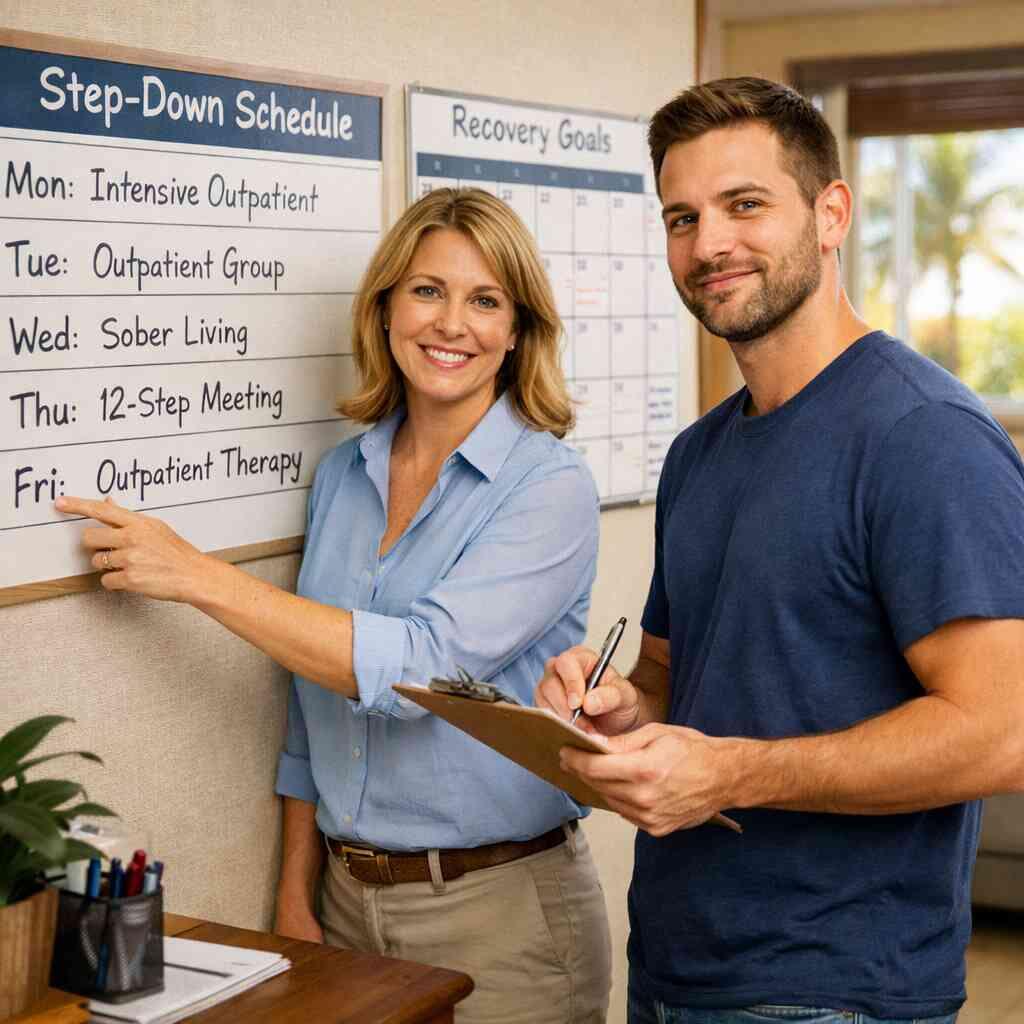
PHP, intensive outpatient, and a standard outpatient program Delray Beach serve different levels of need. A partial hospitalization program usually offers more hours and more structure. Intensive outpatient gives solid support while leaving more room for work or home life. A lighter outpatient program Delray Beach families choose may fit later, when stability improves. The right choice depends on risk, support at home, and your symptoms.
If you want a clearer comparison, think in terms of daily load.
Level of careTypical fitMain benefitPHPHigher risk, more symptomsStrong daily structureIOPModerate support needsFlexibility with accountabilityOutpatientMore stabilityOngoing maintenanceIf you want more detail, this guide to PHP and IOP in Delray Beach explains the difference plainly. What we have seen in 2026 specifically is that people do better when the step-down matches reality, not hope.
Where dual diagnosis treatment fits when anxiety, depression, PTSD, or bipolar disorder are still active
Dual diagnosis treatment matters when mental health and substance use feed each other. That includes depression and addiction, anxiety treatment, PTSD treatment, and bipolar disorder therapy. The co-occurring disorders model recognizes that both problems need care together. NIDA has long supported that approach. If you only treat one side, the other can pull recovery off course.
This is where dual diagnosis treatment for co-occurring disorders becomes essential. A person may stop using cocaine but still panic every morning. Another may leave detox and feel flat, restless, or wired. Those symptoms can drive relapse if no one addresses them. A mental health IOP can help bridge that gap. Licensed clinicians should screen for both conditions early.
When medication-assisted treatment such as Suboxone maintenance or Vivitrol injections may be part of the plan
Medication-assisted treatment can help reduce cravings and lower overdose risk for some people. FDA-approved options like Suboxone maintenance or Vivitrol injections may fit opioid rehab Delray, fentanyl treatment, heroin recovery, or prescription pill addiction plans. These medications are not a cure. They are tools. They work best with therapy, support, and consistent follow-up.
If you are exploring medication-assisted treatment with Suboxone maintenance or Vivitrol injections, ask how the medication fits the larger plan. It should support recovery, not replace it. This is especially important if benzodiazepine withdrawal, alcohol cravings, or repeated relapse have been part of the story. A careful prescriber can explain benefits, risks, and monitoring. Clear answers matter.
How evidence-based treatment like cognitive behavioral therapy, dialectical behavior therapy, and EMDR trauma therapy can anchor the next phase
Evidence-based treatment gives aftercare a strong spine. Cognitive behavioral therapy helps you spot thought patterns that feed use. Dialectical behavior therapy teaches distress tolerance, emotional regulation, and better choices under pressure. EMDR trauma therapy can help process painful memories that still trigger symptoms. These methods are used widely because they are practical and studied.
If trauma sits under the addiction, do not ignore it. A person in South Florida recovery may look stable on the outside while carrying deep fear inside. That is why EMDR trauma therapy in South Florida can matter so much. The right mix of CBT, DBT, and trauma work can make aftercare feel less fragile. Healing gets steadier when the roots are treated, too.
What most people miss when choosing sober living and community support
How to tell whether sober living resources actually fit your routines, triggers, and level of accountability
Sober living is not just a bed. It is a living system with rules, peers, curfews, and expectations. The best sober living resources fit your work schedule, your trigger profile, and your need for structure. If you have early cravings, a strong urge to isolate, or a shaky home environment, accountability matters more. If the house feels too loose or too strict, it may not fit.
If you are reviewing sober living resources near Palm Beach, ask direct questions. Who checks sobriety? What happens after a relapse? How are conflicts handled? What is the house culture? A decent fit can protect long-term recovery support. A poor fit can add stress fast.
Why 12-step alternatives and SMART Recovery can matter as much as traditional meetings for some people
Traditional meetings help many people. They are not the only path. Some people connect better with 12-step alternatives or SMART Recovery because the language feels more practical. Others want both. The point is not loyalty to one model. The point is finding a support system you will actually use.
If you want a simple breakdown, SMART Recovery and 12-step alternatives can show you how each approach works. Some people like the shared story of meetings. Others prefer skills-based tools and clear goals. If you are already tired or skeptical, that is okay. Start with the format that lowers resistance. Consistency beats perfection.
How group therapy activities and alumni program support keep momentum from fading after discharge
Group therapy activities matter because they make recovery social again. They help you hear patterns in other people that sound a lot like your own. That recognition reduces shame. Alumni program support can also keep momentum alive after discharge. It adds contact, reminders, and a sense of continuity when treatment hours drop. 
One young adult in an outpatient program Delray Beach residents recommended kept skipping meetings after work. He was not rejecting support. He was drifting. Once he joined alumni support and one weekly group, his week had shape again. That shift was small, but it changed everything. If you want a model, alumni program support for long-term recovery shows how that continuity can look. “RECO Island was a great choice for detox. The medical staff was attentive and made the process as comfortable as possible. Clean facility and supportive environment. Highly recommend!”– Sandra K., a 5 star review from RECO Island on Google Business Reviews
The role of peer support network, sober accountability, and coastal recovery routines in South Florida
A peer support network is not a fancy phrase. It means people who notice if you disappear. It means sober accountability when your mind starts bargaining. In Delray Beach, that can include meetings, coffee check-ins, and simple routines near the coast. A walk by the beach after therapy can calm a nervous system that feels overloaded. Coastal recovery routines can be steady and plain.
Here is the part most people miss: support works better when it fits local life. Atlantic Avenue can be busy and triggering for some people, and quiet parks can help more than nightlife-heavy plans. South Florida recovery often benefits from rhythm, sunlight, movement, and honest contact. That is not magic. It is structure with air around it.
The practical paper trail that keeps aftercare from collapsing under stress
How insurance verification, out-of-network benefits, and self-pay options change the plan before discharge day
Money stress can derail a good recovery plan. That is why insurance verification and out-of-network benefits for rehab should happen before discharge, not after. If your plan includes Aetna, Cigna, Blue Cross Blue Shield, out-of-network benefits, or self-pay options, you need the facts in writing. Unknown costs create avoidable panic. Panic can push people away from care.
If you are comparing Florida rehabs that take insurance, ask what the estimate includes. Ask about therapy, medical visits, and follow-up care. Ask what changes if you move from PHP to IOP. Clarity is protective. The intake process should feel direct, not confusing.
What case management, life skills training, vocational support, and nutritional counseling should cover
Case management holds the practical pieces together. It helps with appointments, forms, transportation, and referrals. Life skills training may cover budgeting, time planning, and how to manage a sober morning. Vocational support can help you return to work without overloading yourself. Nutritional counseling matters too, especially after detox or long periods of poor eating.
What we have seen on the projects we finished this year is simple: people do better when basics are not ignored. If meals are erratic, sleep is poor, and work is chaotic, cravings get louder. Good aftercare support addresses the body, not just the mind. That is especially true in long-term recovery.
Why family therapy and family weekend can reduce friction once someone returns home
Family systems change during addiction. So do expectations. Family therapy helps everyone speak more clearly and argue less sideways. A structured family weekend can teach boundaries, warning signs, and better ways to respond when stress rises. It also helps repair trust without forcing fake closeness.
If you want more detail, family therapy and family weekend support in recovery can show why this matters. Families often need help as much as the person leaving treatment. That is not blame. It is reality. Clear roles reduce chaos after discharge.
How to use coping skills for recovery, trigger management, and craving management before the hard days arrive
Coping skills for recovery work best when you practice them before you need them. Deep breathing sounds basic until your chest tightens at 9 p.m. Trigger management means knowing what pulls you off center. Craving management means having a plan before the craving spikes. Small tools can stop a spiral from growing.
Try these:
- delay action for 20 minutes
- call one safe person
- change the setting
- eat something simple
- attend a meeting
- write down the trigger
- avoid decision-making when flooded
Learning new skills takes time and practice. That is normal. No one masters it by reading once.
What to do next when the structure is solid but the real world still feels loud
How to choose the right next setting using signs of stability, risk, and support at home
The right next setting depends on more than how you feel in a good hour. Ask how stable sleep, cravings, mood, and home support really are. If you have high stress at home, a busier level of care may still fit. If you are steady, engaged, and supported, lighter care may work. The choice should be honest.
A useful question is this: what happens on your worst day? If the answer is “nothing structured,” the plan needs work. If the answer includes therapy, meetings, housing support, and a call tree, you are closer. That is how recovery maintenance strategies become real.
When to reconnect with admissions, alumni support, or a higher level of care if things start to wobble
If you start skipping sessions, sleeping poorly, or romanticizing use, act quickly. Reconnect with admissions, alumni support, or your provider before the wobble grows. A higher level of care is not failure. It is a smart response to rising risk. That mindset protects long-term recovery.
If you need a refresher on Florida addiction treatment and recovery community in Delray Beach, use that resource to re-center. The best teams expect adjustments. They do not treat them like setbacks in character. They treat them like information.
How Delray Beach rehab resources and the local recovery community can support long-term recovery without overpromising
Delray Beach rehab resources have one real strength: community. The area has a visible recovery presence, and that can make follow-up easier to keep. South Florida recovery often benefits from coastal calm and a dense network of meetings, therapy, and peer support. Still, no location fixes recovery by itself. The work remains yours.
RECO Island sits at 140 NE 4th Avenue, Delray Beach, FL 33483, close to the energy of town and the quieter pace people need. That local balance can help when you are rebuilding daily life. If you are reviewing how to choose a Florida addiction treatment center, look for licensed clinicians, DCF-licensed care, and clear aftercare support. Joint Commission accreditation and NAATP member status may also matter in your decision.
Why the best aftercare plan leaves room for adjustment, not perfection
The best aftercare plan does not expect only smooth days. It leaves room for stress, change, and honest repair. Recovery is not a straight line. It is a set of choices repeated under pressure. When the plan can bend, it is more likely to hold.
If you are ready to sort out your next step, start with one practical move today. Call admissions, confirm insurance verification, and ask what level of support fits your current risk. You do not have to solve the whole picture now. Start with one call, and let the next right piece follow.
Frequently Asked Questions
Question: In the Ultimate Guide to Aftercare Planning After Residential Treatment, when should aftercare planning actually begin after a stay in a residential treatment facility?
Answer: Aftercare planning should begin early, not during the final days of discharge planning for rehab. Starting sooner gives you time to organize the practical pieces that make a transition from residential treatment more stable, including outpatient appointments, transportation, housing, and a relapse prevention plan. At RECO Island in Delray Beach, we encourage people to think about aftercare support as part of the treatment process, not an afterthought. That kind of planning can be especially important after South Florida detox, inpatient rehab in Palm Beach County, or any stay where symptoms and stress levels have been high. A strong continuing care plan can help you move from structure into real life with more confidence, less panic, and clearer next steps.
Question: What should a strong continuing care plan include for someone leaving Delray Beach rehab or another Florida addiction treatment program?
Answer: A strong continuing care plan should be practical, specific, and built around your real recovery risks. It often includes outpatient therapy, recovery meetings, sober living resources if needed, medication follow-up, family therapy boundaries, case management, and a written relapse prevention plan. For some people, that also means dual diagnosis treatment, mental health IOP, or other co-occurring disorders support if anxiety treatment, depression and addiction, PTSD treatment, or bipolar disorder therapy are still active concerns. It may also include coping skills for recovery, healthy routines, and a backup plan if cravings or mood symptoms rise. At RECO Island, we value evidence-based treatment and compassionate aftercare support because recovery usually needs structure beyond discharge day. The goal is not perfection. The goal is a plan that can hold up on difficult days.
Question: How do PHP, intensive outpatient, and outpatient program Delray Beach options help with residential treatment aftercare?
Answer: PHP, intensive outpatient, and outpatient care each provide a different level of structure, so the right fit depends on how much support you still need after residential treatment. A partial hospitalization program usually offers the most daily structure outside of inpatient care. Intensive outpatient gives strong support with more flexibility for work, home life, or family responsibilities. A lighter outpatient program Delray Beach residents use may be a better fit later, when stability is stronger. If mental health symptoms, co-occurring disorders, or a high relapse risk are still present, a mental health IOP or PHP may be more appropriate than stepping down too quickly. RECO Island helps people think through these choices carefully so the next level of care matches reality, not just hope. That is one reason aftercare planning matters so much in long-term recovery support.
Question: How can RECO Island support people who need dual diagnosis treatment, medication-assisted treatment, or trauma therapy South Florida after discharge?
Answer: When substance use and mental health are connected, aftercare planning should address both together. That is the purpose of dual diagnosis treatment and co-occurring disorders support. A person may need ongoing therapy for depression and addiction, anxiety treatment, PTSD treatment, or bipolar disorder therapy while also staying connected to substance use recovery supports. In some cases, medication-assisted treatment such as Suboxone maintenance or Vivitrol injections may be part of the plan for opioid rehab Delray, fentanyl treatment, heroin recovery, or prescription pill addiction. If trauma plays a major role, trauma therapy South Florida options such as CBT, dialectical behavior therapy, or EMDR trauma therapy may help create steadier progress. RECO Island’s approach emphasizes licensed clinicians, evidence-based treatment, and aftercare support that accounts for the whole person. That kind of planning can reduce the chance that one untreated issue pulls recovery off course.
Question: What should I look for in sober living resources, alumni support, and recovery community options after treatment near Delray Beach?
Answer: Look for sober living resources and community support that match your routines, stress level, and need for accountability. A good fit should support healthy routines, sober accountability, and practical recovery maintenance strategies rather than just offering a bed. If you benefit from a peer support network, group therapy activities, alumni support, or 12-step alternatives such as SMART Recovery, your aftercare plan should include those options. Some people also do well with family weekend, family therapy, or ongoing alumni program contact because that continuity helps them stay connected after discharge. In the Delray Beach recovery community, the best support is usually the one you will actually use consistently. RECO Island understands that long-term recovery support is built through connection, structure, and honest follow-through. If you are comparing Florida rehabs that take insurance, it is also smart to confirm insurance verification, out-of-network benefits, and self-pay options before making a decision.
Question: How can I decide whether RECO Island is the right place for aftercare support, and what should I ask during the intake process?
Answer: A good first step is to ask how a program approaches aftercare planning, relapse prevention, and the transition from residential treatment into the next level of care. You may also want to ask whether the team can help with case management, life skills training, vocational support, nutritional counseling, family therapy, or referrals to sober living resources. If you are comparing Delray Beach rehab options, it is also reasonable to ask about credentials such as DCF-licensed care, Joint Commission accreditation, and NAATP member status, as well as how the intake process works for Aetna, Cigna, Blue Cross Blue Shield, and other insurance verification needs. RECO Island, located at 140 NE 4th Avenue Delray Beach FL 33483, serves people in South Florida recovery with a compassionate, community-focused approach. We encourage people to ask direct questions, especially if they are wondering how to choose a rehab, whether a partial hospitalization program or intensive outpatient program fits best, or how to build a continuing care plan that supports life after treatment.