What Makes RECO Intensive Rehab a Fit for Young Adults 2026
When young adult rehab feels like the last thing you wanted and the one thing that makes sense You may be reading this with a tight chest and a phone in your hand. That feeling is common. Young adult rehab can sound like a huge, unwanted label, especially when you still have classes, work, family […]

When young adult rehab feels like the last thing you wanted and the one thing that makes sense
You may be reading this with a tight chest and a phone in your hand. That feeling is common. Young adult rehab can sound like a huge, unwanted label, especially when you still have classes, work, family pressure, and a life that does not pause for a crisis. Yet the moment you stop trying to outrun the problem, the path can get clearer.
The signs that a Delray Beach rehab may fit better than trying to white-knuckle it
Some signs are obvious. You keep promising yourself you will cut back, then the same pattern returns. Your sleep is off, your mood swings harder, and you feel sick, angry, or numb when you are not using. You may also notice missed shifts, missed classes, money problems, or risky choices that were not part of your life before.
Here is the part most people miss. The decision is not only about how much you use. It is also about how much the use has started steering your day. If you need a young adult rehab in Delray Beach because your routines keep collapsing, that concern deserves real attention.
A short story from recent work may help. A college student called after failing two exams and hiding a stimulant problem from his family. He thought he needed more willpower. What he actually needed was structure, sleep repair, and a setting that did not shame him for being scared. That is often the turning point.
Why young adults often need a different rhythm than older adults in Florida addiction treatment
Young adults are often living in a more unstable season. You may be changing jobs, moving homes, shifting friend groups, or trying to figure out who you are. Substance use can attach itself to that chaos fast. Older adults may need a different pace, but younger adults often need a program that matches urgency, flexibility, and real-world pressure.
This matters in Florida addiction treatment in South Florida because the best plan is not the same for everyone. A young adult may need more skills practice, more family contact, and more help with shame. They may also need a plan that respects school, jobs, and early adult responsibilities without pretending those pressures will disappear.
Young adults also respond well to plain language and clear rules. They do not need speeches. They need a schedule they can trust, clinicians who speak directly, and a treatment plan that feels built for their stage of life. That is especially true when alcohol, cannabis, stimulants, or pills have become part of social life.
How fear about detox, judgment, or missing work and school shapes the decision to call
Fear delays treatment more often than denial does. You may worry about detox symptoms, being judged, losing your job, or falling behind in school. Those fears are real. They can feel bigger than the addiction itself on a hard night.
A safe South Florida detox support plan can reduce that panic. Medical teams can monitor withdrawal, explain the process, and help you know what to expect. If you have been searching for a drug rehab near me because you are terrified of withdrawal, that fear is a sign to ask for help sooner, not later.
We hear this from families almost every week. They want to act, but they do not know how to tell the difference between a rough weekend and a serious pattern. A simple rule helps: if the use keeps causing harm, taking over your thoughts, or changing your behavior, it is time to talk with a professional. The call does not lock you into anything. It just gives you facts.
What makes RECO Intensive a better match for young adults than a one-size-fits-all program
Young adults usually do better in treatment that feels structured but not rigid. That balance matters. Too little structure leaves room for chaos. Too much can trigger resistance. RECO Intensive was built around the idea that recovery grows through connection, consistency, and practical support.
Why structure matters more when anxiety, addiction, and impulsivity are all in the same room
Anxiety, impulsivity, and substance use can feed each other fast. You feel tense, you use to calm down, then you act before thinking, and the cycle repeats. A strong program interrupts that loop with schedules, check-ins, and clear expectations. That is where structure becomes a clinical tool, not just a routine.
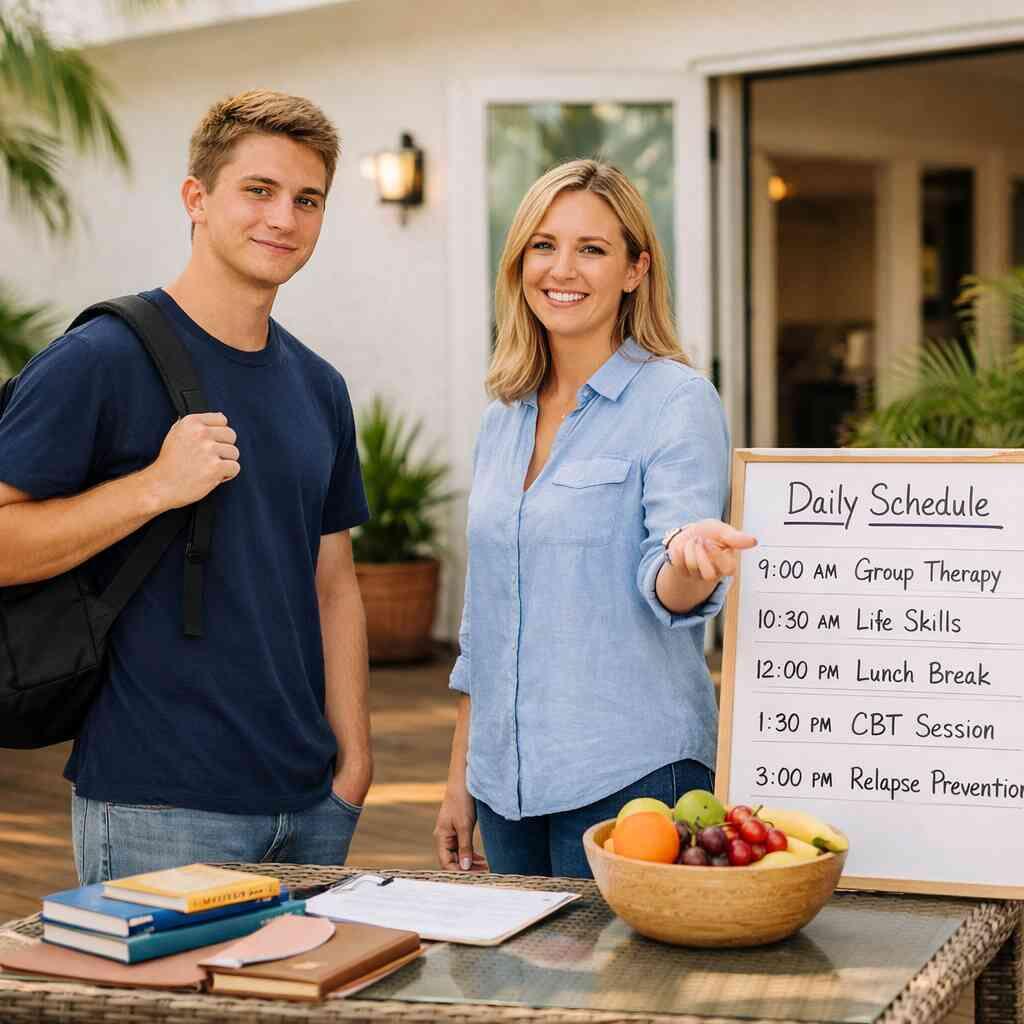
A good outpatient program in Delray Beach should not feel random. It should include a predictable day, measurable goals, and enough support to keep small setbacks from becoming major ones. For many young adults, that rhythm reduces decision fatigue. It also creates space to practice coping skills before life gets complicated again.
One client in his early twenties described treatment as “the first quiet room” he had in months. He had bounced between late nights, missed work, and escalating anxiety. Once his day had structure, he could finally notice triggers instead of reacting to them instantly. That is the kind of shift that makes recovery feel possible.
How a coastal setting near Atlantic Avenue can support calm without pretending recovery is easy
A coastal setting can help, but it does not heal by itself. Still, a calm environment matters. Being near the water, a quieter street grid, and the movement of Delray Beach can lower the constant sense of alarm some young adults carry. The setting near Atlantic Avenue gives the day a different texture than the places where using became normal.
That does not mean recovery becomes easy. It means your nervous system gets fewer signals to stay on guard. A beachside recovery setting can support attention, sleep, and reflection. For many people, that slight reduction in stress makes group work and one-on-one sessions more useful.
Here is where local context matters. South Florida heat, traffic, and nightlife can all add pressure. A center that feels grounded in the Delray Beach recovery community gives you something steadier to return to after sessions. That is useful when your mind has been moving too fast for too long.
What a private rehab in South Florida should offer before a young person ever agrees to treatment
Before anyone agrees to treatment, they need confidence in the basics. Will somebody answer the phone? Will the intake feel respectful? Will they explain options without talking down to you? Those details matter because people in crisis notice tone fast.
A strong private rehab in South Florida should offer clear intake steps, honest education, and help with the first practical barriers. That can include insurance verification, schedule planning, and guidance on level of care. If a program cannot explain what happens next, it may not be the right fit.
At minimum, you should expect:
- A clear intake process
- Medical and mental health screening
- Evidence-based treatment
- Access to licensed clinicians
- Help with insurance verification
- Planning for aftercare and family support
If a program claims to be a residential treatment facility or offers a partial hospitalization program, ask how it supports young adults specifically. Ask how it handles school, work, and family strain. Good care should sound organized, not vague.
The treatment mix that matters when substance use and mental health keep feeding each other
Many young adults do not have only one problem. They have several that collide. Substance use, depression, anxiety, trauma, and mood instability often show up together. That is why the right treatment plan must look at the full picture, not just the substance.
How dual diagnosis treatment and co-occurring disorders change the care plan from day one
Dual diagnosis means a person has both substance use and a mental health condition. Co-occurring disorders is the same idea in broader language. NIDA and SAMHSA both emphasize that these conditions need integrated care, because treating only one side often leaves the other side driving the relapse.
That is why dual diagnosis treatment for co-occurring disorders matters so much. If depression and addiction are both present, or anxiety and alcohol use are tangled together, the plan should address both. A young adult with PTSD treatment, depression and addiction, or bipolar disorder therapy needs care that sees patterns, not just symptoms.
This is also where a mental health IOP can make a big difference. It gives people time to work on psychiatric symptoms, relapse triggers, and daily functioning at the same time. That integration is not fancy. It is practical medicine.
When CBT, DBT, and EMDR trauma therapy South Florida can make more sense than talk alone
Talk therapy helps, but talk alone is not always enough. Cognitive behavioral therapy, or CBT, helps you notice the thought patterns that drive action. Dialectical behavior therapy, or DBT, teaches emotion regulation, distress tolerance, and better choices under stress. EMDR trauma therapy can help some people process traumatic memories without getting stuck in them.
These are not trendy labels. They are structured methods with evidence behind them. A young adult with trauma, panic, or reactive behavior may do better with skill-based work than with open-ended conversation alone. The same is true when cannabis, alcohol, or pills have become a way to avoid feelings.
The mistake we see most often is waiting for the person to “calm down” before starting trauma work. Often, the opposite is true. Once a person has enough support, trauma therapy in South Florida can become safer and more useful. The goal is not to force memories open. The goal is to help the brain stop treating every stressor like danger.
Why psychiatric evaluation, medication management, and medication-assisted treatment may be part of the plan
A full psychiatric evaluation can clarify what is driving what. Is the anxiety primary? Is the depression coming before the use? Is there an untreated mood disorder underneath? Those questions matter because the wrong label leads to the wrong plan.
Medication management can help stabilize symptoms when clinically appropriate. For opioid use disorder, FDA-approved options like Suboxone maintenance or Vivitrol injections may be discussed by a medical provider. These are not shortcuts. They are tools that can lower cravings and reduce relapse risk when used properly. For someone with fentanyl treatment, heroin recovery, or opioid rehab Delray needs, that medical layer can be life-saving.
A medication-assisted treatment for opioid recovery plan should always be individualized. The same goes for cocaine detox Florida, prescription pill addiction, and benzodiazepine withdrawal. Medical oversight matters because withdrawal can be uncomfortable and, in some cases, medically risky.
How group therapy activities, family therapy, and mindfulness meditation support real behavior change
Young adults often learn best in groups, especially when the group feels honest and active. Group therapy activities can help people practice communication, hear feedback, and stop feeling like they are the only one in the room with this problem. Family therapy can help repair patterns that keep repeating at home. A good family program should help relatives learn boundaries, not just worry louder. That is where a family weekend or structured family session can make a difference. Families often need their own language for relapse prevention, boundaries, and support. Mindfulness meditation also has a place, especially for people whose minds race. It is not about emptying the mind. It is about learning to notice urges, breathe through stress, and delay reaction. That skill sounds small until you need it at 11 p.m. and the old pattern is calling. 
PHP, IOP, or residential: what actually fits a young adult life in Palm Beach County
Level of care matters as much as the therapy itself. The right fit depends on safety, stability, and how much support you need each day. In Palm Beach County, young adults often move between options based on severity, home environment, and what they can realistically manage.
When a partial hospitalization program is the better bridge than full residential treatment
A partial hospitalization program can work well when you need strong daily support but do not need round-the-clock residential care. It gives you intensive treatment during the day and returns you home or to supported housing at night. That makes it a useful bridge for many people who are medically stable but still vulnerable.
For some, a partial hospitalization program vs inpatient rehab decision comes down to safety and structure. If withdrawal risk is high or home is unstable, residential care may fit better. If you can stay safe outside of treatment hours, PHP may be enough. The best answer is based on assessment, not pride.
Why an intensive outpatient or mental health IOP can work when school, work, or family duties stay in play
An intensive outpatient schedule gives you more flexibility. A mental health IOP can be a strong fit when you need treatment while keeping school, part-time work, or family duties in place. That does not make the care weaker. It makes it more adaptable.
An intensive outpatient care after residential treatment plan often works best when someone has already built some stability. It helps you keep practicing coping skills while life gets louder again. For many young adults, that is the true test. Can the skills hold when real life starts pressing back?
How outpatient program Delray Beach care connects with case management, life skills training, and aftercare planning
A strong outpatient program Delray Beach should do more than hold groups. It should connect therapy with case management, life skills training, and aftercare planning. Those supports help with jobs, transportation, appointments, and the many small things that can derail recovery.
The best plans also include vocational support and nutritional counseling when needed. Sleep, food, and work structure all affect relapse risk. A person can have strong insight and still struggle if they are exhausted, underfed, or stuck in a chaotic routine.
A practical aftercare plan should include:
- Relapse prevention strategies
- Coping skills practice
- Follow-up therapy
- Recovery meetings or peer support
- Housing or sober living options
- Medication follow-up, if needed
What sober living resources and alumni program support look like after the schedule gets lighter
As care steps down, support should not disappear. Sober living resources can provide a stable bridge when home is not ready. An alumni program can keep people connected to peers and support after the schedule gets lighter. That continuity matters, especially for young adults who are still learning how to live without substances shaping every hour.
A sober living resources near Delray Beach search is not a sign of weakness. It is often a sign of good planning. If a person goes from intensive care straight back into chaos, relapse risk rises. Continuing care lowers that risk by keeping support active during a fragile season.
The decision point that turns interest into action without wasting time
The hardest part is often not choosing treatment. It is making the call. Insurance, timing, and fear can stall action for days or weeks. In recovery, those delays can matter.
How insurance verification, self-pay options, and out-of-network benefits change the timeline
Money concerns are real. They also confuse people fast. Insurance verification can tell you what is covered, what needs authorization, and whether out-of-network benefits may help. If insurance is not available or not enough, self-pay options can still keep the process moving.
A focused insurance verification for private rehab call can save time and reduce uncertainty. Ask directly about Aetna, Cigna, Blue Cross Blue Shield, and other plans if that applies to you. You should also ask what is covered for detox, PHP, IOP, and psychiatric care. Clear answers matter more than broad promises.
What to ask when comparing Florida rehabs that take insurance and how to avoid a bad fit
Do not stop at the phrase “we take insurance.” Ask what that really means. Ask about clinical oversight, level of care, family involvement, and how they handle co-occurring disorders. Ask whether they use evidence-based treatment and whether the clinicians are licensed.
A good comparison point for Florida addiction treatment in South Florida is simple:
- Do they explain the program clearly?
- Do they treat mental health and substance use together?
- Do they offer step-down care?
- Do they plan for relapse prevention?
- Do they help with discharge and aftercare?
If the answers stay vague, keep looking. The right fit should feel clear, clinically grounded, and respectful.
Why local families in Delray Beach, Boca Raton, West Palm Beach, and across South Florida often start with a focused call
Families across Delray Beach, Boca Raton, West Palm Beach, Broward County, and even Miami often start with one call because the process feels less overwhelming that way. That call can clarify the intake process, level of care, and whether the program fits a young adult’s needs. It can also help families who have been arguing about whether the problem is “serious enough.”
Delray has a deep recovery culture, but the real value is not the setting alone. It is having access to a place that understands the local pace, the beachside calm, and the pressure young adults feel around work, school, and image. If you are comparing Florida rehabs that take insurance, ask for specifics, not slogans. And if you want a better sense of the environment, start with a direct conversation.
What the next twenty-four hours should look like if the goal is safe intake and long-term recovery
If the goal is safe intake and long-term recovery, do three things next:
- Write down the main symptoms and risks.
- Gather insurance and contact details.
- Make one call to a treatment team that can explain next steps.
If withdrawal, depression, or self-harm risk is present, say that clearly. If you need help with alcoholism treatment center options, young adult rehab, or support for anxiety treatment, speak plainly about what is happening. Good intake starts with honesty, not polished wording.
You do not have to solve all of this today. You do need to stop carrying it alone in your head. Start with one call, ask direct questions, and let the facts replace the fear.
Frequently Asked Questions
Question: What makes What Makes RECO Intensive Rehab a Fit for Young Adults 2026 relevant for someone looking for young adult rehab in Delray Beach?
Answer: It is relevant because it speaks directly to the reality many young adults face: school, work, family pressure, anxiety, and substance use all colliding at once. RECO Island’s approach in Delray Beach is designed to feel structured, compassionate, and practical rather than one-size-fits-all. For a young adult who needs Delray Beach rehab support, that matters. The focus on routine, coping skills, dual diagnosis treatment, and real-world planning can help someone move from crisis mode into a steadier recovery path. If you are comparing Florida addiction treatment options, it is smart to look for a program that understands young adult stress, co-occurring disorders, and the need for clear next steps like aftercare planning, case management, and life skills training.
Question: How does RECO Island support people who need South Florida detox, outpatient program Delray Beach care, or a partial hospitalization program vs IOP?
Answer: The right level of care depends on safety, stability, and how much support someone needs each day. A person with higher withdrawal risk may need South Florida detox first, while someone who is medically stable but still vulnerable may fit better in a partial hospitalization program. Others may benefit from intensive outpatient care or a mental health IOP that allows them to keep up with school, work, or family responsibilities. RECO Island can help people understand what is PHP vs IOP and which option fits best. That kind of guidance matters because choosing a treatment path should be based on clinical need, not guesswork. If you are searching for a drug rehab near me or comparing inpatient rehab Palm Beach County options, having a team explain the intake process clearly can reduce fear and make the next step feel manageable.
Question: Does RECO Island offer help for dual diagnosis, trauma therapy South Florida, and mental health concerns like depression and addiction or anxiety treatment?
Answer: RECO Island’s content emphasizes integrated care, which is especially important for dual diagnosis treatment and co-occurring disorders. Many young adults are not dealing with only substance use; they are also facing PTSD treatment needs, depression and addiction, anxiety treatment, bipolar disorder therapy, or trauma-related symptoms. A strong plan should address both the mental health side and the substance use side together. Evidence-based treatment methods such as cognitive behavioral therapy, dialectical behavior therapy, and EMDR trauma therapy can help people build coping skills and reduce relapse risk. Group therapy activities, family therapy, and mindfulness meditation can also support long-term recovery by helping people practice healthier responses under stress. This integrated approach is especially important for anyone looking into private rehab or a residential treatment facility that can treat the whole person, not just the symptoms.
Question: How does RECO Island help with opioid rehab Delray, fentanyl treatment, heroin recovery, prescription pill addiction, or benzodiazepine withdrawal?
Answer: For opioid rehab Delray needs and other substance-specific concerns like fentanyl treatment, heroin recovery, prescription pill addiction, or benzodiazepine withdrawal, medical oversight is often essential. RECO Island discusses medication-assisted treatment as part of a broader recovery plan when clinically appropriate. That may include options such as Suboxone maintenance or Vivitrol injections, depending on the person’s situation and provider recommendation. The goal is to reduce cravings, support stability, and create room for therapy to work. People seeking help for cocaine detox Florida needs or alcoholism treatment center support also benefit from a program that understands withdrawal, relapse prevention, and aftercare support. A careful, medically informed approach is one of the reasons many families look for licensed clinicians, evidence-based treatment, and a rehab setting that takes safety seriously.
Question: What should families know about insurance verification, Florida rehabs that take insurance, and whether RECO Island may be a fit for long-term recovery?
Answer: Families should know that insurance verification can make the process much clearer before anyone commits to treatment. If you are comparing Florida rehabs that take insurance, ask about Aetna, Cigna, Blue Cross Blue Shield, out-of-network benefits, and self-pay options. The intake team should explain what is covered, what authorization may be needed, and how the process works for detox, PHP, IOP, or psychiatric care. RECO Island’s focus on aftercare planning, sober living resources, alumni program support, relapse prevention, and life skills training can also be important for long-term recovery. That continuity matters when a young adult is leaving a structured setting and returning to daily life. Families in Delray Beach, Boca Raton, West Palm Beach, Broward County, and Miami often appreciate a compassionate, local resource that understands the Delray Beach recovery community, beachside recovery environment, and the pressure young adults face while rebuilding their lives.