Ultimate Guide to Dual Diagnosis Care at RECO Island
When two diagnoses collide and everything starts to feel louder If you are reading this because sleep feels thin, anxiety feels sharp, and alcohol or drugs seem tied to both, that makes sense. This part is genuinely confusing for most people. A rough day can look like a mental health crisis. A mental health crisis […]
When two diagnoses collide and everything starts to feel louder
If you are reading this because sleep feels thin, anxiety feels sharp, and alcohol or drugs seem tied to both, that makes sense.
This part is genuinely confusing for most people.
A rough day can look like a mental health crisis.
A mental health crisis can look like a substance problem.
Often, it is both.
Why anxiety, depression, PTSD, and substance use often feed each other
Anxiety can push you toward drinking, pills, or stimulants for relief.
Depression can make that relief feel necessary just to get through the day.
PTSD can keep your body on alert long after the danger has passed.
Substances may quiet things briefly, then make symptoms louder later.
That cycle is the core of co-occurring disorders.
NIDA and SAMHSA both support the co-occurring disorder model, which treats mental health and addiction together.
That matters because untreated trauma often shows up as use, and use often hides trauma.
We hear this from clients almost every week.
A person may say they need help from an alcoholism treatment center, then realize panic, grief, or shame are driving the pattern too.
That is why dual diagnosis treatment has to look at the whole picture.
The signs that point to co-occurring disorders instead of one isolated problem
You may notice mood swings that do not match the situation.
You may see missed work, broken sleep, or sudden isolation.
You may also see increasing use, secrecy, and failed attempts to cut back.
When these patterns overlap, a mental health IOP or higher level of care may be needed.
Here is the part most families miss: the emotional symptoms often come first.
A common sign is chasing relief from distress rather than chasing a high.
That distinction matters.
People with depression and addiction, anxiety treatment needs, or bipolar disorder therapy needs may cycle through substances to manage their internal state.
Someone searching drug rehab near me may actually need trauma care, psychiatric support, and relapse work together.
That is especially true in Florida addiction treatment settings serving busy, high-stress families.
Why stopping alcohol or drugs without mental health care can make symptoms flare
Withdrawal can remove the substance, but not the reason it became necessary.
That is why stopping suddenly can feel emotionally brutal.
A person may become more anxious, more depressed, or more irritable.
In some cases, suicidal thoughts or panic may intensify.
That is why South Florida detox should be matched to the person, not just the substance.
A client once described it this way: “My body got sober before my mind did.”
That sentence stays with me.
It captures why trauma therapy South Florida programs often matter after detox begins.
It also explains why PTSD treatment and co-occurring disorders planning should happen early, not later.
If the nervous system never gets support, the old coping pattern can rush back.
What families in Delray Beach usually notice before the full picture becomes clear
Families often notice the small things first.
Missed calls.
Short tempers.
Unfinished plans.
A change in the way someone sleeps, eats, or talks.
In the Delray Beach recovery community, those clues often surface before a crisis.
Sometimes the family sees the person withdraw from the beach, work, or friends on Atlantic Avenue.
Sometimes they notice a sharp drop after a breakup or job stress.
One parent in Palm Beach County told our intake team that their son was “here, but not really here” for months.
That kind of description often points toward co-occurring disorders rather than a single issue.
Early recognition can make dual diagnosis treatment in Delray Beach more effective.
What dual diagnosis care at RECO Island is built to change
At RECO Island, dual diagnosis care should not feel like guesswork.
It should connect psychiatric support, addiction care, and daily structure.
That is especially important in a residential treatment facility or step-down setting.
The goal is steadier functioning, not just symptom suppression.
That takes planning from the start.
How integrated treatment planning connects psychiatric support and addiction care
Integrated planning means the team looks at substance use and mental health together.
That may include medication review, therapy scheduling, safety planning, and family contact.
It is a practical answer to a complicated problem.
It also fits evidence-based treatment standards used across strong Florida rehab options.
At RECO Island, that can connect to services across levels of care, including dual diagnosis treatment in Delray Beach.
The advantage is simple.
You are not treated as if the addiction sits in one box and the anxiety sits in another.
Both affect the plan.
Both affect relapse risk.
The role of a comprehensive intake process in sorting symptoms from side effects
A strong intake does more than ask what you used.
It asks what you felt before using, during use, and after stopping.
It also asks about trauma, medication history, sleep, appetite, and mood shifts.
That detail helps separate a symptom from a side effect.
It can also reveal a medical issue that needs attention.
This matters with benzodiazepine withdrawal, prescription pill addiction, and cocaine detox Florida cases.
Some symptoms mimic anxiety or depression.
Others are direct effects of withdrawal.
A careful assessment lowers the chance of treating the wrong problem.
If you are comparing mental health and addiction treatment in Florida, ask how intake handles both sides.
Why evidence-based treatment matters for dual diagnosis more than guesswork
Guesswork can feel comforting for a day.
It rarely helps for long.
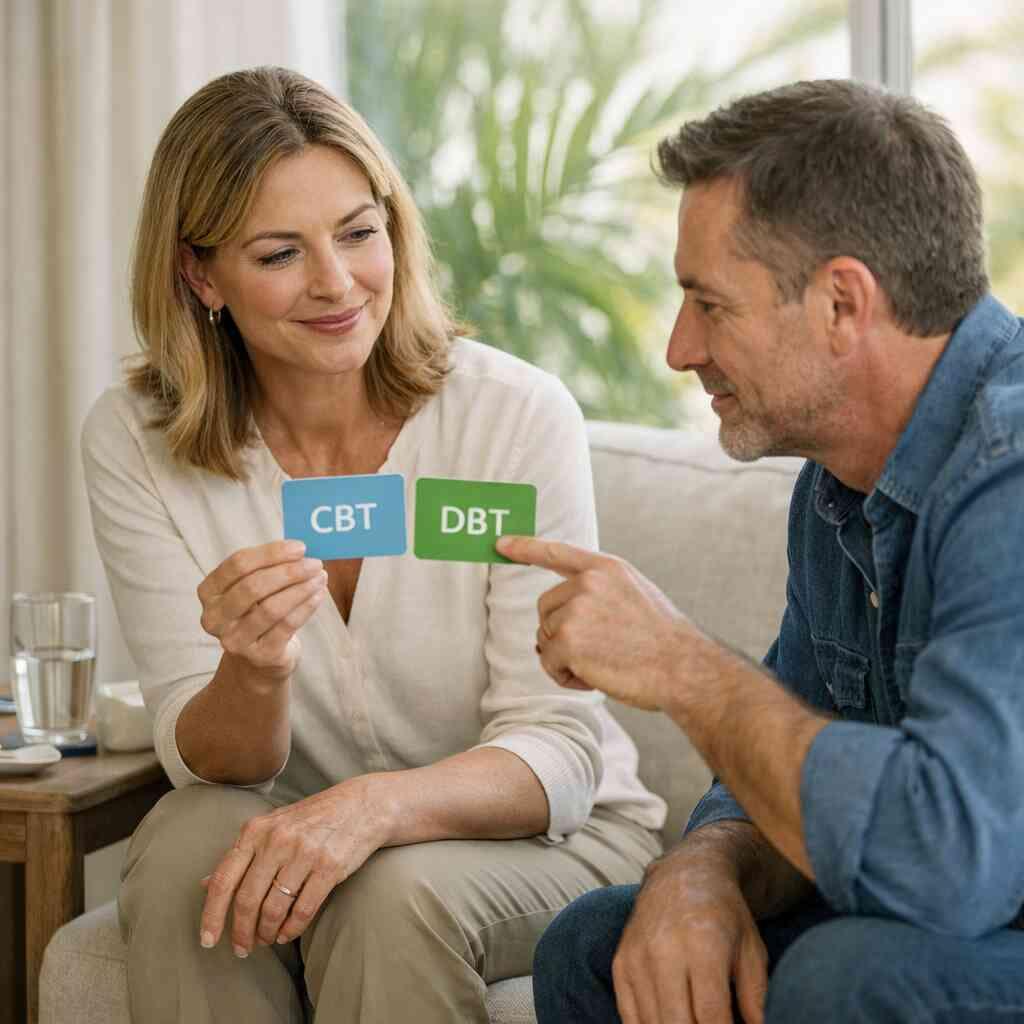
Cognitive behavioral therapy, dialectical behavior therapy, and EMDR trauma therapy have research support for many people with substance use and mental health needs.
They are not magic.
They are structured tools that help people notice triggers, thoughts, and reactions.
SAMHSA treatment guidance has long favored therapies with clear methods and measurable goals.
That is important in private rehab settings, where people deserve more than vague reassurance.
Licensed clinicians should explain why a tool is being used and what it targets.
That clarity helps you make informed choices.
It also reduces fear.
How the coastal setting in Delray Beach can support steadier daily routines
Environment matters more than people think.
A coastal healing environment can support sleep, movement, and calmer routines.
In Delray Beach, the rhythm of the ocean and the slower pace near the beach can help settle overactive stress.
That does not replace treatment.
It can support it.
Here is what we have seen this year: people do better when their days feel predictable.
A morning check-in.
A therapy block.
A meal.
A quiet walk after.
That structure can work well in inpatient rehab Palm Beach County and outpatient program Delray Beach settings alike, especially near the calm around the Intracoastal and beyond busy Atlantic Avenue.
The treatment map behind real stabilization in South Florida
Stabilization is not one service.
It is a sequence.
Detox, therapy, medication review, and the right level of care all matter.
If one piece is missing, progress can wobble.
That is why the treatment map matters so much.
When detox is needed and what South Florida detox can look like day by day
Detox is often needed when withdrawal could be unsafe or unbearable alone.
That can include alcohol, opioids, benzodiazepines, or heavy stimulant use.
The phrase how long is detox depends on the substance, health history, and use pattern.
No honest program should promise the same answer for everyone.
A better question is what monitoring and support you will receive.
A typical day in South Florida detox may include vitals checks, symptom tracking, hydration, rest, and medication support when appropriate.
That is especially important for opioid rehab Delray, fentanyl treatment, and heroin recovery cases.
If withdrawal is severe, inpatient medical monitoring may be safer.
For details, RECO Island’s medical detox process should explain what support looks like in plain language.
How to think about PHP vs IOP when choosing between partial hospitalization program and intensive outpatient
People ask about what is PHP vs IOP because the terms sound similar.
PHP, or partial hospitalization program, usually gives more hours and more structure.
IOP, or intensive outpatient, gives strong care with more room for outside responsibilities.
The right level depends on risk, stability, and home support.
It also depends on whether symptoms are still intense.
Level of careBest forTypical feelPartial hospitalization programEarly stabilization, high symptom loadFull, structured daysIntensive outpatientOngoing support, more independenceSeveral therapy blocks weeklyOutpatient program Delray BeachMaintenance and step-down careFlexible, lower intensityIf you are comparing partial hospitalization program vs intensive outpatient in South Florida, ask how the program changes as you improve.
Good care should flex with your needs.
It should not trap you in one level longer than necessary.
Where medication management fits with Suboxone maintenance or Vivitrol injections
Medication can be part of recovery.
It is not a weakness.
It is a clinical tool.
For opioid use disorder, Suboxone maintenance and Vivitrol injections may reduce cravings and relapse risk when medically appropriate.
That is consistent with medication-assisted treatment standards used across the field. 
A person with opioid use disorder and recovery needs may do better when medication is paired with therapy.
The same is true for alcohol use, especially when relapse has been repeated.
FDA-approved medications should be discussed carefully, with side effects and follow-up explained.
If you are searching for opioid recovery treatment with medication-assisted care, ask about monitoring, dose adjustments, and how the team handles missed doses.
If you are comparing opioid recovery treatment with medication-assisted care, clarity matters.
How CBT, dialectical behavior therapy, and EMDR trauma therapy may support recovery when clinically appropriate
CBT helps you spot thoughts that drive action.
DBT helps with emotion regulation, distress tolerance, and impulse control.
EMDR can help process trauma when a clinician believes the person is ready.
These are not trendy extras.
They are core tools in many strong dual diagnosis programs.
For some people, DBT for anxiety treatment and recovery is the bridge between feeling flooded and feeling functional.
For others, EMDR and CBT for co-occurring care may help reduce the pull of old memories.
The key is fit.
A skilled clinician chooses based on symptoms, trauma history, and readiness.
That is better than treating everyone the same.
What healing looks like once the crisis part settles
Once withdrawal eases, the work changes.
The body may calm first.
The emotions often take longer.
That is normal.
This stage asks for practice, not perfection.
Why group therapy activities and family therapy often matter after withdrawal symptoms ease
Group therapy helps people hear their own story differently.
It lowers shame.
It also builds accountability.
When run well, group therapy activities can teach communication, trigger awareness, and repair skills.
That matters in a therapeutic community model.
Family support can be just as important.
Family therapy gives relatives a place to ask hard questions without blowing up the room.
It can also reduce blame and confusion.
If your family needs structure, family therapy and aftercare planning should be part of the discharge conversation.
A family weekend can help, if the program offers one.
How mindfulness meditation, yoga therapy, and art therapy can support emotional control
These tools do not replace clinical care.
They support it.
Mindfulness meditation helps slow the gap between feeling and reacting.
Yoga therapy may help people notice body tension before it becomes a relapse trigger.
Art therapy can help when words feel stuck.
I have seen people in early recovery sit in complete silence for the first time in months.
That is not failure.
That is data.
It shows how overloaded the nervous system has been.
When people combine these tools with coping skills, they often gain more control over cravings and mood swings.
That helps in holistic recovery without drifting into vague advice.
What coping skills, relapse prevention, and aftercare planning should include before discharge
Before discharge, the plan should be specific.
Not hopeful.
Specific.
It should name warning signs, coping tools, contacts, and next appointments.
It should also cover sleep, meals, stress, and transportation.
That is the heart of aftercare planning.
A useful discharge plan often includes:
- Trigger list and early warning signs
- Crisis contacts and medication list
- Therapy schedule and case manager follow-up
- Support meeting options
- Housing and work plan
- Steps for missed doses or missed sessions
That kind of structure supports relapse prevention and life skills training.
It also helps with vocational support and nutritional counseling when those needs are part of the picture.
How sober living resources, 12-step alternatives, SMART Recovery, and alumni support can extend progress
Recovery often needs a bridge after formal care.
That bridge may be sober living resources, a peer group, or ongoing therapy.
Some people want 12-step alternatives.
Others prefer SMART Recovery or mixed support.
The best option is the one you will actually use, not the one that sounds best in theory.
RECO Island’s aftercare support should point people toward practical next steps, not abstract encouragement.
An alumni program can also help people stay connected after discharge.
That kind of continuing care matches best practice in the field.
It gives recovery time to settle into real life.
That is where change becomes durable.
The decision that matters next and how to get clear about it
Now the question becomes practical.
Which setting fits your situation?
What can you afford?
What level of structure do you need?
That is where a clear comparison helps.
How to compare a private rehab, inpatient rehab Palm Beach County, or outpatient program Delray Beach
A private rehab may offer more privacy and a calmer setting.
An inpatient rehab Palm Beach County option may fit higher risk or unstable home life.
An outpatient program Delray Beach may work if you can stay safe at home and show up consistently.
The best choice depends on safety, symptoms, and support.
If you are comparing a outpatient program in Delray Beach with higher care, ask what happens if symptoms worsen.
That answer reveals a lot.
It shows whether the program thinks in real-life terms.
It also helps you avoid starting too low.
Or too high.
What to ask about insurance verification, out-of-network benefits, and self-pay options
Money stress can shut people down fast.
It should not.
Ask about insurance verification, out-of-network benefits, and self-pay options right away.
Do not wait until you are already packing a bag.
That delay creates avoidable panic.
RECO Island can point you to insurance verification for rehab in Delray Beach before admission decisions get rushed.
Ask for plain numbers and plain language.
If someone cannot explain benefits clearly, keep asking.
Good admissions help should feel calm, not slippery.
That is especially true with Florida rehabs that take insurance.
Which red flags matter when choosing between Delray Beach rehab options and drug rehab near me searches
Search results can look identical.
They are not.
Watch for vague promises, no clinical detail, and unclear licensing.
Also watch for programs that sell hope faster than they build safety.
That is a real problem in addiction treatment marketing.
Use this quick checklist:
- Clear license and accreditation information
- Licensed clinicians and psychiatric support
- Real explanation of detox and step-down care
- Family involvement options
- Aftercare and alumni planning
- Honest answers about costs
If a program says yes to everything and explains nothing, slow down.
That is a red flag.
A strong Delray Beach rehab should be able to describe its model, not just its marketing.
That includes license and accreditation considerations, not just beach photos.
When to reach out to RECO Intensive for admissions, travel coordination, or insurance help at 140 NE 4th Avenue Delray Beach FL 33483
If the picture feels bigger than one issue, get help sorting it.
That is the moment to contact admissions.
RECO Intensive’s Delray Beach recovery community near 140 NE 4th Avenue can help with travel questions, intake timing, and benefit review.
That matters for families coming from Boca Raton, West Palm Beach, Fort Lauderdale, or other parts of South Florida recovery life.
It also matters if work, family, or school timing is tight.
If you are unsure, ask three things today.
Does the program treat dual diagnosis?
Does it offer the right level of care?
Will it help you verify insurance before you decide?
You do not have to figure this out alone, and you do not have to figure it all out today.
Start with one phone call, and let the facts do the heavy lifting.
Frequently Asked Questions
Question: What does dual diagnosis treatment at RECO Island include for people dealing with co-occurring disorders, anxiety treatment, depression and addiction, or PTSD treatment?
Answer: RECO Island’s approach to dual diagnosis treatment is built around the idea that mental health and substance use need to be addressed together, not separately. For many people, co-occurring disorders show up as a cycle where anxiety, depression, trauma, bipolar disorder symptoms, or stress increase substance use, and substance use then makes those symptoms worse. A strong plan may include a comprehensive intake process, psychiatric support, evidence-based treatment, therapy, and recovery support services so the full picture is addressed. Depending on the person’s needs, that can involve cognitive behavioral therapy, dialectical behavior therapy, EMDR trauma therapy, group therapy activities, family therapy, and medication management when appropriate. RECO Island’s goal is to create integrated treatment planning that supports stabilization, coping skills, and relapse prevention while helping each person move toward long-term recovery in a structured, compassionate setting.
Question: How do I know if I need South Florida detox, and what should I expect if I’m searching for an alcoholism treatment center or drug rehab near me?
Answer: If alcohol or drug use is causing withdrawal, unsafe symptoms, or repeated failed attempts to stop, South Florida detox may be the right first step. This is especially important for people dealing with prescription pill addiction, benzodiazepine withdrawal, cocaine detox Florida needs, opioid rehab Delray concerns, fentanyl treatment, or heroin recovery. The phrase how long is detox depends on the substance, the length of use, overall health, and whether there are co-occurring disorders present, so no responsible program should give one fixed answer for everyone. In a strong detox setting, care usually includes monitoring, symptom tracking, medication management when appropriate, and planning for the next level of support. RECO Island can help people think through whether a residential treatment facility, partial hospitalization program, or intensive outpatient level of care makes the most sense after detox, especially when the person needs both addiction and mental health support.
Question: What is PHP vs IOP, and how do I choose between partial hospitalization program, intensive outpatient, or outpatient program Delray Beach care?
Answer: The difference between what is PHP vs IOP usually comes down to structure and time commitment. A partial hospitalization program generally offers more hours of treatment and is often better for people who need a higher level of support after detox or during early stabilization. Intensive outpatient provides strong clinical care with more flexibility, which can work well for people balancing work, school, or family responsibilities. An outpatient program Delray Beach may be best for step-down care or ongoing maintenance when symptoms are more stable. At RECO Island, the right level of care should be based on safety, symptom severity, home support, and whether mental health IOP or other services are needed. That kind of individualized planning matters because the best Delray Beach rehab experience is not about choosing the most intense option, but the right one. If you are comparing Florida addiction treatment programs, ask how the level of care changes as progress is made and whether the team can support a smooth step-down into aftercare planning.
Question: Does RECO Island offer evidence-based treatment like CBT, DBT, EMDR trauma therapy, medication-assisted treatment, Suboxone maintenance, or Vivitrol injections?
Answer: RECO Island emphasizes evidence-based treatment and integrated care, which is important for people who need both addiction and mental health support. Depending on the person’s needs and clinical recommendations, treatment may involve cognitive behavioral therapy, dialectical behavior therapy, EMDR trauma therapy, psychiatric support, and medication management. For some people with opioid use disorder, medication-assisted treatment such as Suboxone maintenance or Vivitrol injections may be part of the plan when clinically appropriate. These tools are not one-size-fits-all, but they can play a major role in stabilizing cravings, supporting recovery, and lowering relapse risk. That kind of planning is especially valuable for people seeking opioid rehab Delray services, trauma therapy South Florida support, or help with depression and addiction. The benefit of a coordinated approach is that treatment addresses the whole person, not just the symptoms that brought them in.
Question: What support does RECO Island provide after residential treatment facility care, and how do aftercare planning, sober living resources, SMART Recovery, and alumni program support help long-term recovery?
Answer: Recovery does not end when a person leaves a higher level of care, which is why aftercare planning is such an important part of the process. RECO Island’s approach should include practical next steps such as relapse prevention planning, coping skills development, case management, and connections to sober living resources when needed. Some people benefit from 12-step alternatives, SMART Recovery, or a mix of supports depending on what they will actually use consistently. Ongoing therapy, family therapy, life skills training, vocational support, nutritional counseling, and alumni program connection can all help build stability over time. That matters because long-term recovery often depends on having structure after discharge, not just motivation. For many people, the transition from a residential treatment facility to everyday life is where the real work begins, and steady aftercare support can make that transition safer and more sustainable.
Question: What should I know before choosing RECO Island for Delray Beach rehab, including insurance verification, out-of-network benefits, self-pay options, and license and accreditation considerations?
Answer: If you are comparing Delray Beach rehab options, it helps to start with the basics: does the program treat dual diagnosis, does it offer the level of care you need, and can it clearly explain costs and coverage? RECO Island can help with insurance verification and may be able to walk families through options such as out-of-network benefits and self-pay options, which is especially helpful when time is limited and the situation feels urgent. It is also wise to ask about license and accreditation considerations, because those details matter when you are evaluating Florida rehabs that take insurance or any private rehab setting. You should feel comfortable asking how the intake process works, whether the team provides psychiatric support, and how family therapy, intervention services, or a family weekend may fit into the plan if appropriate. If you are searching for how to choose a rehab, a clear, compassionate admissions team can make the process feel less overwhelming and more grounded in real clinical support. For people near 140 NE 4th Avenue Delray Beach FL 33483, that kind of clarity can make the next step much easier to take.
“My experience at Reco Island Detox Center was outstanding. The clinical program was comprehensive and tailored to individual needs, ensuring a holistic approach to recovery. Every aspect of the treatment was carefully designed to support healing and growth. What truly stood out, however, was the compassionate staff. They were not only professional and knowledgeable but also genuinely caring and supportive, making the entire journey feel safe and comfortable. Reco Island Detox Center truly provides a nurturing and effective environment for recovery. ❤️”– Jessica H., a 5 star review from our business on Google Business Reviews