Explore SMART Recovery and 12 Step Alternatives in Florida
What people are really asking when they search SMART Recovery in Florida If you are searching for SMART Recovery Florida at midnight, something probably feels heavy. Maybe traditional meetings did not fit. Maybe you want help without the language, rituals, or pace of a 12-step room. That feeling is common, and it does not mean […]
What people are really asking when they search SMART Recovery in Florida
If you are searching for SMART Recovery Florida at midnight, something probably feels heavy. Maybe traditional meetings did not fit. Maybe you want help without the language, rituals, or pace of a 12-step room. That feeling is common, and it does not mean you are difficult. It usually means you need support that matches how you learn and heal.
Why 12 step alternatives matter for people who do not connect with traditional meetings
Many people want 12-step alternatives in South Florida because they want practical tools first. SMART Recovery uses self-management, not shame. It asks you to notice triggers, challenge thoughts, and build habits you can repeat on hard days. For some, that structure feels clearer than surrender language.
Here is what many people miss: a meeting that feels wrong can still be useful information. It may show you need a different support style, not less help. In Delray Beach rehab settings, that insight matters because early recovery can feel fragile. You need a plan that lowers friction, not adds it.
One client we met in the Boca Raton area said weekly meetings left them feeling like an outsider. They were sober, but tense every time they walked into the room. Once they paired non-12-step recovery support in Delray Beach with therapy, they could actually use the tools. That change mattered more than a label.
“RECO Island is an amazing place! The environment is peaceful and beautifully designed — very clean, modern, and comfortable. The staff are kind, caring, and professional. They truly help you feel safe and supported throughout the recovery process. Highly recommended for anyone looking for real healing and a positive atmosphere! 🌿💫”– Md H., a 5 star review from RECO Island on Google Business Reviews
How SMART Recovery fits alongside outpatient program Delray Beach and mental health IOP care
SMART Recovery works best when it sits beside clinical care, not instead of it. An outpatient program in Delray Beach can help you practice sober routines while still living at home. A mental health IOP in Delray Beach adds more structure when anxiety, trauma, or mood symptoms keep showing up. Together, they create more stability than peer support alone.
This pairing matters in Florida addiction treatment because life does not pause for recovery. You still have work, family, traffic on Federal Highway, and the pull of old routines. SMART Recovery can help you plan for urges. Clinical care can help you treat the deeper patterns under those urges.
A SMART group may give you a framework. Therapy gives you a place to process what is underneath. That combination often feels less abstract. It can also feel more manageable when you are trying to stay steady in the South Florida recovery community.
When a Florida addiction treatment plan should include both peer support and clinical therapy
The best plans usually include both. Peer support gives connection. Therapy gives precision. If you are dealing with prescription pill addiction, opioid rehab Delray needs, cocaine detox Florida concerns, or alcohol cravings, you may need more than encouragement. You may need relapse prevention, medication support, and trauma work.
A treatment plan should also reflect your mental health. Depression and addiction often feed each other. So do anxiety treatment needs and bipolar disorder therapy needs. That is why dual diagnosis treatment exists. It addresses co-occurring disorders instead of treating substance use as the only issue.
From the projects and cases we see every year, the biggest mistake is waiting for one type of support to do everything. It rarely does. A steadier path often combines SMART Recovery, group therapy, individual therapy, and aftercare planning. That mix gives you more than hope. It gives you a structure that can hold.
The difference between meeting based support and treatment that changes daily life
Meeting-based support can be powerful. It can also be limited if you need clinical care. That difference is important in Delray Beach, where people often compare support groups, residential treatment facility options, and outpatient care without a clear map. The question is not which one is “better.” The question is which one meets your real needs.
What SMART Recovery asks of the person in recovery and why that structure can feel different
SMART Recovery asks for active participation. You identify the thoughts that drive use. You practice new responses. You track what works and what fails. That can feel empowering if you want practical change. It can feel awkward if you are new to self-reflection or still overwhelmed by early withdrawal.
The structure is simple, but not easy. You are expected to show up with honesty. You work on change, not just reflection. For some people, that feels less intimidating than a 12-step model. For others, it feels more demanding because there is no script to hide behind.
That is why some people search for SMART Recovery options in Florida after trying traditional meetings first. They want a format that feels direct. They want language that fits their values. They want tools they can use at 2 p.m., not just at a meeting on Thursday night.
Where CBT, DBT, and mindfulness meditation fit inside evidence-based recovery programs
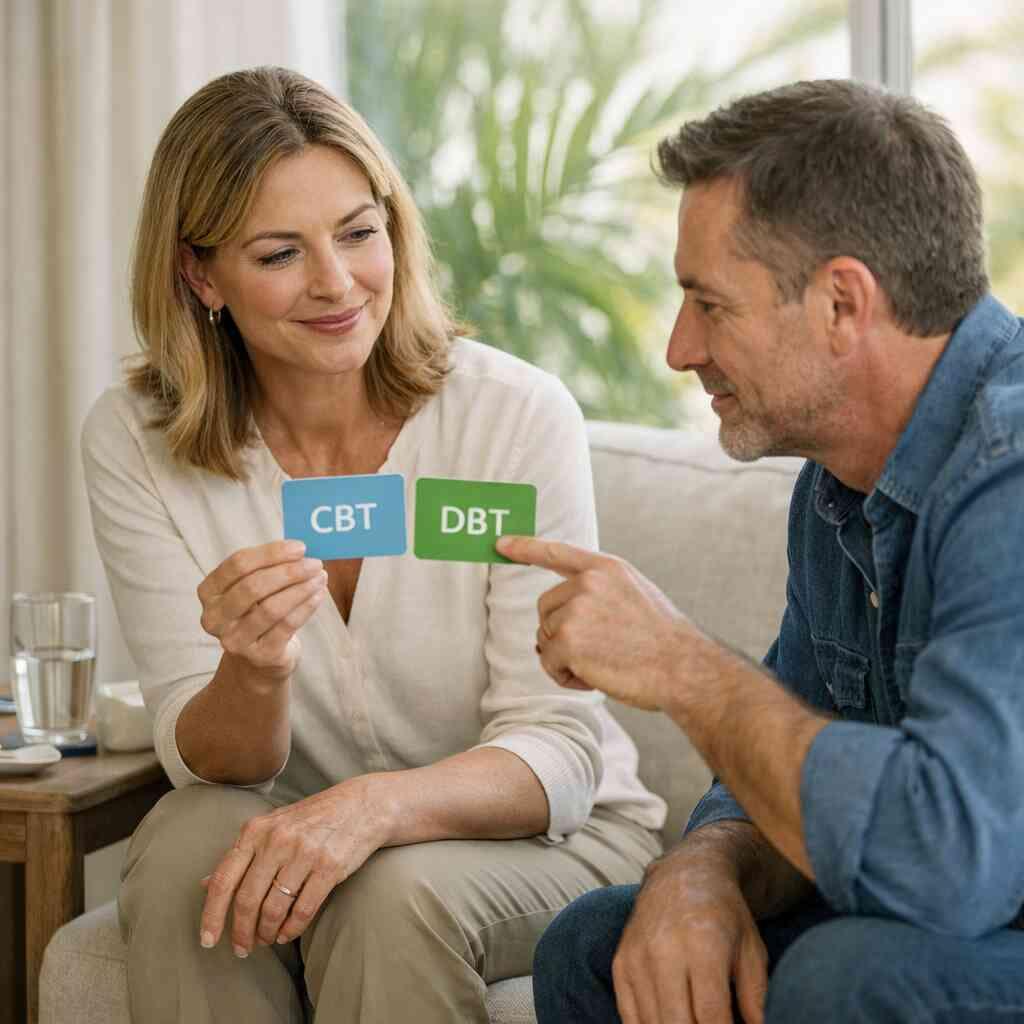
CBT, or cognitive behavioral therapy, helps you notice the link between thoughts, feelings, and actions. DBT, or dialectical behavior therapy, adds skills for distress tolerance, emotion regulation, and better relationships. Mindfulness meditation slows the mind enough for you to notice urges before they turn into action. These are not vague ideas. They are practical tools used in evidence-based recovery programs in Florida.
A good clinician will not throw jargon at you. They will explain the skill, then rehearse it with you. That matters because recovery is repetitive. You practice when calm so you can use the skill when stressed. At RECO Island, that kind of grounded teaching fits well with holistic recovery, group therapy activities, yoga therapy, art therapy, and mindfulness meditation.
The best part is that these methods complement SMART Recovery. SMART helps you think clearly. CBT helps you test those thoughts. DBT helps you stay steady when feelings spike. Mindfulness helps you pause long enough to choose differently.
Why dual diagnosis treatment changes the conversation for depression and addiction, anxiety treatment, and bipolar disorder therapy
Dual diagnosis treatment matters when substance use and mental health symptoms show up together. NIDA describes co-occurring disorders as common, and that reality shapes good care. If you are drinking to quiet panic, using pills to sleep, or cycling between highs and crashes, the substance use is rarely the whole story. The clinical picture is wider.
A person with depression and addiction may need more than willpower. Someone with anxiety treatment needs may need coping tools and medication support. A person with bipolar disorder therapy needs may need close monitoring, structured scheduling, and careful medication management. That is why dual diagnosis treatment is not a luxury. It is the right level of care for many people.
We hear this from families almost every week: “Why did the relapse happen again?” Often, the answer lives in untreated mood symptoms, trauma, or sleep disruption. A plan that treats only alcohol or only drugs can miss the engine underneath.
How group therapy activities and family therapy add pressure relief without replacing professional care
Group therapy activities can reduce isolation fast. You hear your story in someone else’s words. That can lower shame. It can also give you useful feedback from people who understand the grind of early recovery. Still, group work does not replace one-on-one care.
Family therapy helps even when the family feels tired or confused. It gives everyone a shared language. It can also reduce the cycle of blame and rescuing. If your home has been shaped by addiction, family therapy for recovery in Florida can make the home feel less chaotic. That is especially helpful during the first months after treatment.
The practical point is simple. Support groups help you stay connected. Therapy helps you change. Both matter. Neither should carry the full weight alone.
Picking the right level of care in Delray Beach without guessing
People often search for the right program by label alone. That creates confusion. PHP, IOP, residential, detox, and outpatient can all sound similar until you are the one trying to live through them. In Delray Beach, the better question is how much support you need right now, not what sounds strongest.
When PHP vs IOP starts to matter more than the label on the program
PHP versus IOP in Delray Beach becomes important when your day-to-day stability changes. PHP, or partial hospitalization program, usually offers more hours and more structure. IOP, or intensive outpatient, gives you more flexibility while still keeping therapy frequent. If you are newly sober, unstable, or struggling to function, PHP may fit better. If you can manage basic routines and need continued structure, IOP may be enough. That is why a skilled intake team asks about sleep, cravings, work, home stress, and safety. They are not trying to box you in. They are trying to match care to your actual life. That is the difference between guesswork and good treatment. For some people, PHP versus IOP in Delray Beach is not just a billing question. It changes the shape of the week. It changes how much time you have for family, work, and recovery. It can also change how quickly you stabilize.  starts to matter more than t](https://www.recoisland.com/wp-content/uploads/2026/10/explore-smart-recovery-and-12-step-alternatives-in-florida-6abcd0977b372.jpg)
How residential treatment facility, partial hospitalization program, and intensive outpatient can work together
A residential treatment facility may be the right place if you need 24-hour support. It removes daily triggers and creates room for stabilization. PHP can follow when you are ready for more independence but still need heavy structure. Intensive outpatient can come next, especially if you are rebuilding work and home routines.
This step-down model works because recovery needs repetition. You do not heal in one setting and stay healed forever. You build capacity over time. On Florida addiction treatment in Palm Beach County plans, that sequence often helps people move from crisis to consistency.
Think of it like reducing support in layers. First, stabilize. Then, practice. Then, live it out. That rhythm is especially useful for young adult rehab, professional’s program needs, LGBTQ+ affirmative treatment, and veterans addiction help, where life demands can be intense.
What to expect from intake process, insurance verification, and out-of-network benefits
The intake process should feel clear, not cold. You answer questions about use, medical history, mental health, and safety. Then the team helps decide level of care. Insurance verification comes next for many families, and that step can remove a lot of fear. If you are comparing Florida rehabs that take insurance, ask how out-of-network benefits may apply.
This is where insurance verification for Florida rehab becomes practical, not abstract. You want to know what is covered, what is not, and what self-pay options exist. A good admissions team should explain this in plain English. If they cannot, keep asking until they do.
The question we get most often is not about therapy. It is about cost. That is normal. If money stress is clouding your thinking, verify benefits before you decide. Clarity often lowers panic faster than reassurance alone.
Why South Florida detox, medication-assisted treatment, Suboxone maintenance, and Vivitrol injections can be part of early stability
Detox is often the first medical hurdle. If you are looking at South Florida detox, you may be asking how long withdrawal lasts and how hard it will feel. The honest answer is that it varies by substance, dose, health, and history. A medical team can help you manage symptoms safely, especially with alcohol, opioids, fentanyl treatment, heroin recovery, benzodiazepine withdrawal, or cocaine detox Florida concerns.
Medication-assisted treatment can help early stability. Suboxone maintenance may reduce cravings and withdrawal for opioid use disorder treatment. Vivitrol injections can support people who benefit from naltrexone-based care. These are FDA-approved tools, not shortcuts. They can give your brain time to settle while you learn new habits.
In our medical detox process, the goal is safe stabilization, not drama. The mistake we see most often is waiting too long because detox sounds scary. It can be uncomfortable, yes. It can also be medically managed in a calmer way than many people expect.
How trauma therapy South Florida, EMDR trauma therapy, and co-occurring disorders care shape long-term recovery
Trauma often sits under addiction. That is why trauma therapy South Florida matters. EMDR trauma therapy can help process painful memories without forcing endless retelling. It is one evidence-based option for PTSD treatment and trauma-related distress. For many people, it lowers the emotional charge that fuels use.
Co-occurring disorders care keeps the focus on the whole picture. If your nervous system is always on guard, recovery feels harder. If sleep is poor, cravings grow louder. If shame keeps cycling, setbacks can snowball. That is why trauma therapy in South Florida belongs in the same conversation as sobriety.
A woman from near Atlantic Avenue once said she could handle cravings better than memories. That sentence stayed with our team. After trauma-focused work, her nights became less chaotic. She was not “fixed.” She was steadier. That is a real result worth respecting.
What a steadier recovery plan looks like after the meetings end
Support should not disappear when the meeting does. Long-term recovery needs structure, repetition, and honest follow-through. That is why aftercare planning matters so much in Delray Beach and across South Florida. The goal is not just to stay busy. It is to build a life that can hold up under pressure.
How aftercare planning, relapse prevention, and coping skills keep progress from slipping
Aftercare planning maps the weeks after formal care. It can include therapy, meetings, medication, sober supports, and check-ins. Relapse prevention means identifying triggers before they explode. Coping skills give you a response plan for boredom, stress, anger, and loneliness. Those skills are learned, not wished into place.
A strong plan should be specific. If cravings hit after work, what do you do? If family conflict spikes, who do you call? If you miss a meeting, what is the backup? That kind of planning is what keeps progress from slipping into panic.
Why sober living resources, alumni program support, and life skills training matter in real life
Sober living resources can help bridge the gap between treatment and full independence. Alumni program support gives you contact with people who know the routine. Life skills training helps with the ordinary parts of adult life that can feel enormous in early recovery. Cooking. Scheduling. Budgeting. Showing up on time. These are recovery skills, too.
The alumni program should not feel like a club you must impress. It should feel like a bridge. That bridge matters after residential treatment, PHP, or intensive outpatient ends. It also matters if you are rebuilding trust with family after a hard season.
Here is what almost no online guide mentions. Small routines protect big progress. A clean car. A stocked fridge. A phone list that is easy to find. Those things sound minor. They are not.
How vocational support, nutritional counseling, and case management help recovery hold up at work and home
Vocational support can help you return to work with less chaos. Case management can coordinate care, appointments, and referrals. Nutritional counseling matters because hunger and poor sleep can make cravings worse. These services are not extras. They help recovery function in the real world.
At RECO Island, those supports fit with holistic recovery and coastal healing environment values. A calm setting near the beach can help, but it cannot replace structure. That is why practical support matters so much in Palm Beach County treatment centers and beyond. When life becomes predictable again, relapse risk often drops.
When to verify care for Florida rehabs that take insurance and choose a next step with confidence
If you are still comparing centers, verify the basics before you decide. Ask about licensing, clinical oversight, and whether the program is DCF licensed. Ask if licensed clinicians provide care. Ask how family weekend works. Ask what happens after discharge. Those questions are practical, not picky.
Use our insurance verification page if you want a cleaner view of coverage, out-of-network benefits, Aetna, Cigna, Blue Cross Blue Shield, or self-pay options. If a program cannot answer clearly, keep looking. Confidence grows when the facts are plain. You do not have to figure this out alone, and you do not have to solve everything tonight. Start with one call, one benefits check, and one honest conversation about what support would actually help.
Frequently Asked Questions
Question: How can RECO Island help if I am looking for SMART Recovery Florida or 12-step alternatives in Florida instead of a traditional meeting-based approach?
Answer: RECO Island understands that not everyone connects with a 12-step room, and that is okay. If you are exploring SMART Recovery Florida or other non 12-step recovery support options, our team can help you build a plan that fits your needs, values, and level of stability. SMART Recovery can be a strong fit for people who want practical tools, self-management strategies, and a more evidence-based recovery programs approach.
At RECO Island in Delray Beach, we focus on the bigger picture, not just whether you attend a meeting. We can help you compare outpatient program Delray Beach options, partial hospitalization program support, and intensive outpatient care so recovery has structure beyond peer support alone. That matters for people dealing with alcohol recovery support, prescription pill addiction, opioid rehab Delray needs, fentanyl treatment, heroin recovery, or cocaine detox Florida concerns.
If you are searching for a drug rehab near me that feels more personal and less rigid, RECO Island may be a helpful place to start. We can talk through aftercare planning, relapse prevention, coping skills, and sober living resources so your support continues after the meeting ends. The goal is to help you find a recovery path that feels workable in real life, not just in theory.
Question: What does the blog Explore SMART Recovery and 12 Step Alternatives in Florida mean for someone deciding between Delray Beach rehab, outpatient program Delray Beach care, and mental health IOP support?
Answer: The main message of Explore SMART Recovery and 12 Step Alternatives in Florida is that recovery works best when the support matches the person, not the other way around. Some people do well with SMART Recovery because it offers a structured, practical framework. Others need more clinical support through Delray Beach rehab services, a mental health IOP, or dual diagnosis treatment when substance use and mental health symptoms show up together.
At RECO Island, we believe it is important to match level of care to your actual needs. If anxiety treatment, depression and addiction, bipolar disorder therapy, PTSD treatment, or co-occurring disorders care are part of your picture, meeting-based support alone may not be enough. That is where evidence-based treatment, cognitive behavioral therapy, dialectical behavior therapy, EMDR trauma therapy, and trauma therapy South Florida services can make a meaningful difference.
Our team can help you think through whether a residential treatment facility, partial hospitalization program, or intensive outpatient plan makes the most sense. We also help with case management, life skills training, vocational support, nutritional counseling, family therapy, and aftercare support so your recovery is not left to chance. For many people, the right answer is not one option or the other. It is a thoughtful combination of clinical care and community support.
Question: Does RECO Island offer help with detox, medication-assisted treatment, and early stabilization for alcohol, opioid, or benzodiazepine withdrawal?
Answer: Yes, early stabilization is often where recovery begins, and RECO Island can help you understand what that process may look like. If you are asking how long detox takes, the honest answer is that it depends on the substance, dose, health history, and how long use has been happening. People facing South Florida detox needs for alcohol, opioids, fentanyl treatment, heroin recovery, prescription pill addiction, benzodiazepine withdrawal, or cocaine detox Florida concerns should not try to figure it out alone.
Medication-assisted treatment can be an important part of early care for some people. Options such as Suboxone maintenance or Vivitrol injections may be considered depending on the clinical picture and what a licensed clinician recommends. These tools are not shortcuts. They are evidence-based treatment supports that can reduce cravings and create space for healing.
At RECO Island, the focus is on safe, supported, and compassionate care. We can help you navigate the intake process, insurance verification, and Florida rehabs that take insurance so you can make a clearer decision with less stress. If you need private rehab or self-pay options, our admissions process can help you compare what fits best.
Question: How does RECO Island support dual diagnosis treatment and co-occurring disorders care for depression and addiction, anxiety treatment, or bipolar disorder therapy?
Answer: Dual diagnosis treatment is essential when substance use and mental health concerns are affecting each other. At RECO Island, that means looking beyond the surface symptoms and addressing co-occurring disorders care in a way that reflects the whole person. If depression and addiction are feeding each other, or if anxiety treatment needs are driving substance use, recovery is usually stronger when both are treated together.
Our approach can include individual therapy, group therapy activities, family therapy, mindfulness meditation, and holistic recovery support alongside clinical services. Depending on the level of need, someone may benefit from mental health IOP structure, a partial hospitalization program, or a residential treatment facility before stepping down into outpatient care.
This is especially important for people who have been searching for alcoholism treatment center support or drug rehab near me options and have not felt understood elsewhere. RECO Island’s model is designed to support long-term recovery planning, relapse prevention, and coping skills that can be used at home, at work, and in relationships. We want treatment to be practical enough to use in daily life, not just during a session.
Question: What should I know about insurance verification, out-of-network benefits, and whether RECO Island is a fit if I am comparing Florida addiction treatment options?
Answer: Insurance can feel like one of the hardest parts of getting help, which is why RECO Island makes insurance verification a priority. If you are comparing Florida addiction treatment options, you deserve clear information about what your plan may cover, what out-of-network benefits might apply, and whether self-pay options make sense for your situation. We can help you review plans such as Aetna, Cigna, and Blue Cross Blue Shield when applicable.
When people are looking at Florida rehabs that take insurance, they often want to know more than just coverage. They want to know whether the program feels trustworthy, whether licensed clinicians are involved, whether the center is DCF licensed, and whether the care is grounded in evidence-based treatment. Those are the right questions to ask.
RECO Island is based at 140 NE 4th Avenue Delray Beach FL 33483, and we serve people seeking South Florida recovery support from Delray Beach, Palm Beach County treatment centers, Broward County rehab areas, Boca Raton outpatient needs, and beyond. If you are exploring private rehab, beachside recovery, or a coastal healing environment, we can help you understand what level of care may fit best and what the next step should be.
Question: What happens after treatment ends, and how do aftercare planning, sober living resources, and the RECO Intensive alumni community help with long-term recovery?
Answer: Recovery does not end when formal treatment ends, which is why aftercare planning is such an important part of the process. At RECO Island, we encourage people to think ahead about relapse prevention, coping skills, sober living resources, and the kind of day-to-day structure that helps recovery hold up under stress. That may include continued therapy, support groups, alumni program connection, or other aftercare support.
The RECO Intensive alumni community can provide a helpful bridge after residential treatment facility care, partial hospitalization program support, or intensive outpatient programming. It gives people a way to stay connected to the Delray Beach recovery community while rebuilding routines, relationships, and confidence. For some, that may also include life skills training, vocational support, nutritional counseling, and family weekend involvement when appropriate.
We also recognize that recovery looks different for everyone. That is why RECO Island supports young adult rehab needs, professional’s program considerations, LGBTQ+ affirmative treatment, veterans addiction help, gender-specific treatment, women’s rehab, and men’s recovery pathways when clinically appropriate. If you are searching for Florida recovery resources that feel compassionate, practical, and grounded in real-life support, RECO Island is here to help you take the next step with more clarity and less fear.